


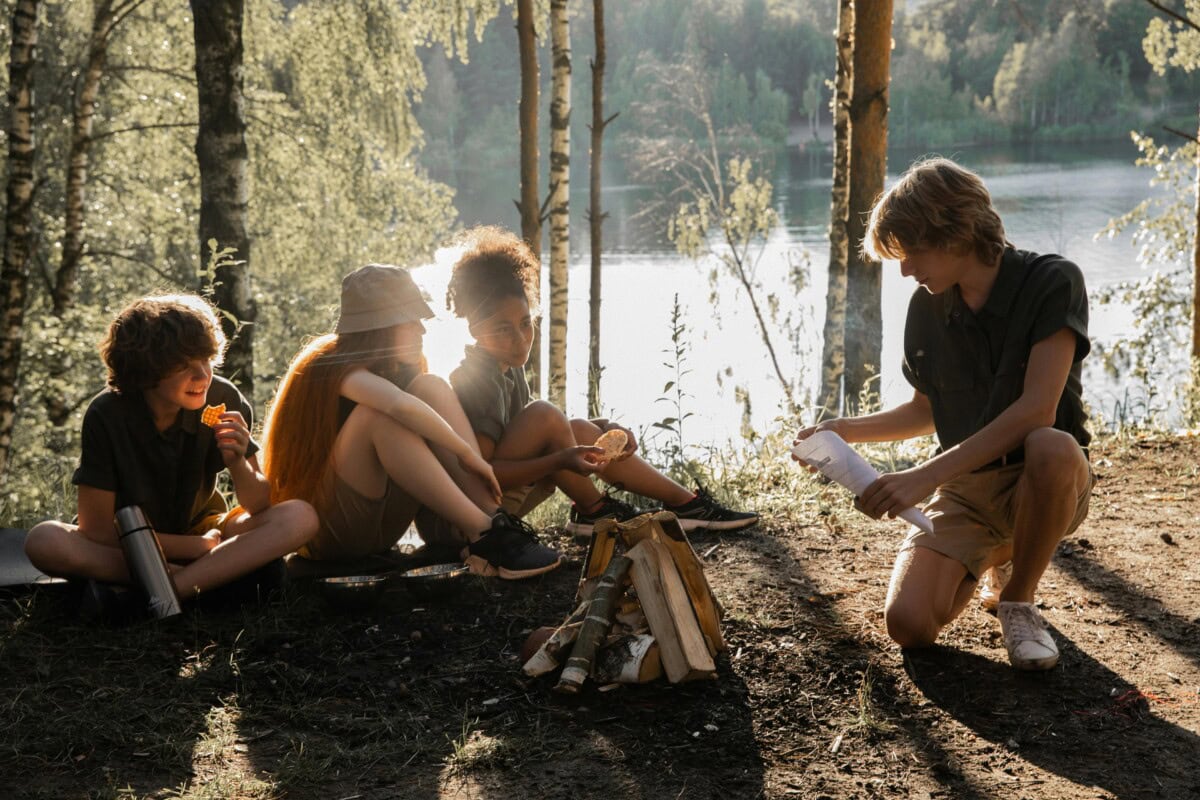
Have you ever learned something important while doing something fun, like solving a tricky puzzle, hiking up a mountain, or even just working together to beat an obstacle course? That’s the essence of Adventure-Based Learning (ABL) – an approach to education that blends excitement with personal growth, all while teaching valuable life skills. Instead of sitting in a classroom, ABL gets you moving, thinking on your feet, and pushing yourself (and your teammates) to overcome challenges.
Think of it as learning through exploration – whether it’s a physical challenge in the great outdoors or an exciting problem-solving activity. The best part? It’s not just about gaining knowledge; it’s about building confidence, enhancing teamwork, and developing a whole set of skills that traditional classrooms don’t always touch on.
In this article, we’re diving into the world of ABL to show you how this hands-on, immersive approach can completely transform your child’s way of learning. Whether you’re a teacher looking for new ways to engage students or just curious about how ABL can be a powerful learning tool, you’ll find something here to spark your interest. Let’s explore how ABL can be the classroom of the future – and why it’s just as fun as it sounds!

What is Adventure Based Learning?
Adventure-Based Learning (ABL) might sound like something you’d do on a weekend getaway with friends, but it’s actually a powerful educational approach that takes learning beyond the classroom, similar to a montessori learning style. At its core, ABL is all about creating a learning environment through experience. It involves engaging in physical, often outdoor, activities that challenge participants to think critically, work as a team, and step outside their comfort zones.
Rather than simply reading about a concept or listening to a lecture, ABL invites students to live it. The challenges – whether they’re outdoor experiences like hiking, mountain biking, kayaking, rock climbing, or obstacle courses, or indoor team-building games – force students to actively engage in problem-solving, communication, and decision-making in real-world situations.
Core Principles of ABL
At the heart of Adventure-Based Learning are a few key principles:
- Experiential Learning
ABL is rooted in the idea that we learn best by doing. It’s one thing to study how to solve a problem; it’s another to get your hands dirty by actually solving it. When students interact in an ABL activity, they’re learning firsthand through trial and error, which deepens their understanding and makes the lessons stick. - Teamwork and Collaboration
Many ABL activities require teamwork. Whether it’s figuring out how to cross a “river” on an obstacle course or completing a problem-solving challenge together, students quickly learn that collaboration is key. They develop critical skills in communication, trust, and cooperation that will serve them in nearly every aspect of life. - Reflection and Debriefing
After the action-packed activity is over, ABL emphasizes the importance of reflection. Through structured debriefing sessions, students are given the chance to process what they’ve learned, discuss what worked (and what didn’t), and think about how they can apply their new insights to other areas of their lives. This reflection is crucial in turning the experience into real learning.
How Is ABL Different from Traditional Education?
While traditional learning is often passive – think lectures, textbooks, and worksheets – ABL is dynamic and hands-on. In a typical classroom, students might read about leadership skills or teamwork. But in ABL, they actually practice those skills in real-time, tackling problems and challenges that require immediate collaboration, decision-making, and sometimes a bit of creative thinking.
Additionally, ABL introduces an element of risk and challenge that is often missing from conventional education. This doesn’t mean jumping into dangerous situations, but rather creating controlled, safe environments where students are encouraged to push their limits and face the thrill of the unknown. It’s about stepping outside your comfort zone and growing from the experience.

Key Elements of Adventure Based Learning
ABL isn’t just about the thrill of physical activities; it’s about the combination of several key elements that make the experience truly impactful. Let’s break down the main components that make ABL such a unique and powerful way to learn.
Outdoor Education and Physical Activities

One of the most defining features of ABL is the use of physical, often outdoor, activities to facilitate learning. These aren’t just any physical activities, though—they’re carefully chosen to encourage children’s teamwork, curiosity, problem-solving, and personal growth.
For example, students might engage in outdoor challenges like hiking, navigating a ropes course, or even participating in scavenger hunts. These activities require participants to think critically, communicate effectively, and collaborate with others to achieve a shared goal. The physical challenge helps students build confidence and resilience, while the problem-solving elements engage their minds into the natural world around them.
Think of it like a hands-on science experiment, but instead of mixing chemicals, kids are mixing teamwork, creativity, and decision-making skills. The great outdoors promotes students to think outside the box, face real-time challenges, and push their limits.
Reflection and Debriefing
After an ABL activity, the real magic happens during the reflection and debriefing process. While the adventure itself is exciting, the learning truly takes place when students have a chance to reflect on their experience.
Reflection allows participants to process what happened—what went well, what didn’t, and how they can apply those lessons in the future. This can happen through group discussions, journaling, or guided conversations with facilitators. For example, after completing a team-building activity, students might discuss how they worked together to solve a problem, what they learned about each other’s strengths, and how they could improve next time.
Debriefing is an essential part of the ABL process because it turns the experience into genuine learning with deep connections on what they learned. Without it, students might miss out on key takeaways, such as improved communication skills, boosted self-confidence, or better teamwork strategies. It’s the moment where theory meets practice, and students can truly connect the dots between their adventure and real-world application.
Collaboration and Teamwork
Most ABL activities are designed with teamwork at the forefront. In these activities, students must work together to succeed, and often, the challenge is too great to solve alone. Whether it’s building a shelter in the wilderness, navigating a difficult obstacle course, or solving a puzzle together, the emphasis is on collaboration.
This is where ABL shines in teaching essential life skills like communication, trust, and leadership. Working as part of a team allows students to practice these skills in real-time, helping them learn how to lead, follow, listen, and contribute effectively. These are the kinds of skills that will serve them well in any group setting, from school projects to future jobs.
Students also gain a deeper appreciation for each other’s abilities and perspectives. ABL helps break down social barriers and encourages students to see the strengths in others, creating a supportive environment where everyone can thrive.
Risk and Challenges
While ABL activities are designed to be safe, they also introduce an element of calculated risk. The purpose isn’t to create danger, but to push participants to stretch their comfort zones and face new challenges. Whether it’s trying something physically demanding, making quick decisions under pressure, or tackling an unfamiliar task, ABL helps students build resilience.

Facing and overcoming challenges, both mental and physical, builds self-confidence. It teaches students that it’s okay to fail or stumble along the way, as long as they keep trying and learning from their mistakes. By working through these challenges, students develop a growth mindset—one that values effort, perseverance, and progress over perfection.

Benefits and Outcomes of Adventure Based Learning
Adventure learning isn’t just fun and engaging—it’s also incredibly effective in developing a wide range of skills that are often hard to nurture in traditional classroom settings. Let’s dive into some of the key benefits of ABL and explore how it contributes to the overall growth of learners.
Development of Soft Skills
While academic knowledge is important, soft skills like leadership, communication, problem-solving, and teamwork are just as crucial for success in life and work. ABL activities are designed to foster these skills in a hands-on, real-world context.
For example, a group of students working together to solve a challenging problem or complete a physical task will inevitably need to communicate clearly, delegate tasks, and support each other. These are exactly the types of interactions that help students develop strong interpersonal skills. Whether they’re leading a group through a high ropes course or collaborating on a puzzle-solving challenge, students have multiple opportunities to practice and refine these vital skills.
Improved Emotional Intelligence
Emotional Intelligence (EQ)—the ability to recognize and manage our own emotions, as well as understand and influence the emotions of others—is another key benefit of ABL. Through teamwork and challenges, students are pushed to step outside of their comfort zones, often facing stressful or unfamiliar situations. This not only tests their problem-solving abilities but also strengthens their emotional resilience and self-awareness.
For example, a student might feel frustrated or anxious when they encounter a tough challenge, but the ABL environment encourages them to work through these feelings. By processing emotions in real-time (often with the help of group reflection), students develop the ability to regulate their emotions, empathize with others, and handle stress more effectively.
Moreover, by being part of a team, students gain a better understanding of others’ emotions, learning how to collaborate with people who may have different communication styles or approaches. This can be incredibly valuable both in academic settings and in the workplace.
Increased Engagement and Motivation
Let’s face it—traditional learning can sometimes feel monotonous. But ABL adds a spark by offering activities that are exciting, unpredictable, and physically engaging. The hands-on nature of the learning process naturally leads to higher levels of student engagement.
Instead of passively absorbing information, students actively participate in the learning experience, which can ignite a greater sense of enthusiasm and motivation. The idea of a “real-world” challenge where their actions directly affect the outcome makes the learning experience feel more relevant and meaningful.
When students are motivated and excited, they’re more likely to retain the lessons they’ve learned. Whether it’s through overcoming a challenge or achieving a goal, ABL makes learning feel more tangible and rewarding, which can fuel a student’s intrinsic desire to continue exploring and learning.
Enhanced Critical Thinking

In a typical classroom setting, students are often asked to solve problems using theoretical knowledge. In contrast, ABL presents real-time problems that require quick thinking, creative solutions, and flexible approaches.
Whether it’s navigating a challenging course or devising a strategy for completing a group task, students need to analyze situations on the fly, weigh their options, and make decisions in a timely manner. These situations naturally encourage students to develop critical thinking skills, as they must not only come up with solutions but also evaluate the consequences of their actions.
By practicing critical thinking in a hands-on context, students learn how to approach problems in innovative ways and become better equipped to solve complex challenges in their academic and personal lives.
Building Confidence and Resilience
Perhaps one of the most important benefits of ABL is the boost it gives to self-confidence and resilience. As students face obstacles and challenges during ABL activities, they learn to trust in their abilities to overcome adversity. The process of tackling challenges, making mistakes, and persevering through difficult situations helps them develop a growth mindset—the belief that abilities and intelligence can be developed through effort and learning.
As students push through their limits—whether it’s climbing a rock wall, navigating a difficult decision, or helping their team succeed—they experience a deep sense of accomplishment. This sense of achievement fosters confidence, showing them that they are capable of more than they may have believed.
The resilience built through ABL activities also teaches students how to cope with setbacks, persevere in the face of failure, and keep moving forward, all of which are valuable life skills.

Practical Applications of Adventure Based Learning
Now that we’ve covered what Adventure-Based Learning (ABL) is and the benefits it brings, let’s take a look at how this dynamic approach can be applied in real-world settings. ABL isn’t just for outdoor camps or wilderness programs—it can be adapted to fit various environments, from schools to corporate offices to personal development workshops. Here are a few ways ABL can make an impact in different areas:
Utilize it in the Classroom
Although ABL is often associated with outdoor adventures, it can be seamlessly integrated into traditional school settings. Teachers can use team-building activities, problem-solving challenges, and interactive simulations to engage students and make learning more active and enjoyable.
For example:
- Outdoor Activities: Schools with access to green spaces or local parks can organize nature walks, scavenger hunts, or even simple group exercises like building shelters or navigating obstacle courses. These activities are not only fun but also help students develop skills in collaboration, planning, and critical thinking.
- Indoor Adventure Challenges: Even without access to outdoor spaces, teachers can create “adventures” within the classroom. Think of a problem-solving challenge where students have to design a blueprint to solve a community issue, or a role-playing game that teaches negotiation and decision-making. These types of activities can be just as captivating and educational as their outdoor counterparts.
- Simulations and Role-Playing: Teachers can simulate real-world problems, such as disaster preparedness, environmental issues, or historical events, where students have to “act” their way through situations. By using hands-on learning techniques and active participation, students gain a deeper understanding of the concepts they are studying.
By incorporating ABL into everyday lessons, educators make learning much more engaging, allowing students to apply their knowledge in creative and practical ways.
In Corporate Training and Development
Adventure-Based Learning has proven to be a powerful tool in corporate training and leadership development. Companies are increasingly turning to ABL techniques to build teamwork, improve communication, and develop leadership skills within their employees. Rather than spending hours in a conference room, teams are sent outdoors or into immersive experiences to solve problems, work through conflicts, and learn how to collaborate more effectively.
For example:
- Corporate Retreats: Many companies organize retreats where employees participate in ABL activities such as obstacle courses, trust exercises, or problem-solving challenges. These activities are designed to push participants out of their comfort zones, enhance team dynamics, and improve leadership skills.
- Leadership Development: ABL activities are particularly effective in helping future leaders hone skills such as decision-making under pressure, resilience in the face of challenges, and the ability to motivate and inspire others. For instance, an activity like navigating a ropes course can reveal leadership qualities in team members that might not come to the surface in a traditional office setting.
- Team-Building Exercises: Companies often use adventure-based exercises to strengthen relationships between team members. Activities like “trust falls,” problem-solving challenges, or team sports help employees practice working together, communicating effectively, and supporting one another.
Using ABL in corporate settings creates an interactive environment that allows employees to build stronger, more effective teams, and develop the skills necessary to succeed in the workplace.
In Personal Growth and Development
Adventure-Based Learning isn’t just for students or employees—it can be an incredibly effective tool for personal growth, too. Whether through group experiences or individual challenges, ABL helps people develop a better understanding of themselves, gain confidence, and push past personal limitations.
For example:
- Self-Discovery: Activities that challenge an individual’s physical or mental limits—like hiking a challenging trail or completing a solo reflection exercise—can lead to moments of self-discovery. Participants may realize strengths they didn’t know they had, or gain new perspectives on how they handle challenges and setbacks.
- Overcoming Fears: Many ABL activities involve facing something that scares or challenges you. Whether it’s public speaking, overcoming physical challenges, or stepping into a new environment, ABL encourages participants to face their fears head-on, which can be a transformative experience. The process of pushing through fear helps build emotional resilience, self-confidence, and a greater sense of achievement.
- Mindfulness and Reflection: ABL’s emphasis on reflection also plays a key role in personal growth. Taking time to think critically about an experience—whether it’s a physical activity or an emotional breakthrough—helps individuals process their feelings, gain insight, and learn how to apply those lessons to their personal or professional lives.
Whether you’re a student, an employee, or someone looking to grow personally, ABL offers a unique opportunity for learning and development that feels both engaging and rewarding.

The Future of Adventure-Based Learning
Adventure-Based Learning (ABL) is not just a passing trend; it’s an evolving educational approach with the potential to reshape the way we think about learning, personal development, and teamwork in the years to come. As we look toward the future, there are several exciting developments on the horizon for ABL, driven by advancements in technology, shifting educational priorities, and growing recognition of the importance of experiential learning.
Integration with Technology
While ABL is traditionally known for its hands-on, physical activities, the future of ABL will likely see a fusion of the physical and digital worlds. Technology-enhanced learning tools, such as virtual reality (VR), augmented reality (AR), and gamification, are already making their way into educational and corporate settings, and they offer new opportunities to enhance the ABL experience.
- Virtual Reality (VR) can create immersive environments where learners can practice problem-solving, leadership, and teamwork skills in simulated “adventure” scenarios, without the need for physical space. For example, VR can simulate an outdoor challenge or a difficult team-building scenario, allowing learners to experience real-time problem-solving in a virtual setting.
- Augmented Reality (AR) can bring adventure-based exercises into the classroom or workplace, using mobile devices or smart glasses to overlay interactive challenges or tasks over the real world. This could enable learners to participate in scavenger hunts, puzzles, or even collaborative simulations that combine the physical and digital worlds.
- Gamification takes ABL to the next level by introducing competitive or reward-based elements, turning learning into a fun, game-like experience. Points, badges, and leaderboards can be used to motivate participants, encouraging them to engage more deeply in the activities.
These technologies can bring ABL into new realms, allowing participants to experience adventure-based learning in more flexible and accessible ways, regardless of location or physical constraints.
Personalized Learning Paths
As education continues to shift toward more personalized learning, ABL is well-positioned to adapt to individual needs and preferences. It’s important to he future of ABL could see even more tailored approaches, where activities are designed to suit the unique learning styles, strengths, and developmental goals of each participant.
For example:
- Adaptive Learning Technologies could use data to track a participant’s progress and adjust activities in real-time based on their performance. If a student struggles with a certain task, the system could provide additional support or offer alternative challenges to keep them engaged.
- Self-directed ABL could become a more prominent feature, where learners choose their own adventure paths based on their personal interests and goals. This self-guided approach could empower students or employees to explore specific skills or challenges that resonate with them, increasing motivation and personal investment in the learning process.
By tailoring experiences to meet the individual needs of participants, personalized ABL programs will ensure that each learner can engage with the content in the most meaningful and effective way possible.
Emphasis on Social-Emotional Learning (SEL)
As educators and organizations place greater importance on social-emotional learning (SEL)—the process of developing self-awareness, self-regulation, social skills, and responsible decision-making—ABL will play a critical role in supporting these goals. Many ABL activities naturally promote SEL by encouraging participants to work together, communicate, manage stress, and solve problems in real-time.
The future of ABL will likely see even greater alignment with SEL frameworks, with activities specifically designed to:
- Build empathy and emotional intelligence by encouraging group reflection and communication about feelings and experiences.
- Promote resilience and coping strategies through challenges that help participants manage stress, failure, and uncertainty.
- Foster leadership skills by providing opportunities for students or employees to take charge of group tasks, motivate others, and make decisions under pressure.
As SEL becomes an increasingly central part of educational curricula and corporate training programs, ABL will continue to be a powerful tool for helping learners develop the emotional and interpersonal skills needed to thrive in today’s complex world.
Wider Adoption in Corporate and Professional Development
While ABL has already found a strong foothold in educational settings, its future in corporate training and professional development looks even brighter. With the growing focus on soft skills such as collaboration, problem-solving, leadership, and adaptability, more businesses are recognizing the value of ABL in fostering these skills in their employees.
In the future, companies may:
- Integrate ABL into regular team-building programs, using experiential learning to build stronger, more cohesive teams.
- Use ABL to foster innovation by creating environments where employees can experiment, fail, and try again in a safe space—an essential component of creative thinking and innovation.
- Expand virtual and hybrid ABL opportunities, allowing remote teams to engage in team-building exercises and leadership development regardless of geographical location.
As the workforce becomes more dynamic and global, ABL will be an increasingly important tool for building collaborative, resilient, and adaptable teams that are capable of navigating the challenges of a rapidly changing world.
Focus on Sustainability and Global Citizenship
Looking ahead, ABL could also play a role in shaping sustainable education and global citizenship. Many ABL activities already involve environmental challenges, outdoor adventures, and community engagement, and in the future, these elements are likely to become even more prominent.
- Sustainability Challenges: ABL can be used to teach students or employees about environmental sustainability through outdoor experiences that emphasize teamwork and problem-solving in nature. For example, groups might work together to build eco-friendly structures or design solutions to local environmental issues.
- Global Citizenship: With the increasing emphasis on developing responsible global citizens, ABL could also help participants understand issues such as social justice, climate change, and global interconnectedness. Activities that encourage collaboration across cultural, geographical, or social boundaries will prepare learners to work in diverse, international contexts.
As we face complex global challenges, ABL will be a critical tool in helping individuals develop the skills and mindset necessary to become effective, responsible citizens in a globalized world.

Adventure-Based Learning (ABL) has proven itself to be a powerful and engaging approach to education, personal growth, and professional development. By moving beyond traditional classroom settings and embracing hands-on, immersive experiences, ABL encourages learners to step outside their comfort zones, develop essential life skills, and tackle real-world challenges. Whether in a school, corporate office, or personal development workshop, ABL provides valuable opportunities for building teamwork, emotional intelligence, critical thinking, and resilience.
As we’ve explored, ABL isn’t just about physical adventures in nature—it’s about creating environments where learners can experiment, reflect, and grow in ways that traditional methods often can’t match. From outdoor activities and role-playing exercises to virtual simulations and team-building challenges, the possibilities for ABL are endless and continue to expand with the growth of technology and new educational approaches.
Looking to the future, ABL will continue to evolve and become more integrated into our educational systems and workplaces. With the rise of digital tools like virtual reality and gamification, the ability to personalize learning experiences and create inclusive, adaptive programs, and the increasing recognition of the importance of social-emotional learning, the potential of ABL has never been greater.
Ultimately, the heart of Adventure-Based Learning is about engagement, growth, and connection—to oneself, to others, and to the world around us. By embracing this approach, we can inspire individuals to become more confident, collaborative, resilient, and empathetic, preparing them for the challenges and opportunities of the future. Whether you’re an educator, a corporate leader, or simply someone looking to grow, ABL is an exciting, transformative tool that offers endless opportunities to learn, grow, and thrive.
So, why not start your own adventure today? Take the first step toward creating meaningful, engaging learning experiences that inspire and challenge both you and those around you. After all, the best learning often happens when we embrace the unknown and embark on an adventure.
WANT TO READ MORE?
Check out What is Montessori Education? A Complete Guide to Montessori Methods, Montessori at Home, and Montessori Teaching.
CONNECT WITH DAILY MOM
💖 NEWSLETTER: DAILY READS IN YOUR INBOX 💖
Sign up to receive our picks for the best things to do, see and buy so you can relax and focus on more important tasks! Let us help you be the best version of yourself you can be!
BE SOCIAL WITH US
📌 LOVE IT? PIN IT!📌


