


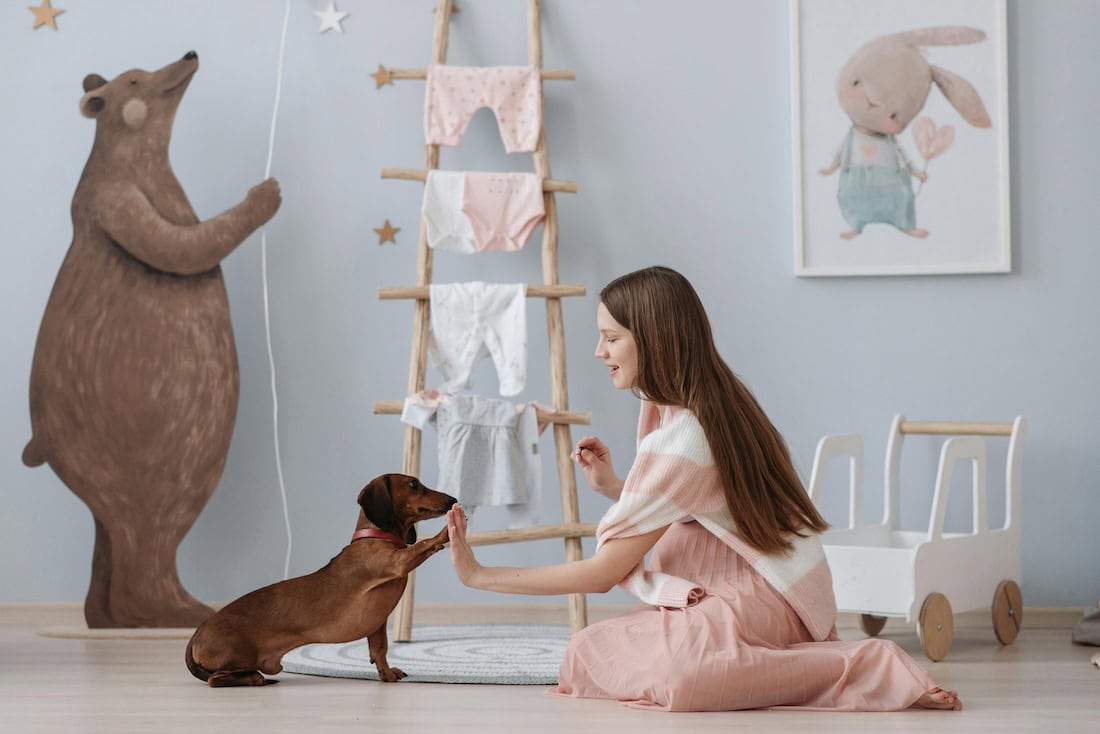
Dog tricks to teach puppy companions aren’t just about cuteness—they’re the foundation of communication, trust, and lifelong learning. Whether you’re raising a new puppy, tuning up your adult dog’s manners, or proving that old dogs really can learn new tricks, teaching your dog is one of the most rewarding parts of being a pet owner.
From essential commands like “sit” and “stay” to fun moves like “shake” and “play dead,” there are plenty of easy tricks to teach that spark your dog’s brain and bring out their playful side. With the right approach, even basic training becomes something dogs look forward to—because it’s not just about obedience, it’s about bonding. Whether your pup is brand new or your dog’s been around the block, there’s always room to add a new trick to the mix.

Puppy Training 101 – Teaching Your Puppy the Basics
Before jumping into flashy moves and fun dog tricks, the real magic starts with the basics. Think of early puppy training as laying the foundation for every behavior your dog will build on. It’s not about perfection—it’s about consistency, patience, and teaching your puppy how to tune in to you. The commands may seem simple, but they shape everything from safety to social skills.
Why Start With Basic Dog Commands Like Dog to Sit, Dog to Stay, and Dog to Come
These three commands—sit, stay, and come—might sound old-school, but they’re essential. They aren’t just about good manners; they’re lifesavers in real-world situations. A dog that can sit calmly on cue, stay put in distracting environments, or come back when called is a dog that’s ready to learn more complex tricks and navigate everyday life with ease.
Here’s why these commands are your starting point:
- Dog to sit: Teaches focus and settles over-excitement; a must-have before meals, walks, or greetings.
- Dog to stay: Builds impulse control and reinforces patience—great for calming a high-energy puppy.
- Dog to come: Critical for recall; it keeps your dog safe, especially off-leash or in crowded areas.
Getting these right early on will make teaching your dog everything else—including more advanced tricks—a whole lot smoother.
Making Dog Training Kid-Friendly for Your New Puppy
When kids join in on puppy training, it becomes a team effort that benefits everyone. Young handlers learn responsibility, communication, and empathy, while the dog gets used to following commands from more than one person. Plus, training becomes a playful bonding experience rather than a chore.
To keep it successful and stress-free:
- Keep commands short and clear: Kids can handle one-word cues like “sit” or “stay.”
- Use treats and praise: It’s rewarding for dogs—and motivating for kids.
- Supervise sessions: Ensure safety and help redirect both puppy and child if things get off track.
The earlier kids help teach your puppy, the faster everyone in the household becomes part of the learning process.


First Fun Tricks – Easy Tricks to Teach and Teaching Your Dog Tricks

Once the basics are down, it’s time for some fun. Teaching your dog tricks keeps their mind active and strengthens the bond between you. These aren’t just party tricks—they’re confidence boosters for your pup and proof that learning can be a game. And for an easy dog or a new learner, starting with simple tricks builds momentum fast.
Simple Dog Tricks to Teach a Dog That Stick, Like Dog to Lie and Dog to Sit – Perfect for an Easy Dog
These are the classics for a reason. Simple commands like having your dog to sit and dog to lie down give your dog clear cues in day-to-day life. They’re some of the easiest tricks to teach and form the base for more complex behaviors later.
Start here for easy to teach tricks like:
- Dog to sit: One of the easiest tricks, great for teaching focus and obedience.
- Dog to lie: Helps your dog settle and stay calm—ideal during meals or downtime.
- Teach your dog to spin: A playful and simple trick that keeps your dog moving and engaged—just use a treat to guide them in a circle.
- Use treats and a verbal cue: Say the command, lure your dog into position, and reward your dog right away.
Mastering these moves helps your dog understand more playful commands.
Teach Your Dog to Shake Hands, Paw, and Dog to Play Dead – A Classic Easy Dog Trick
Now for the crowd-pleasers. Teaching your dog to shake a paw or play dead is as entertaining as it is rewarding. These fun dog tricks are easy to teach with a little consistency and a lot of positive reinforcement.


Try these easy favorites:
- Dog to shake hands: One of the most iconic tricks—start with your dog sitting, then gently lift a paw and pair it with a cue like “shake.”
- Dog to play dead: A bit of theater that starts with the “down” position and ends with a very convincing flop on their side.
- Keep it short and upbeat: Short training sessions with plenty of praise keep your dog engaged.
Whether you’re teaching your dog to shake or roll, these fun commands are perfect for building trust and showing off your dog’s charm.
Level Up – From Basic Dog Tricks to Advanced Commands Your Dog Can Learn
Once the easy stuff becomes second nature, it’s time to level up. Advanced commands don’t just look impressive—they push your dog’s mental boundaries and keep boredom at bay. Dog owners looking for new tricks to teach will find that challenging behaviors create more confident, focused pups who love to learn.
When to Add More Challenging Tricks to Teach Your Dog and Train Your Dog
The best time to introduce more complex tricks is right after your dog learns the basics consistently. If your dog follows simple commands like “sit,” “stay,” and “come” without hesitation, it’s a sign they’re ready for the next step.
Look for these signs before moving forward:
- Your dog follows commands even with distractions
- You only need to hold a treat briefly before they perform the action
- Your dog will be able to combine steps—like sitting, staying, and then shaking

When these basics are solid, you’re ready to introduce multi-step routines or verbal cues that challenge your dog’s memory and patience.
Advanced Tricks That Keep Your Dog Engaged and Stimulated
Need something a little flashier than “shake”? Next-level tricks is a great way for dogs who crave more mental stimulation. Whether you want your dog to perform for fun or just stay sharp, mixing in complex commands can take your routine to new heights.
Try these:
- Dog bark on command: Use a trigger word and hold a treat until they vocalize—then reward fast.
- Dog to bark in response to specific cues or situations can also help with alert training—just make sure it’s under control.
- Dog to spin or twirl: Lure your dog in a circle with a treat, then add a verbal cue once they get the movement.
- Back up or walk backward: A great trick for body awareness and spatial control.
With patience, practice, and the right motivation, your dog will be able to learn more than you might expect—even tricks that surprise seasoned dog owners.


Paws, Praise, and Play – Making Dog Trick Training a Daily Habit
The secret sauce to successful trick training? Make it part of everyday life. When training feels like play, your dog learns faster—and stays more engaged. Instead of long, serious sessions, weave commands and tricks into daily moments, from walks to mealtime routines. The more naturally these moments fit into your day, the more your dog learns without even realizing it.
Have Your Dog to Play – Turn Training into Playtime
The best way to teach your dog consistently is to turn lessons into games. Dogs thrive on positive energy, and nothing fuels them like movement and play. If you ask your dog to perform a trick while tossing a toy or running a mini obstacle course, they’ll stay excited and eager to participate.
Here are a few playful ideas to mix in training:
- Practice dog standing tricks like “spin” or “high five” during fetch breaks
- Use hide-and-seek games to reinforce the “come” command
- Add in short “sit” or “down” cues while on a walk to keep focus sharp
Keeping it playful isn’t just funny—it’s smart. A happy dog learns faster, and playful learning sticks longer.
Keep Your Dog Curious and Motivated to Learn New Tricks
Repetition can lead to boredom, even for eager learners. That’s why variety and curiosity are key to long-term dog training success. Every few days, ask your dog to try something slightly new—an added spin, a longer stay, or a trick in a new environment.
Make sure you’re doing the following:
- Rotate training sessions to avoid repetition burnout
- Use high-value treats only for new or harder tricks
- Make sure your dog ends each session on a high note

The more curious and engaged your dog is, the more they’ll look forward to every chance to learn. With that mindset, learn how to teach doesn’t feel like work—for either of you.


Old Dogs, New Tricks – Yes, You Can Teach an Old Dog New Tricks
The saying “you can’t teach an old dog new tricks” is a lie that’s stuck around for far too long. Senior pups may move a little slower, but their brains are still sharp—and in some ways, even more focused than a distracted puppy’s. If you’re patient and keep it light, teaching your dog new tricks later in life is not just possible—it’s incredibly rewarding.
Don’t Count Out the Senior Dogs – You Can Still Teach a Dog
Older dogs often already know the basics, which gives you a head start. You just need to adapt your pace and expectations to suit their comfort level. When you start with your dog, respect their physical limits, and mix in plenty of praise, you’ll find that training becomes a new way to connect.
Try these tricks you can teach older dogs:
- Dog to shake paw: Easy on the joints, simple to learn, and heart-meltingly cute.
- Front of your dog stays focused: Use visual cues and clear gestures for dogs who may have weaker hearing.
- Slow-motion spin or roll: Keep movements gentle, and skip anything that feels like too much effort.
The goal isn’t perfection—it’s engagement, connection, and showing that bond with your dog never stops evolving
Tips for Kid-Led Training with Older Dogs – How to Get Your Dog Involved Gently
Getting kids involved with training a senior dog isn’t just safe—it can be deeply meaningful. Kids learn patience and empathy, while the dog enjoys social attention and low-impact mental stimulation. Dog trainers often recommend starting with tricks the dog knows and slowly introducing new ones to build trust.
Here’s how to make it work:
- Use calm voices and gentle touches
- Focus on short sessions, 5–10 minutes max
- Reinforce old cues before you teach your dog new ones
Even a few minutes of interaction can brighten an older dog’s day and deepen the relationship between your child and their furry friend. With care and encouragement, older dogs keep learning—and loving it.


The Joy of Connection – Why Teaching Your Dog Tricks Strengthens the Bond
Teaching tricks goes far beyond obedience—it’s a shared language, a playful back-and-forth that deepens your connection. Whether you’re laughing as your dog barks on cue or feeling proud when your pup finally nails that dog to roll move, you’re not just building skills. You’re building trust, together.
More Than Just Tricks – How to Get Your Dog Emotionally Connected
What makes trick training so powerful is the emotional layer. When your dog starts associating learning with fun, affection, and praise, training becomes a relationship builder. It’s not about performing on command; it’s about showing up for each other.
Here’s how to encourage your dog emotionally through training:
- Use praise more than correction: A cheerful “yes!” or happy tone goes a long way.
- Make sessions light and funny: Laugh when they mess up. It’s about play, not pressure.
- End on a high note: Always finish with a win and a dog treat—big or small.
When training becomes a feel-good ritual, you’ll see it in the way your dog looks at you: with trust, focus, and the joy of doing something together.


Building a Lifelong Habit of Trust and Fun with Trick to Teach Your Dog
The real reward of teaching your dog tricks isn’t in the performance—it’s in the process. Every moment you spend giving cues, waiting for a tail wag, or seeing your dog in a standing position ready to try again, you’re reinforcing a relationship built on patience, consistency, and love.
It’s not about having a dog who can do the most tricks. It’s about having a dog who’s excited to learn from you—and who trusts you enough to keep trying. That connection, built over time and powered by simple moments, is the biggest win of all.
FAQ’s
What are some easy tricks to teach my puppy?
Some easy tricks to teach your puppy include ‘sit’, ‘stay’, ‘come’, and ‘shake hands’. These basic commands serve as a foundation for more advanced dog training and help establish good behavior.
How can I teach my dog to shake hands?
To teach your dog to shake hands, start by having your puppy sit. Then, hold a dog treat in your hand, and encourage your dog to lift their paw. When they do, gently take their paw and say “shake.” Reward them with the treat and praise when they respond correctly.
What is the best way to train my dog to come when called?
To train your dog to come when called, use a leash in a safe area. Call your dog’s name followed by the command “come.” Reward them with a dog treat when they reach you. Consistency and positive reinforcement are key to successful puppy training.
Can I teach my puppy to spin?
Yes, you can teach your puppy to spin by using a dog treat as a lure. Hold the treat close to their nose and move it in a circular motion. Encourage them to follow the treat with their body, and once they complete the spin, reward them with the treat.
What are some fun tricks to teach my dog?
Fun tricks to teach your dog include rolling over, playing dead, and retrieving objects. These tricks not only entertain but also strengthen the bond between you and your dog. Remember to use positive reinforcement throughout the process.
How do I teach my dog to lie down?
To teach your dog to lie down, start with your dog in a sitting position. Hold a treat in your hand and lower it to the ground while saying “down.” As your dog follows the treat and lies down, reward them with praise and the treat.
What is the importance of teaching your dog basic commands?
Teaching your dog basic commands is crucial for good behavior and safety. Commands like ‘sit’, ‘stay’, and ‘come’ help you manage your dog in various situations. They also enhance communication between you and your dog, making training more effective.
Can old dogs learn new tricks?
Yes, old dogs can learn new tricks! The saying “you can’t teach an old dog new tricks” is a myth. With patience and the right approach, you can teach an old dog new commands and tricks, enriching their life and keeping their mind sharp.
You might also be interested in…
Learn about therapy dogs and how they provide comfort. Click here.
CONNECT WITH DAILY MOM
💖 NEWSLETTER: DAILY READS IN YOUR INBOX 💖
Sign up to receive our picks for the best things to do, see and buy so you can relax and focus on more important tasks! Let us help you be the best version of yourself you can be!
BE SOCIAL WITH US
📌 LOVE IT? PIN IT!📌


