


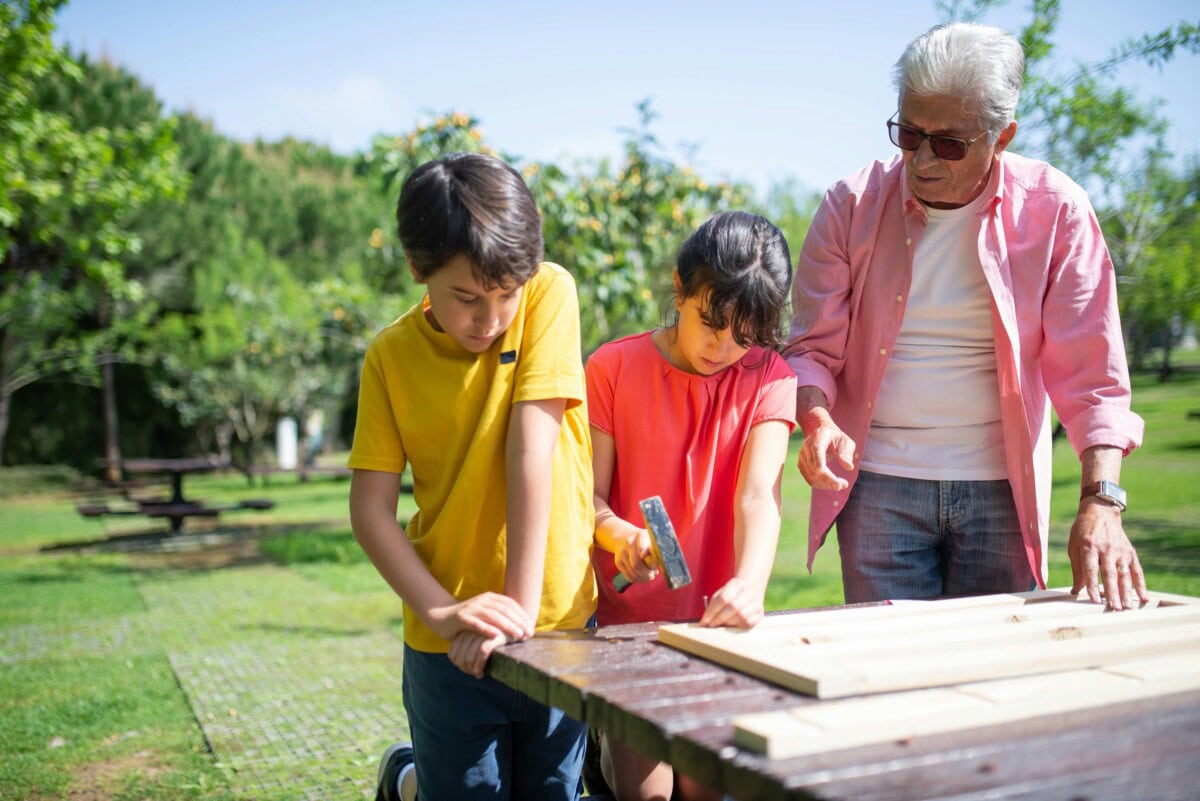
Are you looking for ways to engage your children in hands-on activities that build real-world skills? Woodworking projects for kids offer the perfect blend of creativity, learning, and fun. This guide explores beginner wood crafts that children ages 5-12 can tackle with a little adult supervision. Whether you’re an experienced woodworker wanting to share your passion or a parent with minimal DIY experience, these simple projects will help introduce children to the rewarding world of working with wood.
Why Introduce Kids to Woodworking? It’s a Great Way to Build More Than Just Projects
Woodworking is one of the most valuable skills you can teach a child. Beyond creating something tangible, the woodworking process develops several important abilities:
- Fine motor skills development – Using basic tools requires coordination and precision
- Problem-solving practice – Each project presents challenges that need creative solutions
- Patience and perseverance – Wood projects take time and attention to detail
- Math application – Measurement, angles, and dimensions make math concepts concrete
- Pride in craftsmanship – Completing a wooden creation builds confidence
For children between 5-12 years old, the right beginner woodworking projects can ignite a lifelong passion for making things. From preschoolers to middle schoolers, kids love seeing a simple block of wood transform into something functional or decorative through their own efforts.
Since woodworking involves tools and wood that require careful handling, these projects also teach responsibility and safety awareness. You’ve got a perfect opportunity to bond with your child while passing down valuable life skills that extend far beyond the woodshop.
What Woodworking Tools Do Kids Need to Get Started Building Their First Projects?

Before diving into fun wood projects, gathering the right woodworking tools makes all the difference between frustration and success. When introducing children to woodworking, you’ll want to start with tools specifically designed for smaller hands while still being functional enough to complete real projects.
- Child-sized hammers (8-10 oz weight)
- Pull saws (safer than push saws for beginners)
- Sandpaper in various grits (80, 120, and 220)
- Wood glue designed for children’s projects
- Measuring tape with large, easy-to-read numbers
- Safety goggles sized for children’s faces
- Work gloves in youth sizes
Power tools should generally be avoided for children under 10, with proper supervision required for older kids. Instead, focus on quality hand tools that teach fundamental woodworking skills. Many beginner woodworking projects can be completed with just a few basic tools, making this an accessible hobby that doesn’t require a high investment to start.
Creating a dedicated workspace helps children take their woodworking seriously. A small workbench at an appropriate height gives kids the chance to feel like real woodworkers. An old coffee table or sturdy card table can work perfectly for younger children, while older kids might appreciate a section of your existing workbench adjusted to their height.
Safety always comes first in any woodshop. Teach proper tool handling from day one, making it clear which tools are off-limits without direct supervision. Common tools like hammers still require instruction on proper grip and technique. A simple project often becomes a perfect teaching moment for these fundamental skills.
It’s a great idea to create a visual chart showing where each tool belongs when not in use. This organization system teaches responsibility and keeps dangerous items properly stored. Some families find that a special toolbox just for the child’s own woodworking tools creates a sense of ownership and pride in caring for their equipment.
10 Easy Wood Projects for Kids: What Can They Actually Build Successfully?


Ready to make some sawdust together? Here are 10 great beginner woodworking projects that kids can tackle with varying levels of assistance. These projects balance simplicity with actual usefulness—because there’s nothing more satisfying than creating something that serves a real purpose.
The best wood projects for kids combine achievable challenges with quick results to maintain enthusiasm. Each of these projects can typically be completed in just a few hours to build confidence without testing patience too severely.
1. Wooden Name Plate
A personalized name plate for a bedroom door makes an excellent first project. Using a simple piece of wood, children can learn basic sanding techniques, painting or staining, and how to attach hanging hardware.
2. Simple Birdhouse
Birdhouses teach measurement and assembly skills while connecting kids with nature. The straight cuts and basic structure of a birdhouse make it a classic beginner woodworking project that delivers big satisfaction, especially when birds actually move in!
3. Small Storage Box
Creating a storage box teaches children about building structural items. With just five pieces of wood (bottom, four sides), kids can make a simple container for their treasures or craft supplies. This project introduces the concept of joining corners properly—a fundamental woodworking skill.
4. Wooden Picture Frame
Picture frames offer a perfect opportunity to learn how to make precise 45-degree angle cuts. Children take pride in framing their own artwork or family photos in something they’ve built themselves.
5. Build a Wooden Serving Tray
A serving tray combines several skills: cutting straight lines, attaching handles, and finishing wood for food-adjacent use. Plus, the whole family benefits when breakfast in bed arrives on a tray the child made themselves!
6. Step Stool
Kids can use their own creation to reach things independently—a huge motivator! A simple step stool introduces concepts of structural stability and weight-bearing design. For younger children, pre-cut wood pieces can be assembled with guidance.
7. Beginner Craft Stick Projects
For the youngest woodworkers (ages 5-7), popsicle stick projects provide an introduction to design and wood glue techniques without the challenge of actual cutting. These mini wood projects build confidence before moving to bigger materials.
8. Wooden Toy Car
Using wood scraps and dowels for wheels, toy cars offer endless customization possibilities. This project teaches not just building skills but engineering concepts like axle movement and balance.
9. Desk Organizer

A practical project for school-aged children, desk organizers can be as simple or complex as appropriate. Start with something basic—a pencil holder made from a block of wood with drilled holes—and expand from there.
10. Make a Simple Coaster Set
Coasters introduce finishing techniques like sealing and waterproofing. They’re quick to make, highly useful, and make great gifts for loved ones. Even young children can sand and decorate pre-cut wooden squares.
When choosing projects, consider matching the complexity to your child’s age and attention span. Pre-cutting some components for younger children (5-8) allows them to focus on assembly and decoration, while older kids (9-12) can take on more complex measuring and cutting tasks as their skills develop.
How to Build a Simple Wooden Serving Tray: A Perfect Spotlight Project for Young Woodworkers

Among all the beginner woodworking projects mentioned, the serving tray deserves special attention. It’s a great beginner woodworking project that combines multiple skills while creating something genuinely useful for the entire family. Whether you’re helping a 7-year-old or guiding a 12-year-old, this project can be adapted to various skill levels.
Materials Needed:
- 1/2″ thick wood board (approximately 12″ x 18″) for the base
- Two 1″ x 2″ pieces (about 14″ long) for the side handles
- Wood glue
- Small screws or nails
- Sandpaper (various grits)
- Wood finish (food-safe if the tray will hold food)
- Optional decorative elements (stencils, non-toxic paint)
Learn how to build this serving tray in a weekend with just a few hours of active work time. The process teaches several fundamental woodworking skills that transfer to more advanced projects later.
Start by cutting the base board to your desired size—this is where adult assistance might be needed for younger children. For a first-timer, pre-cut pieces from a home improvement store make this project even more accessible. Once the main board is ready, round the corners slightly with sandpaper to avoid sharp edges.
The magic of this project lies in its customization possibilities. Children can personalize their tray with:
- Painted designs or patterns
- Wood burning (with supervision for older kids)
- Decoupage images
- Stenciled names or mottos
- Natural wood finish with different stain colors
Attaching the handles teaches proper measuring, marking, and securing techniques. Position the two longer pieces along opposite sides of the tray base. Mark where screws or nails will go, being careful to space them evenly. This step introduces the importance of pre-drilling holes to prevent wood splitting—a crucial lesson in working with wood.
What makes this project particularly valuable is how it builds transferable beginner skills while resulting in something immediately usable. Children experience tremendous pride serving breakfast to parents or using their creation during family game night. The practical application reinforces the value of craftsmanship in a way that purely decorative projects sometimes miss.
For an added challenge, older children might add dividers to create sections within the tray, or experiment with different wood types for a more sophisticated look. A DIY wooden serving tray also makes an excellent gift, teaching children the joy of creating handmade presents rather than simply purchasing items.
What Types of Wood Work Best for Kids’ Woodworking Projects?


Selecting the right wood for beginner woodworking projects can make or break the experience. Not all wood is created equal, especially when small hands and developing skills are involved. The ideal wood for children’s projects balances workability, safety, and cost.
Pine stands as the champion wood for most beginner projects, offering the perfect combination of softness and stability. This affordable option forgives mistakes and doesn’t require specialized tools to work with effectively. Pine takes stain and paint beautifully, making it versatile for various project finishes.
Here’s a breakdown of kid-friendly wood options:
- Pine – Soft, inexpensive, widely available at any home center
- Poplar – Slightly harder than pine, minimal splintering, takes paint well
- Cedar – Naturally resistant to rot, great for outdoor projects like birdhouses
- Basswood – Extremely soft and easy to carve, perfect for detail work
- Plywood (⅜” or ½”) – Economical for larger projects, comes in manageable sheet sizes
Avoid hardwoods like oak or maple for beginners—they’re simply too challenging for developing woodworkers to saw, drill, and sand effectively. Remember that the goal is building confidence alongside projects!
Where can you find affordable materials? Look beyond traditional lumber yards:
- Home improvement stores often sell “project boards” in small, manageable sizes
- Ask local cabinet shops for wood scraps they might otherwise discard
- Check online marketplaces for people giving away leftover wood from their projects
- Some craft stores carry small basswood pieces perfect for beginner projects
Teaching children to identify different wood types becomes its own valuable lesson in natural materials. Show them how to look at grain patterns, color variations, and relative weight. This knowledge connects woodworking to the natural world and helps children understand how trees become usable lumber—a concept that often fascinates young minds.
Don’t overlook the value of reclaimed wood for projects. That old fence board or discarded wooden crate might contain character and history that makes a simple project more interesting. Just be sure to remove all nails and thoroughly sand rough edges before letting children work with reclaimed materials.
For the youngest woodworkers, pre-cut wood kits available from craft stores provide a middle ground between full woodworking and simple assembly. These kits offer instant gratification while still teaching basic skills like sanding, gluing, and finishing.
What Important Things Should You Consider When Woodworking with Kids?

Introducing children to woodworking requires more than just gathering tools and wood. The experience needs thoughtful planning to ensure it’s both enjoyable and educational. Whether you’re working with active preschoolers or detail-oriented 12-year-olds, tailoring the approach to each child’s development stage makes all the difference.
Age-appropriate project selection is absolutely crucial for success. Nothing extinguishes enthusiasm faster than a project that’s either too simple or frustratingly complex. Here’s a general guide for different age groups:
Ages 5-7
- Focus on pre-cut components that require assembly
- Emphasize decoration, sanding, and basic joining
- Keep projects completable within 30-45 minutes
- Simple wood projects like paint stick frames or small boxes
- Always provide direct, hands-on supervision
Ages 8-10
- Introduce measuring and marking
- Allow supervised use of hand saws with proper technique
- Extend project time to 1-2 hours, possibly spread across multiple sessions
- Projects like birdhouses, step stools, or simple wooden toys
- Begin teaching proper tool maintenance
Ages 10-12
- Introduce more complex joinery techniques
- Supervised introduction to simple power tools (like a drill)
- Multi-day projects with distinct phases
- Storage boxes with fitted lids or diy wooden games
- Begin teaching design modification skills
Patience might be the most valuable tool in your woodworking arsenal when working with kids. What seems obvious to an experienced woodworker may require multiple demonstrations for a beginner. Remember that woodworking is a great way to teach persistence through challenges—the occasional frustration is actually part of the learning process.
Setting realistic expectations benefits everyone involved. A child’s first birdhouse might have slightly uneven edges or visible glue seams—and that’s perfectly fine! The objective isn’t professional-quality woodwork but rather developing skills and confidence. Many adult woodworkers look back fondly at their imperfect first projects as meaningful stepping stones.
Knowing when to help versus when to step back requires careful judgment. As a general rule:
- Demonstrate techniques first, then guide hands for especially young children
- For older beginners, stay nearby to offer verbal guidance without taking over
- Always handle truly dangerous operations yourself
- Let minor mistakes happen—they often provide the best learning opportunities
- Jump in before frustration reaches the point of discouragement
If you’ve got a particularly independent child, create “checkpoints” during the project where they show you their progress before moving to the next step. This balances autonomy with necessary oversight.
When fall weather keeps outdoor activities limited, woodworking offers a productive indoor alternative that teaches valuable skills. Many families find that woodworking becomes a seasonal tradition during cooler months, resulting in handmade gifts for loved ones during the holidays.
How Can Kids Build Beginner Wood Crafts Skills Progressively?

Every master woodworker started as a beginner. Developing woodworking skills happens through a natural progression that builds confidence while gradually introducing more complex techniques. When children start with something simple and gradually take on more complex projects, they develop not just technical abilities but also the patience and problem-solving mindset that characterizes great craftspeople.
The journey from absolute beginner to competent young woodworker follows a predictable path that works best when not rushed. Here’s how to structure that progression:
Starting with Pre-Cut Wood Pieces
For the youngest woodworkers or those unsure where to start, pre-cut components offer an ideal entry point:
- Focus on assembly techniques rather than cutting
- Learn proper gluing procedures with wood glue
- Understand how pieces fit together structurally
- Develop finishing skills through sanding and decorating
- Build confidence through quick project completion
A simple project like assembling a small storage box from pre-cut pieces gives immediate satisfaction while teaching fundamental concepts. Children experience the joy of creation without the potential frustration of precise cutting. Many craft stores offer basic woodworking kits that provide these pre-cut pieces with child-friendly instructions.
Moving to Measuring and Marking
Once comfortable with assembly, the next natural step introduces precision:
- Learn to read and use measuring tools accurately
- Understand the importance of marking clearly
- Practice drawing straight lines using squares and straight edges
- Comprehend how measurement errors compound throughout a project
- Begin planning cuts to maximize material usage
This stage often corresponds with projects like picture frames or serving trays where straight, accurate cuts make a visible difference in the final product. It’s a great place to introduce the woodworker’s mantra: “measure twice, cut once.”
Advancing to Simple Joinery Techniques
As confidence grows, joining wood in more sophisticated ways becomes possible:
- Start with simple butt joints reinforced with nails or screws
- Progress to more refined joints like dado or rabbet joints
- Learn how to use wood dowels for alignment and strength
- Understand when to choose different joinery methods
- Practice making tight-fitting connections without gaps
Building a wooden step stool represents an ideal project at this stage since it requires sturdy joints that will bear actual weight. The functional testing—can it support a person?—provides immediate feedback on joint quality.
Making Simple Projects More Complex
The final progression stage involves adding design elements and personal touches:
- Incorporate decorative edges using sandpaper or simple tools
- Add compartments or divisions to basic boxes
- Experiment with different finishing techniques
- Combine multiple wood types for visual interest
- Begin drafting simple plans rather than following existing ones
A desk organizer that started as a simple box might evolve into a multi-compartment system with pencil holders, paper slots, and custom dividers. This progression gives kids the chance to revisit earlier projects with enhanced skills and improved designs.
Since woodworking builds upon itself so naturally, maintaining a “project journal” helps children see their own growth. Taking photos of each completed project creates a visual timeline of developing skills that proves tremendously motivating when tackling more challenging builds.
Why Do These Woodworking Projects Matter Beyond Just Making Stuff?

When kids complete their first successful woodworking projects, something magical happens that goes far beyond creating a physical object. That wobbly birdhouse or slightly uneven step stool represents much more than a simple craft activity—it marks the beginning of a potential lifelong relationship with making and building.
Woodworking is one of the few activities that produces tangible results children can point to with pride and say, “I made that.” In today’s digital world, where so much of what children create exists only on screens, the permanence and physicality of wooden creations offer a uniquely satisfying counterbalance. That simple wood project sitting on the shelf provides concrete evidence of capability and growth.
These woodworking experiences build several invaluable life skills:
- Confidence in problem-solving – When something doesn’t fit, children learn to troubleshoot
- Delayed gratification – Unlike instant digital rewards, woodworking requires patience
- Risk assessment – Learning which tools require caution teaches practical safety judgment
- Spatial reasoning – Visualizing how parts will fit together exercises important brain pathways
- Resource management – Planning how to use materials efficiently teaches sustainability
- Resilience – When mistakes happen, children learn to adapt and continue
Small wood projects provide the foundation upon which more advanced skills are built. Just as a house needs a solid foundation, woodworking knowledge accumulates progressively. The child who starts by sanding pre-cut pieces at age 5 has built the baseline confidence to try using a handsaw at 8, and perhaps tackle basic power tools under supervision by 12.
Great woodworking experiences in childhood often translate to practical household skills in adulthood. The comfort level with basic tools and wood means these children grow into adults who aren’t intimidated by home repairs or DIY projects. Whether you’re looking to foster independence or simply provide useful life skills, woodworking delivers remarkable value.
The parent-child relationship often deepens through shared woodworking activities. Working side-by-side on a diy woodworking project creates natural opportunities for conversation, instruction, and connection. Many woodworkers report that some of their most treasured childhood memories involve building something alongside a parent or grandparent—experiences they later recreate with their own children.
For some children, these early exposures to woodworking might even spark career interests in fields like construction, engineering, architecture, or professional woodworking. Even if they don’t pursue related careers, the appreciation for craftsmanship and quality workmanship often persists throughout life.
Perhaps most importantly, beginner woodworking projects teach children that creating is often more satisfying than consuming. In a world where kids can use a one-click shopping app, the experience of transforming raw materials into something useful through their own effort provides a powerful counter narrative to instant gratification culture.
FAQs
What are some easy to build projects for beginners in woodworking?
Some great project ideas for beginners include simple birdhouses, picture frames, and small wooden toys. These projects are fun and can be completed with minimal tools, making them perfect for kids.
Where can I find free woodworking plans for children’s projects?
You can find free woodworking project plans on various websites dedicated to DIY crafts. These websites often provide detailed instructions and materials lists to help you get started on cool projects for beginners.
What materials do I need to start woodworking projects for beginners?
For easy woodworking projects, you will typically need basic materials such as wood boards, screws, nails, sandpaper, and wood glue. These materials are readily available at most hardware stores.
How can I learn how to build simple woodworking projects with my kids?
You can learn how to build simple woodworking projects by watching instructional videos, reading woodworking books, or following online tutorials. Many resources are available that cater specifically to beginners and children’s projects.
Are there any good ideas for woodworking projects that kids can do themselves?
Yes! Some good ideas for children’s woodworking projects include assembling simple bird feeders, making wooden coasters, or crafting small storage boxes. These projects are not only fun but also promote creativity and problem-solving skills.
Can I unsubscribe from woodworking project newsletters at any time?
Yes, most woodworking websites allow you to unsubscribe at any time if you no longer wish to receive updates on new project ideas and plans.
What is a good beginner woodworking project that I can complete in a weekend?
A great project for beginners that can be completed in a weekend is building a simple picnic table. This project is not only practical but also provides a fun outdoor space for kids to enjoy.
How do I choose the right tools for easy woodworking projects?
Not sure where to start when selecting tools for easy woodworking projects, start with basic hand tools like a hammer, saw, and screwdriver. As you gain experience, you can gradually add more advanced tools to your collection based on your project needs.
Are there any top woodworking projects that are particularly popular among beginners?
Yes, top woodworking projects for beginners often include items like wooden toys, small furniture pieces, and home décor crafts. These projects are popular due to their simplicity and the satisfaction of creating functional items.
You might also be interested in…
Need more easy craft ideas for your next rainy day? Check out this link for simple 5-minute crafts that will delight parents and kids!
CONNECT WITH DAILY MOM
💖 NEWSLETTER: DAILY READS IN YOUR INBOX 💖
Sign up to receive our picks for the best things to do, see and buy so you can relax and focus on more important tasks! Let us help you be the best version of yourself you can be!
BE SOCIAL WITH US
📌 LOVE IT? PIN IT!📌


