






























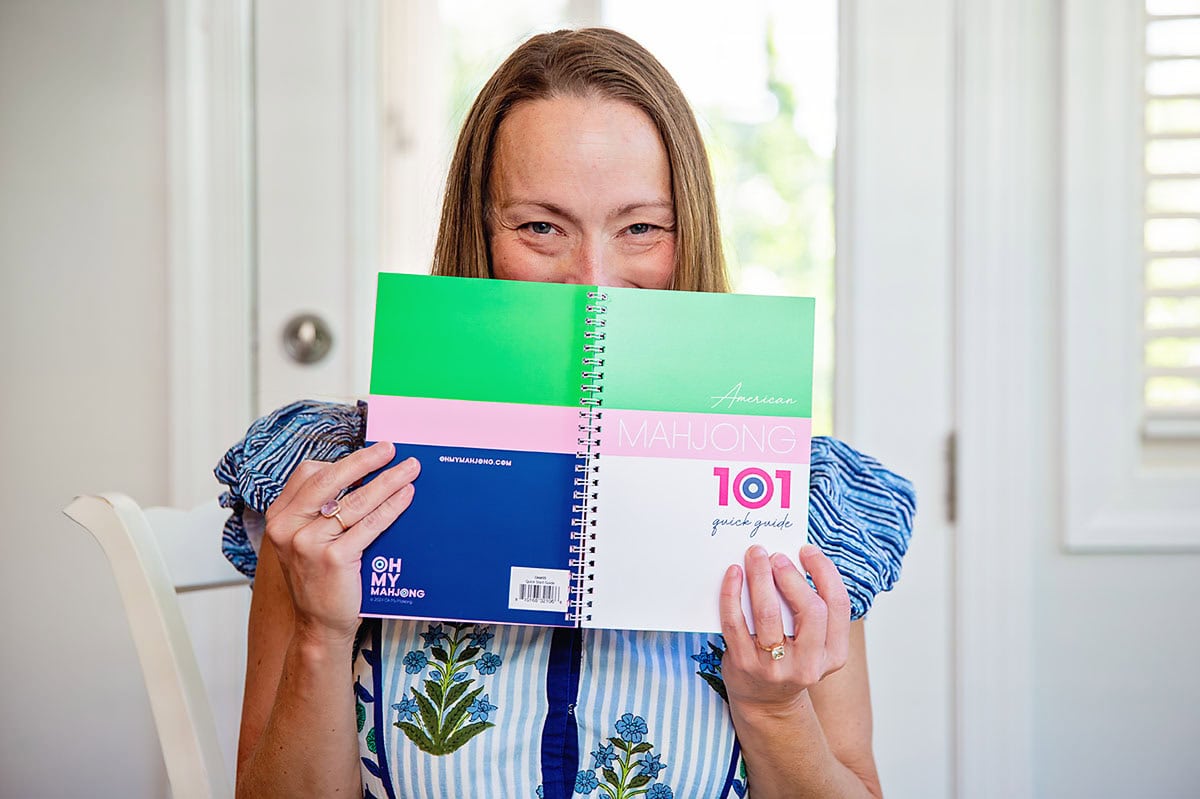
Maybe you’ve noticed it on Instagram. Maybe a friend recently invited you to an American Mahjong night. Or maybe you’ve spotted one of the beautiful, colorful sets popping up everywhere and thought, Wait…since when did Mahjong become so chic?
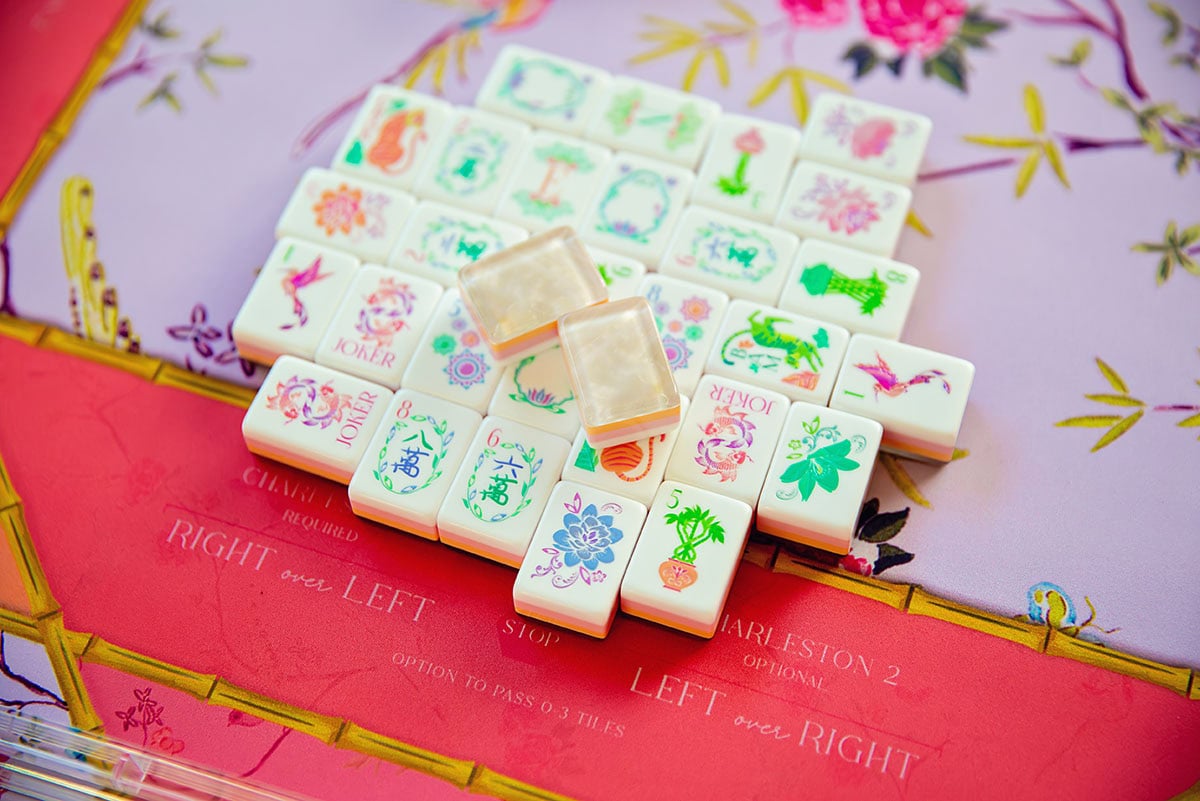
Mahjong has been around for generations, but lately, the game seems to be having a moment. Women are gathering around Mahjong tables with friends, learning to play, hosting regular game nights and discovering that there is something pretty special about sitting around a table with four people and nowhere else you need to be.
And honestly, we’re here for it!
Why We’re Gathering Around the Table Again
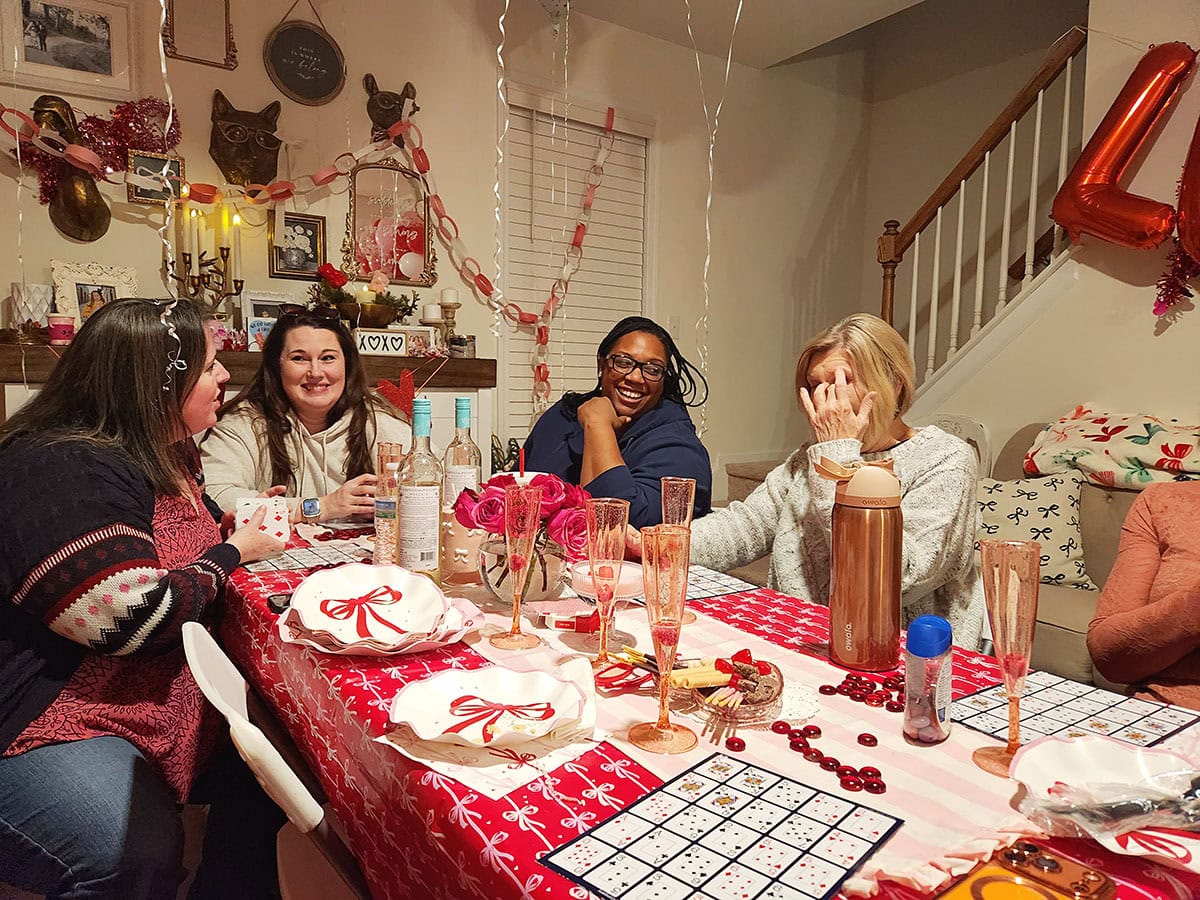
For years, our friend group has had our own version of girls’ night. We’ve been playing “Keno,” a game that’s a little like “Bingo,” but played with playing cards, and the game itself is really only part of the fun. Someone hosts dinner, everyone brings a $15 gift (to offer a selection of prizes for winning a round), we eat, play a round, eat dessert, and play again. During the second round, you can steal prizes from someone else, which naturally makes things even more competitive; but mostly, we laugh…a lot! The kind of laughing that makes your face hurt and leaves you wondering why you don’t do this more often.
However, over time, our group has started getting smaller. This summer, American Mahjong started popping up in conversations. One of the women in our group has an aunt who offered to teach us how to play, and when I heard about it, my immediate response was basically, “Heck yeah, I’m in!”
Our first Mahjong night felt familiar in all the best ways. There was dinner. There were friends. There was plenty of laughing. But instead of cards and prizes, there were racks, and tiles, and dots, and cracks, and a Mahjong card, and a whole lot of us trying to figure out what we were doing.
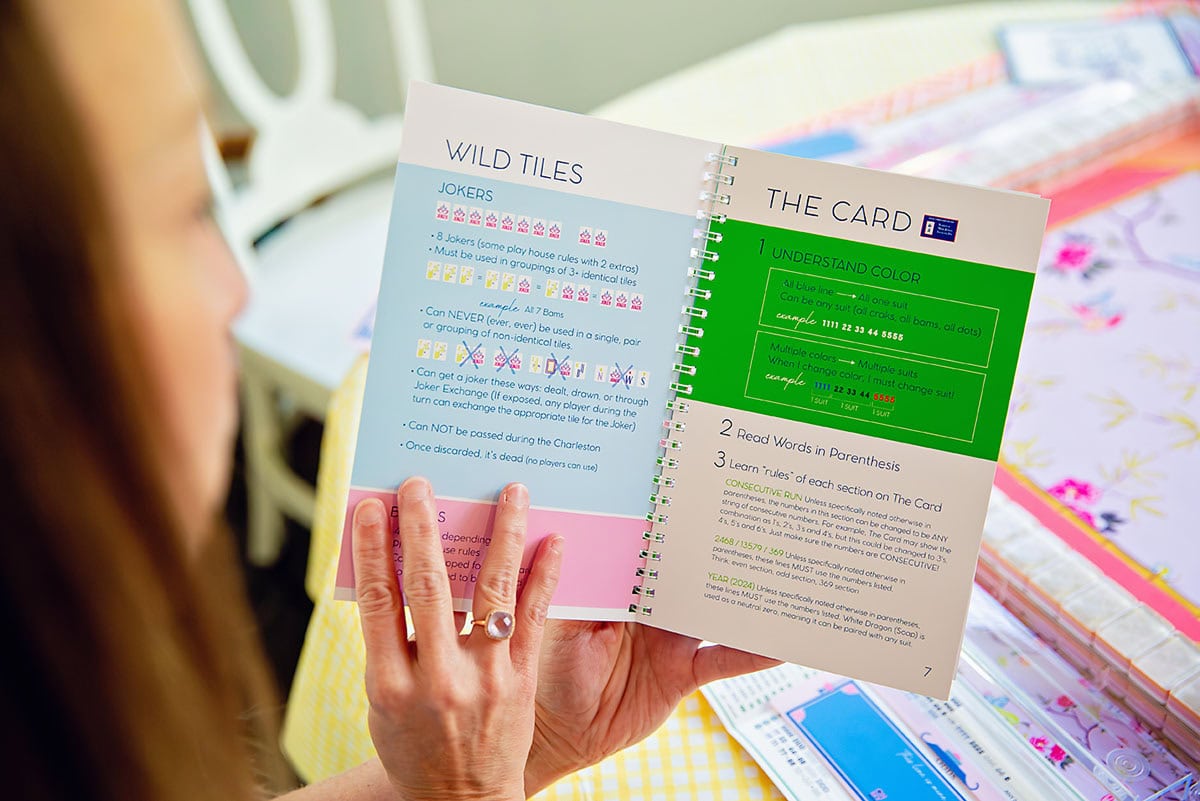
It made me think about what we’re actually looking for when we plan a night with friends. We’re not necessarily looking for one more thing to add to our already-packed calendars (our kids have us covered there). We’re looking for a reason to put everything else down for a few hours.
Because let’s be honest, we spend a lot of time using our brains. We work. We raise kids. We manage schedules, appointments, school emails, sports practices, meals and approximately 7,000 other things that somehow need to happen before bedtime. Sometimes we’re solving our kids’ math homework while simultaneously trying to remember whether someone has clean baseball pants for tomorrow’s game and shopping for a homecoming dress.
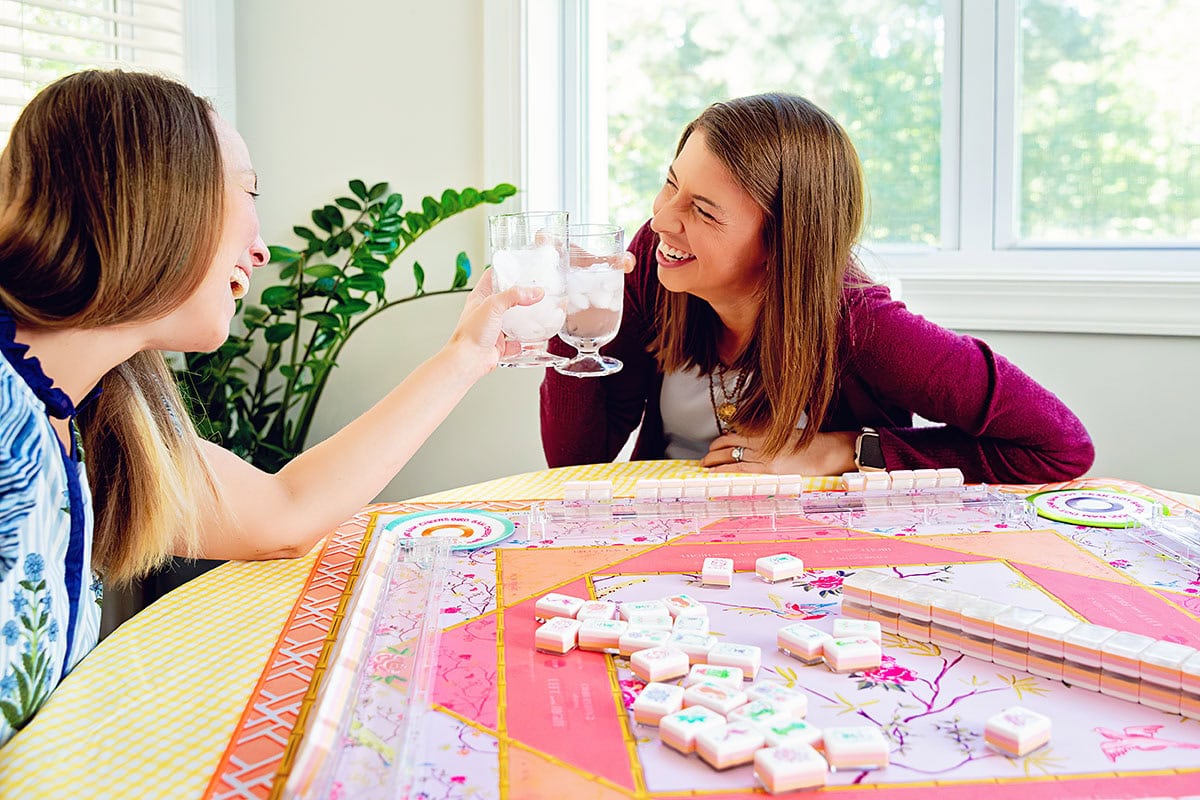
There is something wonderfully different about choosing to challenge your brain for fun. That’s one of the things that makes American Mahjong so appealing. It’s a game, but it’s also a reason to gather. You have something to learn, something to figure out and something to talk about while you’re doing it. You can be terrible at it together. You can get better together. And eventually, you can become the person teaching someone else.

That feels less like adding another responsibility to your life and more like reclaiming a little piece of your time. As it turns out, women have been doing something very similar with Mahjong for generations.
A Brief History of Mahjong
Before we get into the pretty tablescapes and the perfect Mahjong night snacks, let’s talk about where this game actually came from.
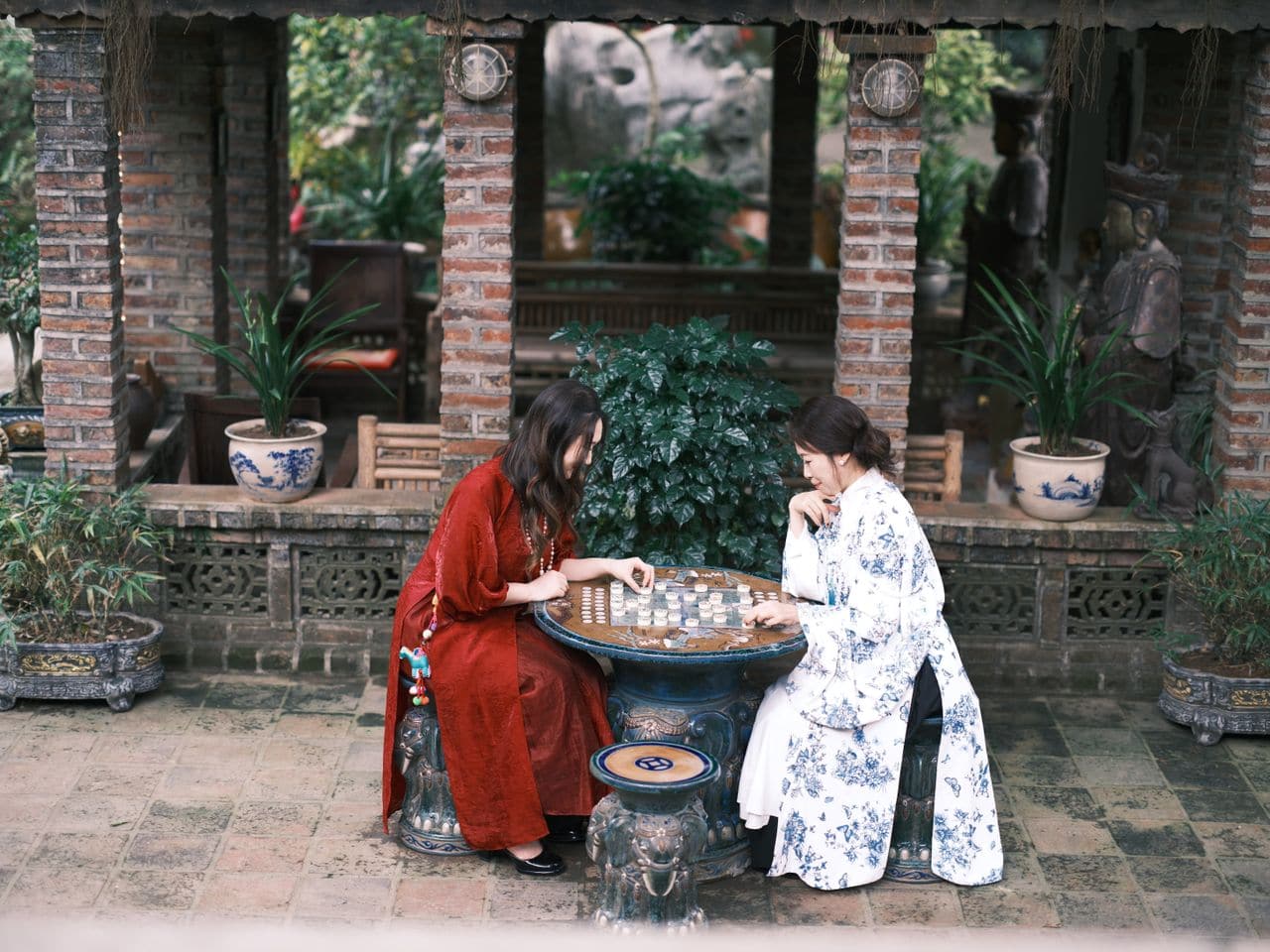
Mahjong originated in China, with recognizable versions of the game emerging in the 19th century. Its exact origins are still debated, but there is broad agreement that the game developed in China before spreading throughout Asia and eventually making its way to the United States.
Mahjong arrived in America in the early 20th century and quickly became a sensation. American businessman Joseph Park Babcock helped popularize the game in the United States in the 1920s, introducing a simplified version and importing sets from China. The game became a major social craze, particularly among women, before its initial popularity began to fade.
And this is where Mahjong’s American story gets especially interesting.
The Women Who Helped Create American Mahjong
As Mahjong spread throughout the United States, it began to take on a life of its own. American players adapted the game, and by the 1930s, different groups were playing with different rules and combinations.
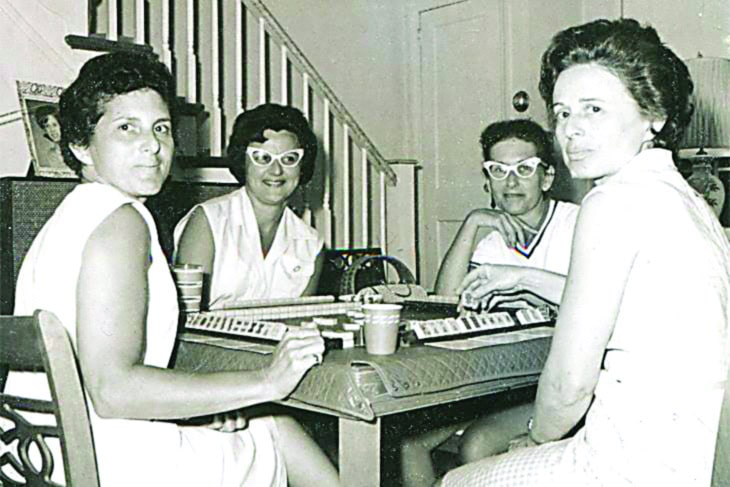
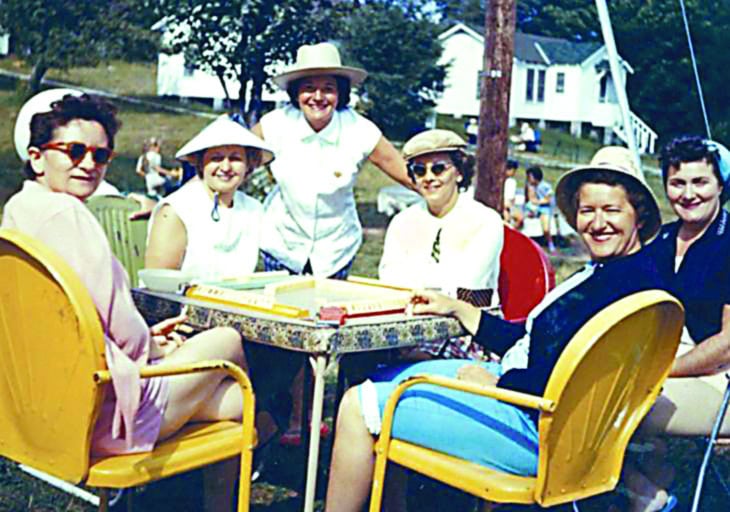
Jewish American women became particularly important to the game’s American evolution. Mahjong found a natural home in Jewish women’s social circles, where regular games became a way to gather with friends, build community and, eventually, raise money for charitable causes. The game wasn’t simply something women played for entertainment. It became part of a larger social tradition.
One of the women who helped shape that tradition was Dorothy Meyerson, a Jewish American entrepreneur who developed a streamlined version of Mahjong in the 1930s. Her version helped make the game more accessible to American players and became the foundation for what would eventually be organized as American Mahjong. Jewish women also helped popularize the game socially, and Mahjong cards were sold by women to raise money for charity.
By 1937, there was another problem to solve: consistency. Different groups had developed their own hands and rules, making it difficult for players from different circles to sit down and play the same game. Mahjong enthusiasts gathered in New York City that year and formed the National Mah Jongg League, creating standardized hands and rules for American Mahjong.
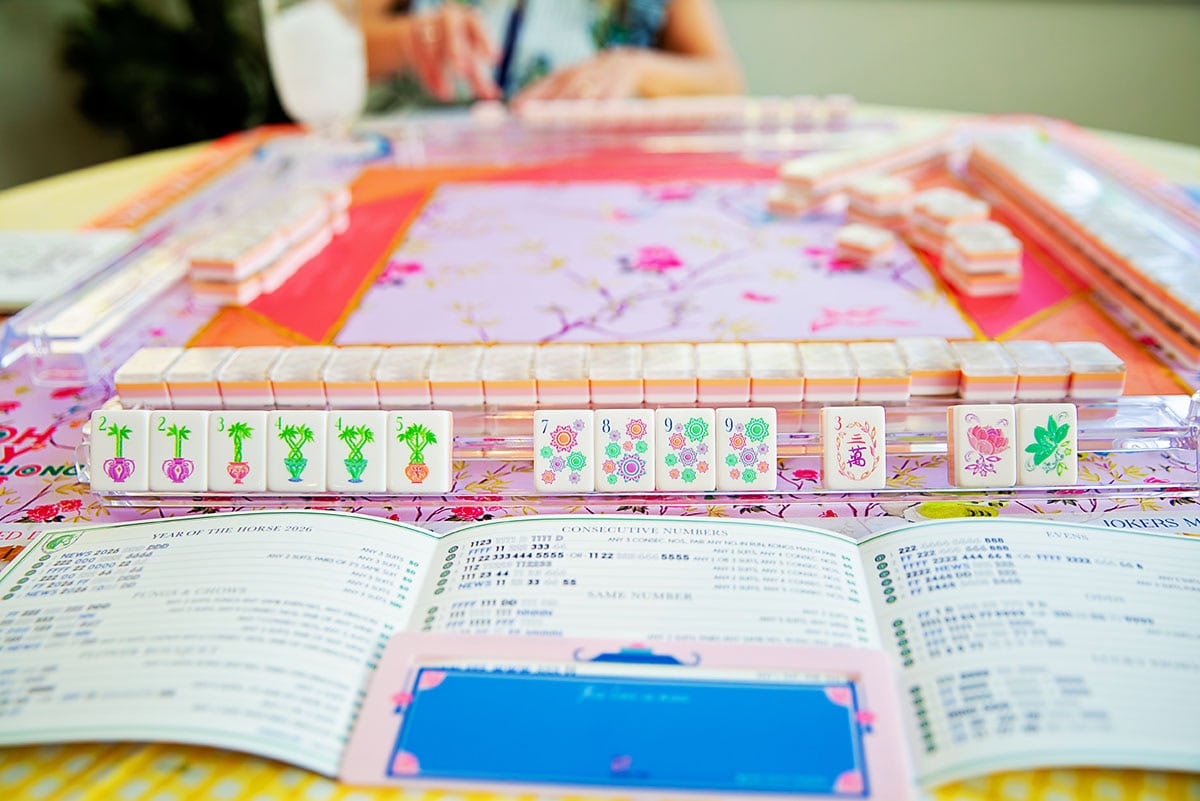
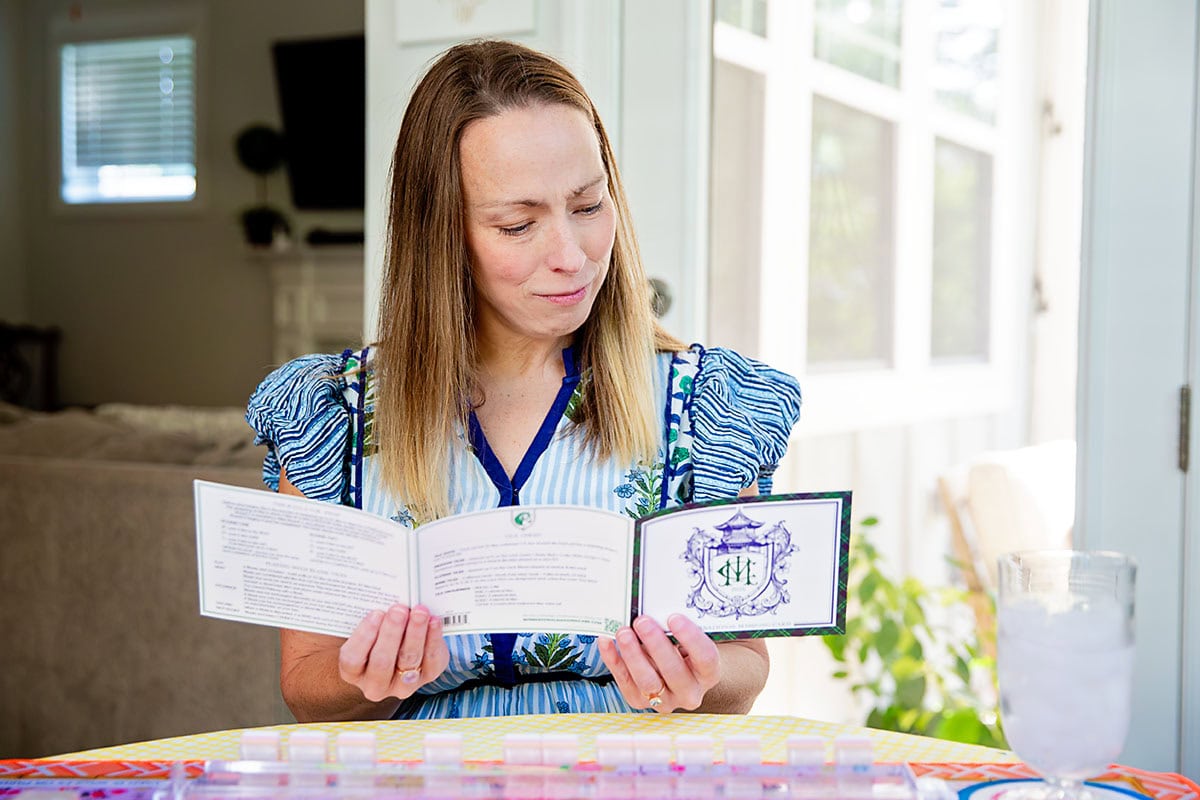
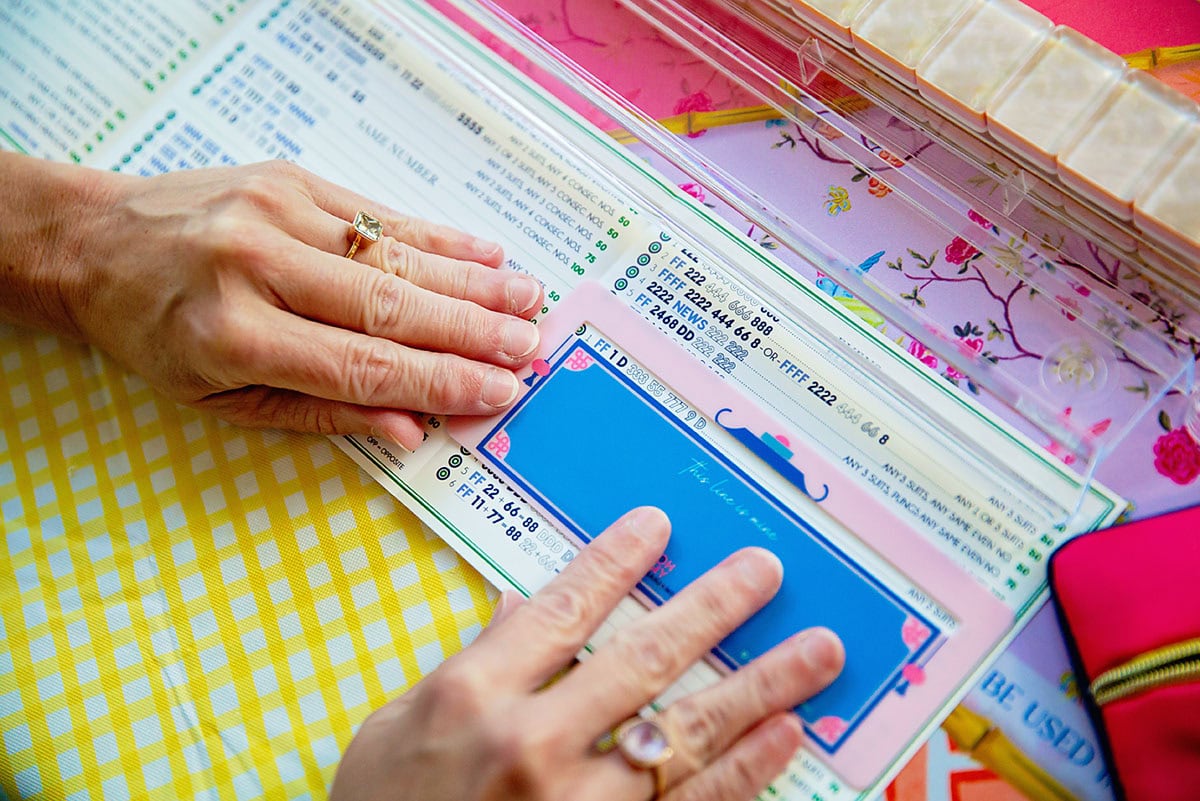
The League also established one of the game’s most recognizable traditions: the card. The National Mah Jongg League publishes a new card every year showing the hands players can make. That means American Mahjong isn’t a game you learn once and play exactly the same way forever. The combinations change, the strategies change and everyone has a new puzzle to figure out each year.

There’s always another card. Another hand. Another year to figure out.
So, What Exactly Is American Mahjong?
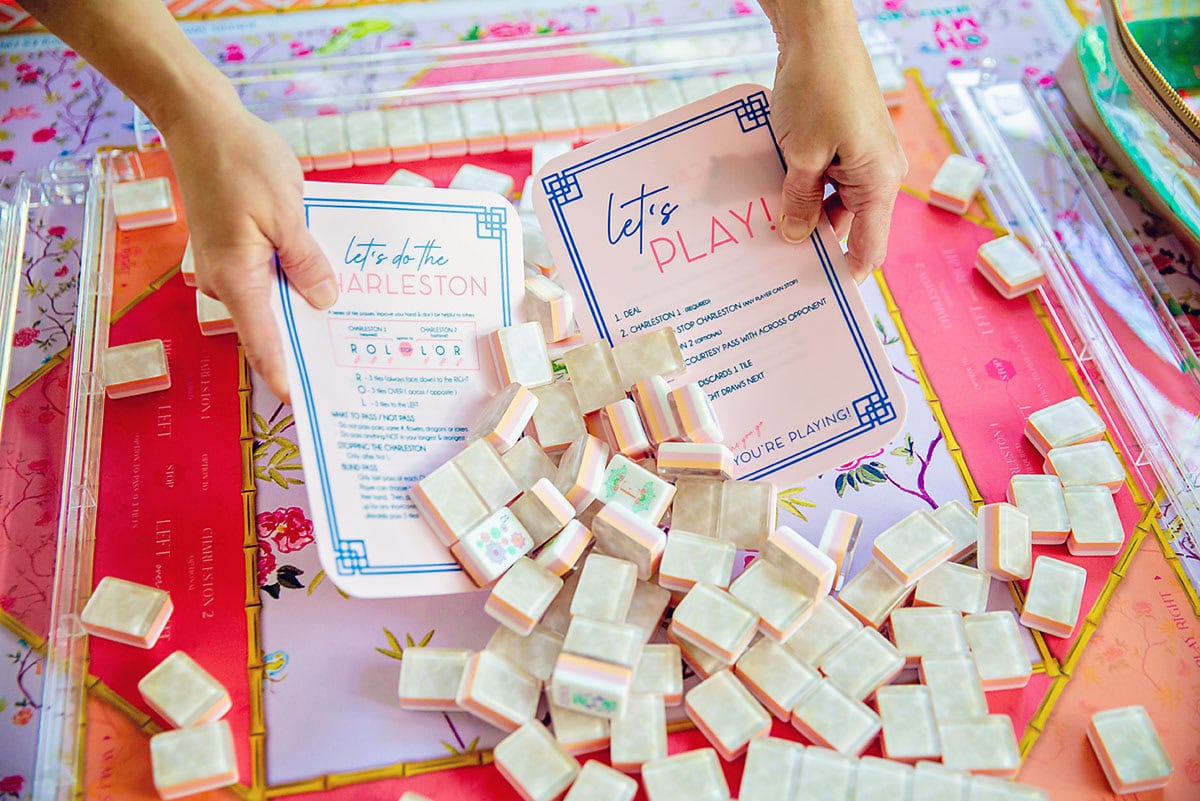
American Mahjong is a four-player tile game that combines strategy, pattern recognition and a healthy amount of luck. Each player builds a hand by drawing and discarding tiles, with the goal of creating one of the winning combinations shown on the National Mah Jongg League’s annual card.
If you’ve never played before, that probably sounds a little more complicated than it actually feels once you’re sitting at the table. Each player has a rack for their tiles, and the game moves around the table as players draw, discard and watch what everyone else is doing. You’re constantly making decisions about which tiles to keep, which ones to let go and what kind of hand you might be able to build.
There are a few things that make American Mahjong different from other versions of the game. It uses Jokers and includes a tile-passing round called the Charleston, which happens before the main play begins.
The Charleston is essentially a series of tile exchanges between players. You’re passing tiles around the table while trying to improve your own hand, which means you’re making strategic decisions before you’ve even really started playing. For a first-time player, it can feel a little chaotic. That’s okay. Eventually, it clicks.
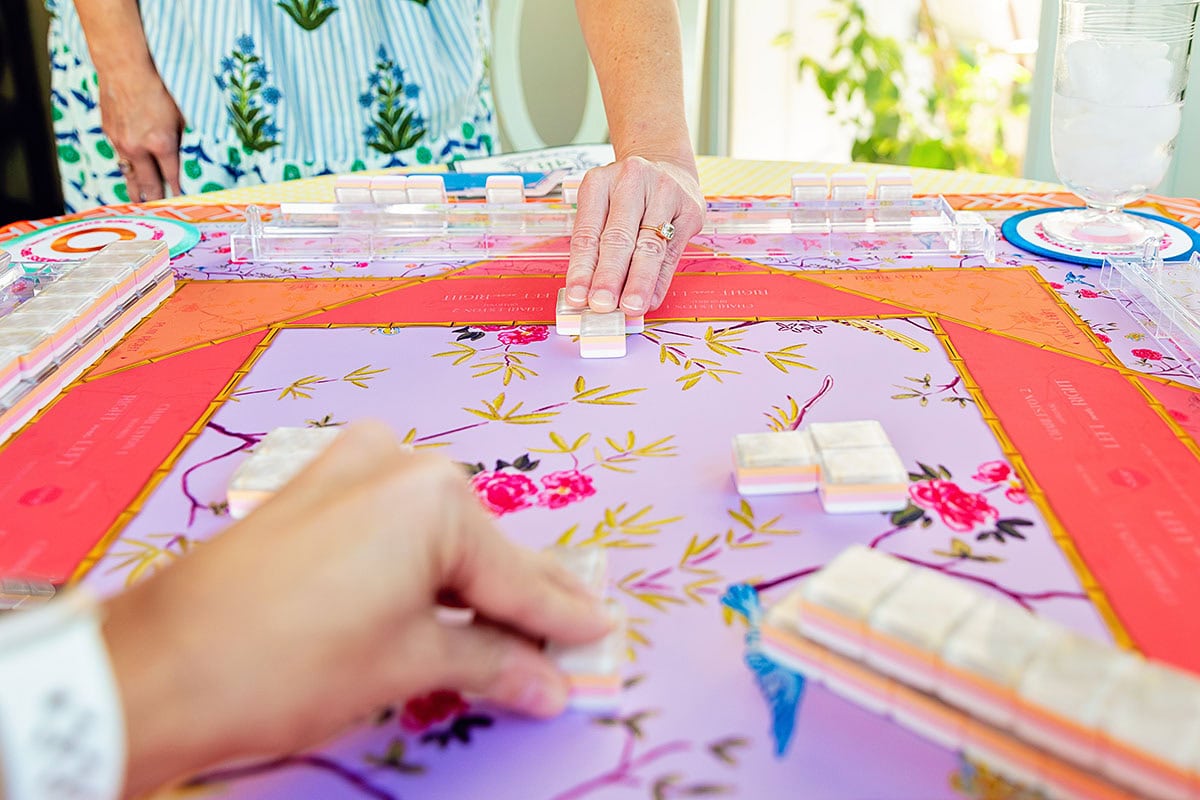
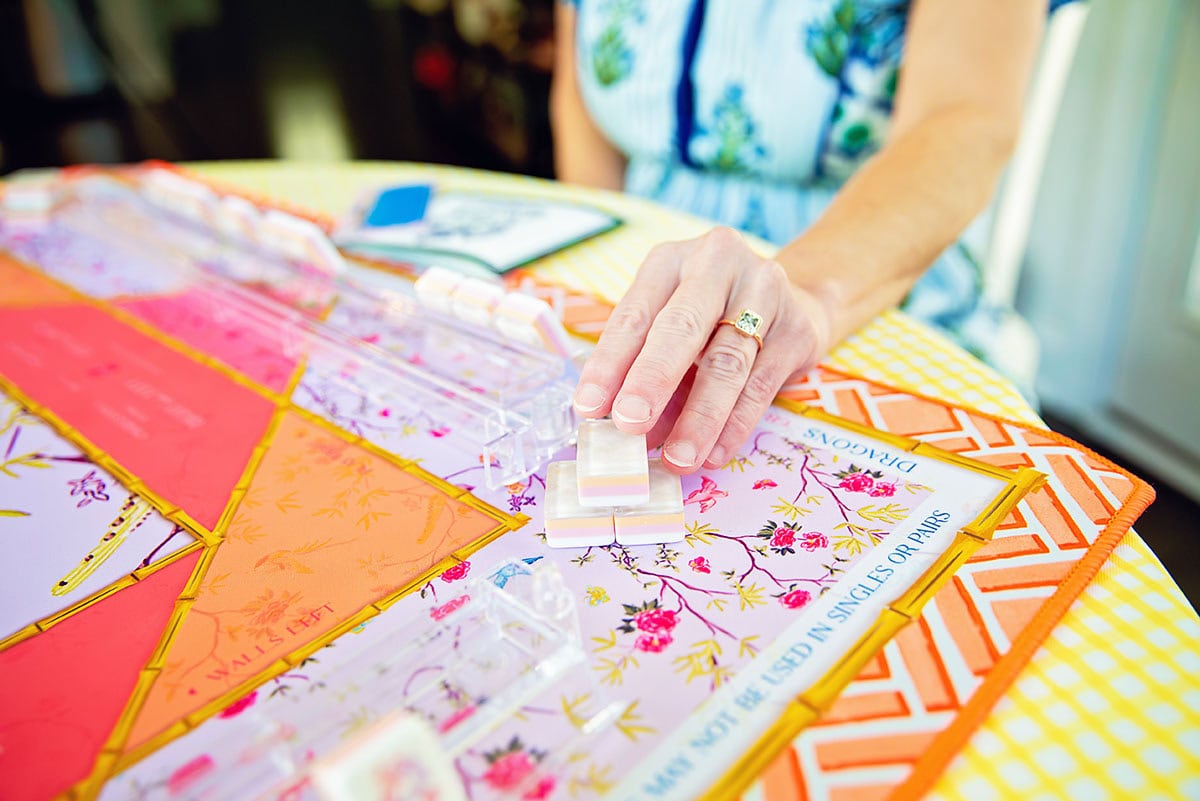
Before the regular play begins, everyone is looking at their starting tiles and trying to figure out which hand on the card might be worth pursuing. You don’t have to know immediately. Part of the strategy is seeing what you’re dealt, watching what tiles become available and adjusting your plan as the game moves along.
Once the Charleston is over, players take turns drawing and discarding tiles. You’re not only paying attention to your own hand, but also watching what other players are discarding and trying to figure out what they might be collecting. When you complete a winning hand from the current card, you call “Mah Jongg!”
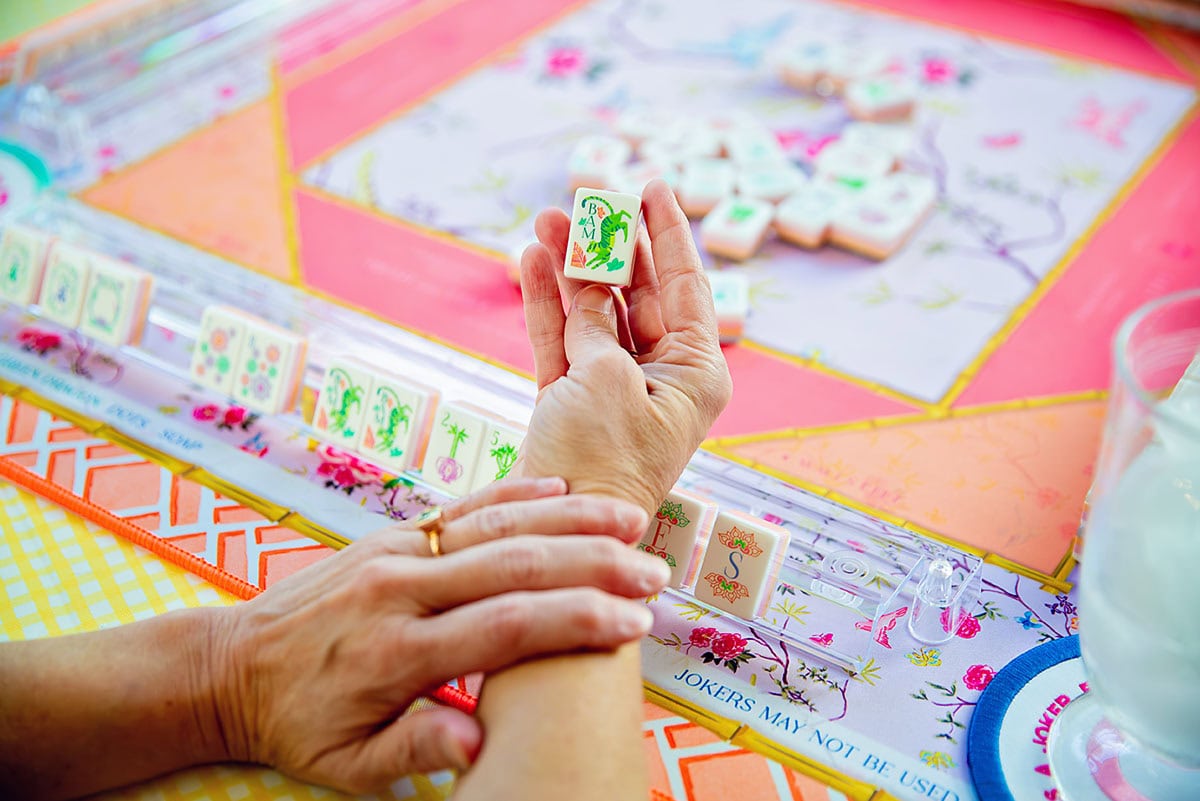
And that’s really all you need to understand before your first game. The details come with practice.
What You Need for a Mahjong Night
The good news is that you don’t need a dedicated game room, a fancy Mahjong table or a house full of Mahjong memorabilia to host a night. At its most basic, you need four players, an American Mahjong set and a table.
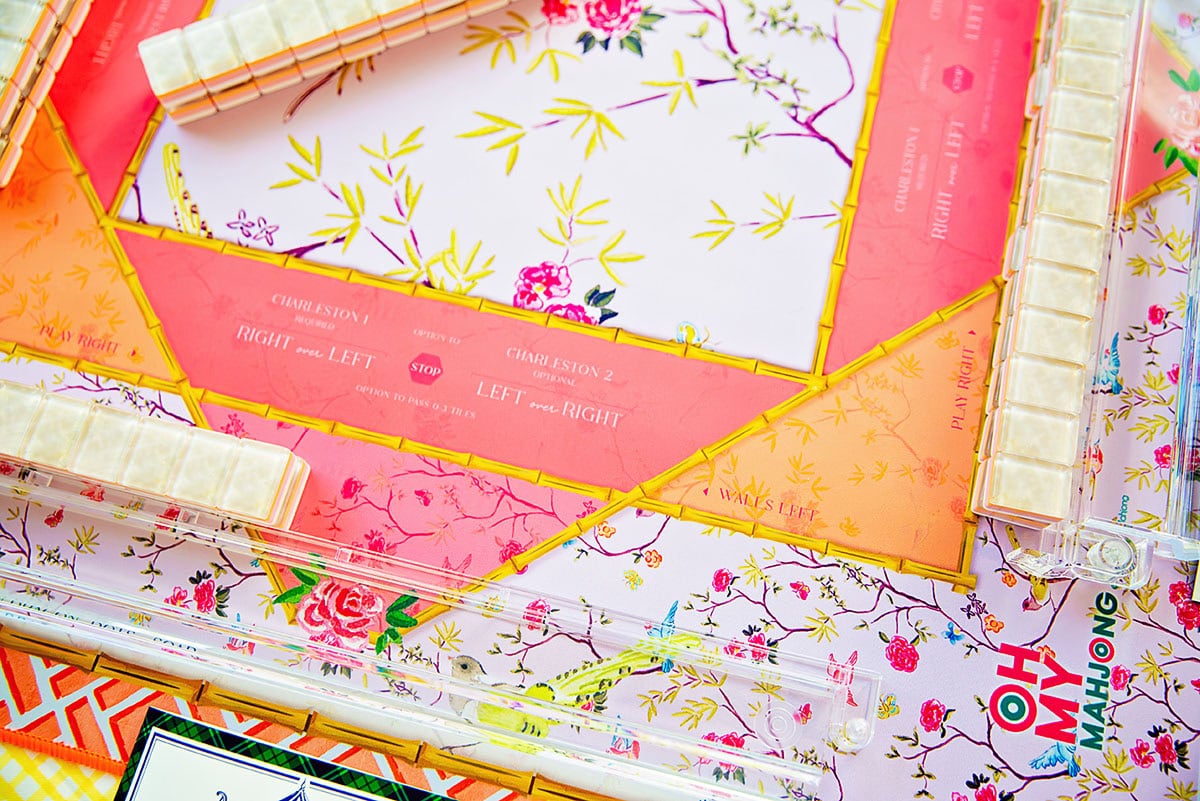
A traditional American Mahjong set includes the tiles, racks, pushers, dice and current American Mahjong card. You can also find dedicated Mahjong tables with built-in racks and playing surfaces, but you absolutely don’t need one to host a game. A card table, dining table or any sturdy table that gives four players enough room to sit comfortably and arrange their tiles works just fine. A Mahjong mat isn’t required either, but it can make the playing surface more comfortable and help define the game area.
And this is where a beautiful set can make the whole experience feel a little more special.
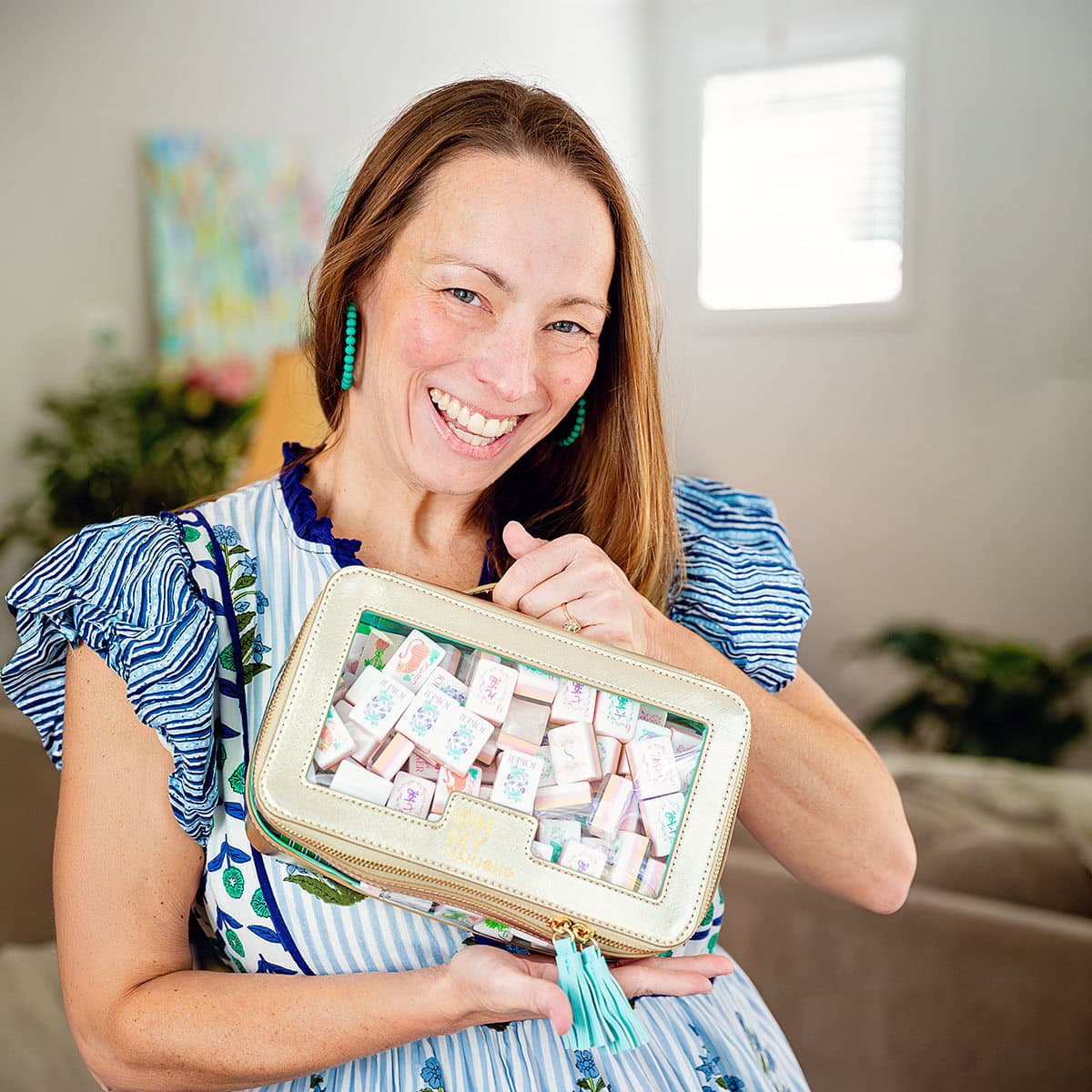
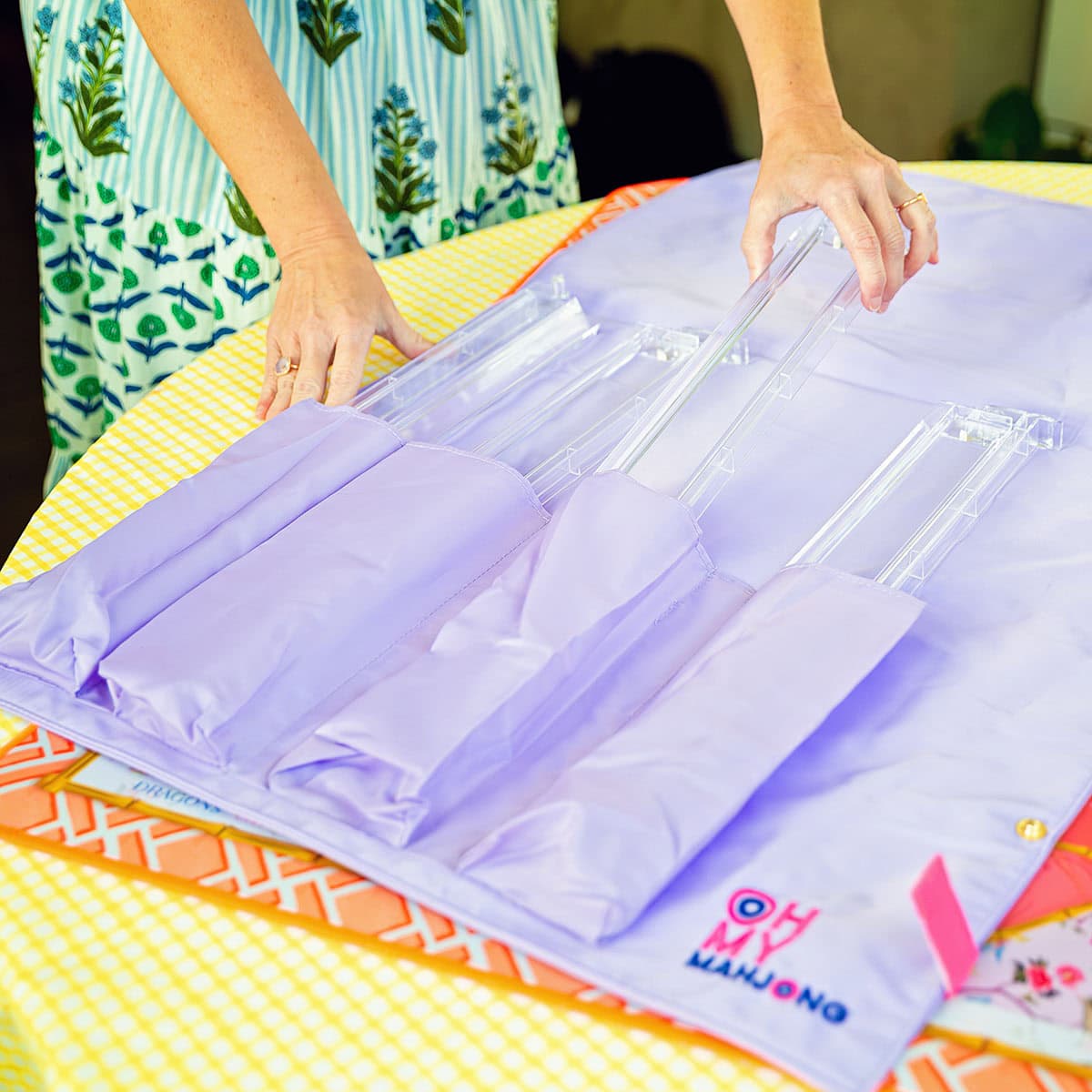
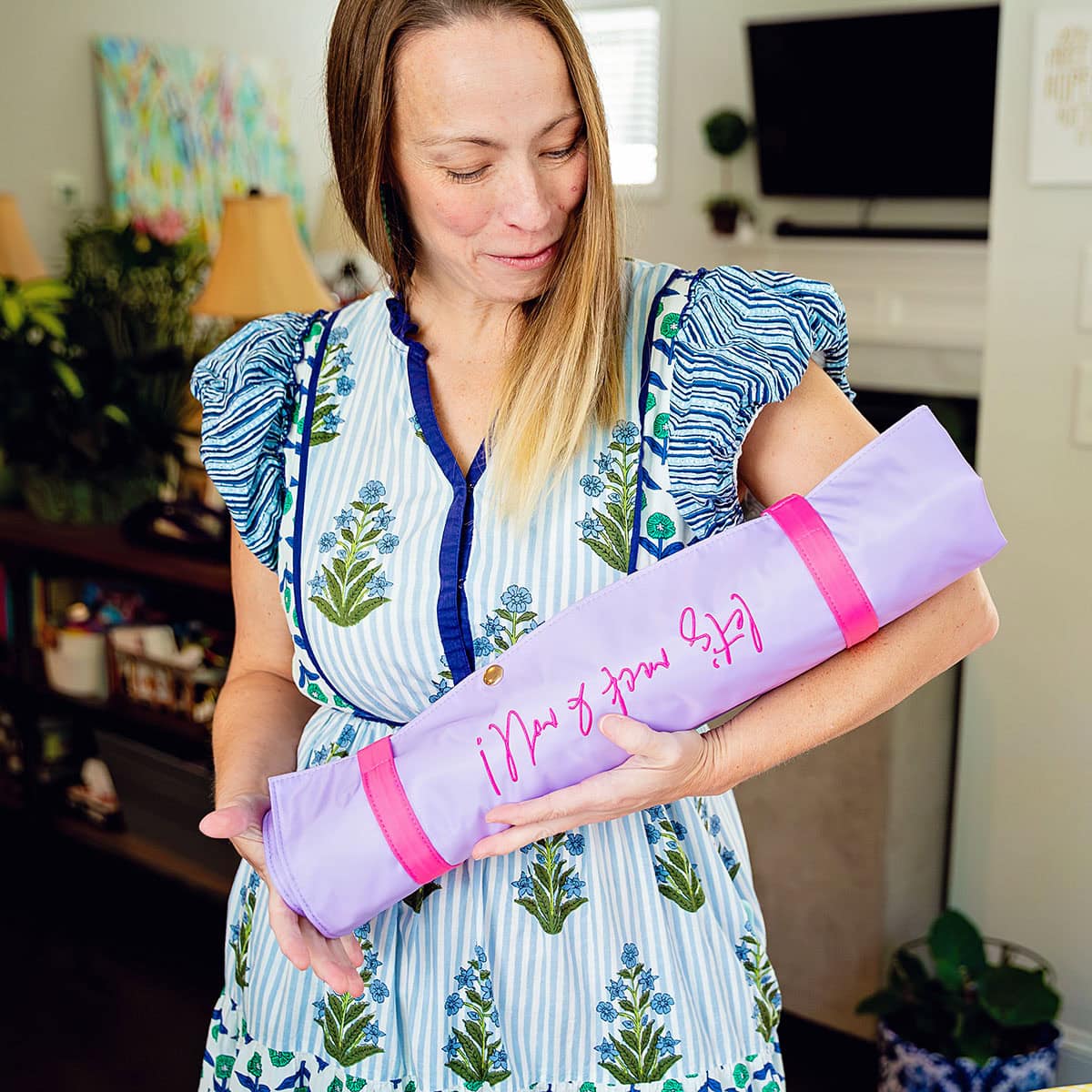
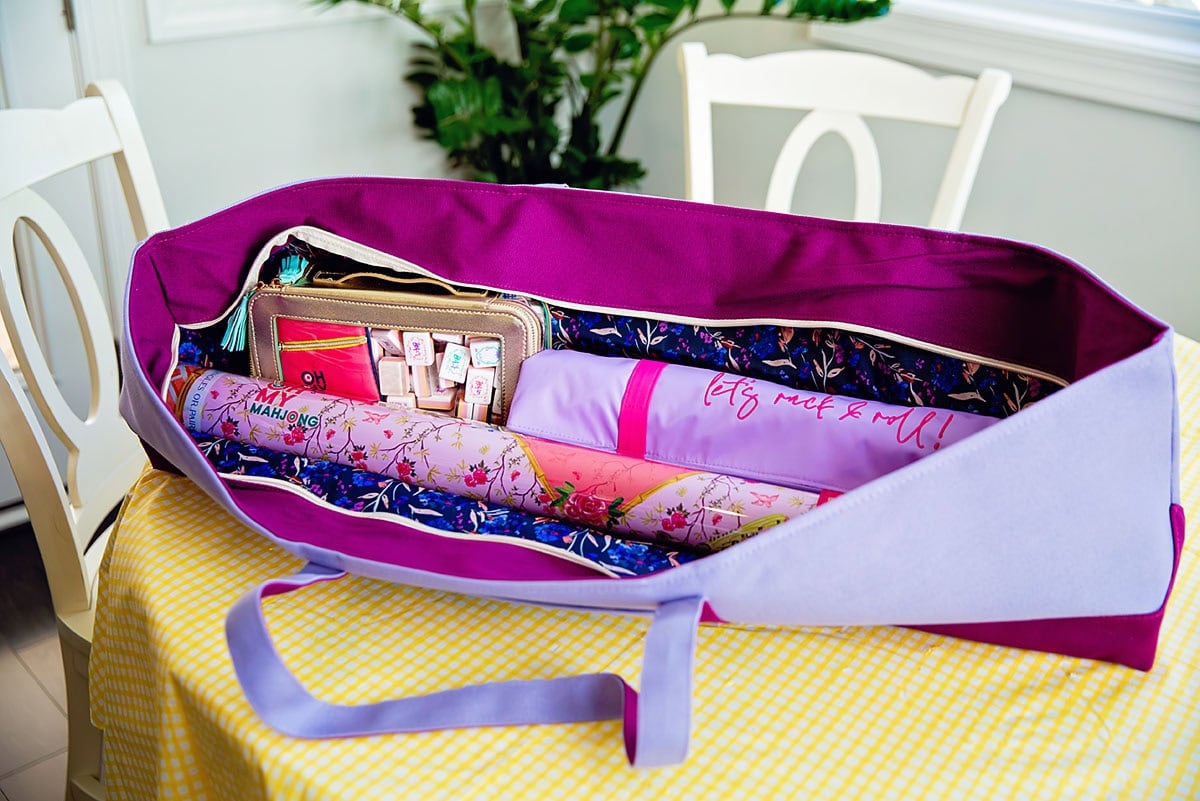
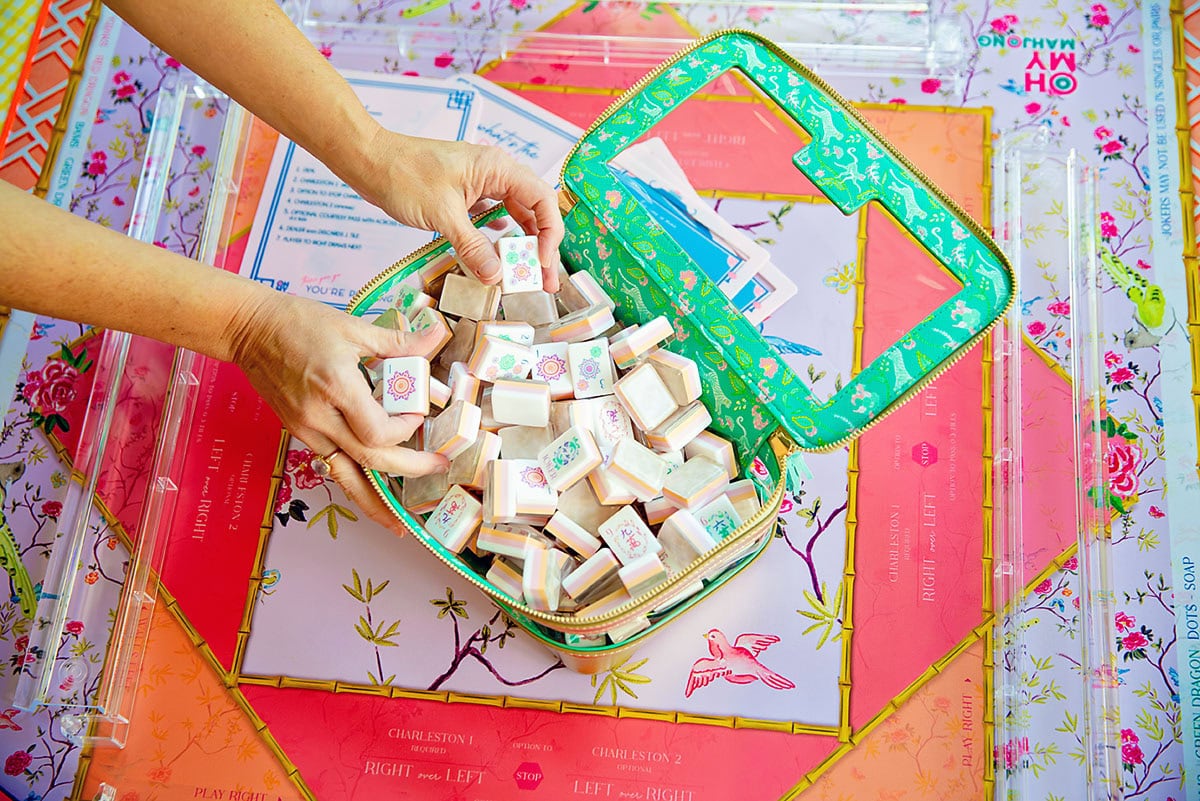
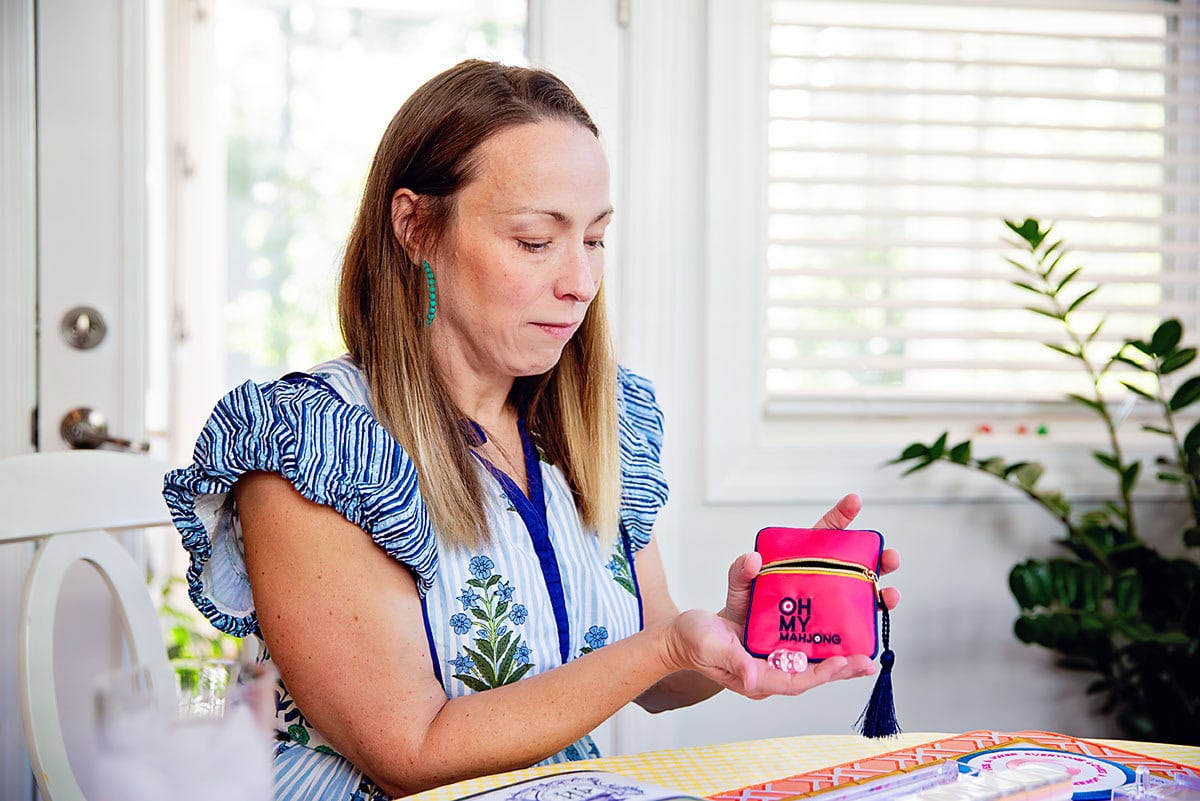
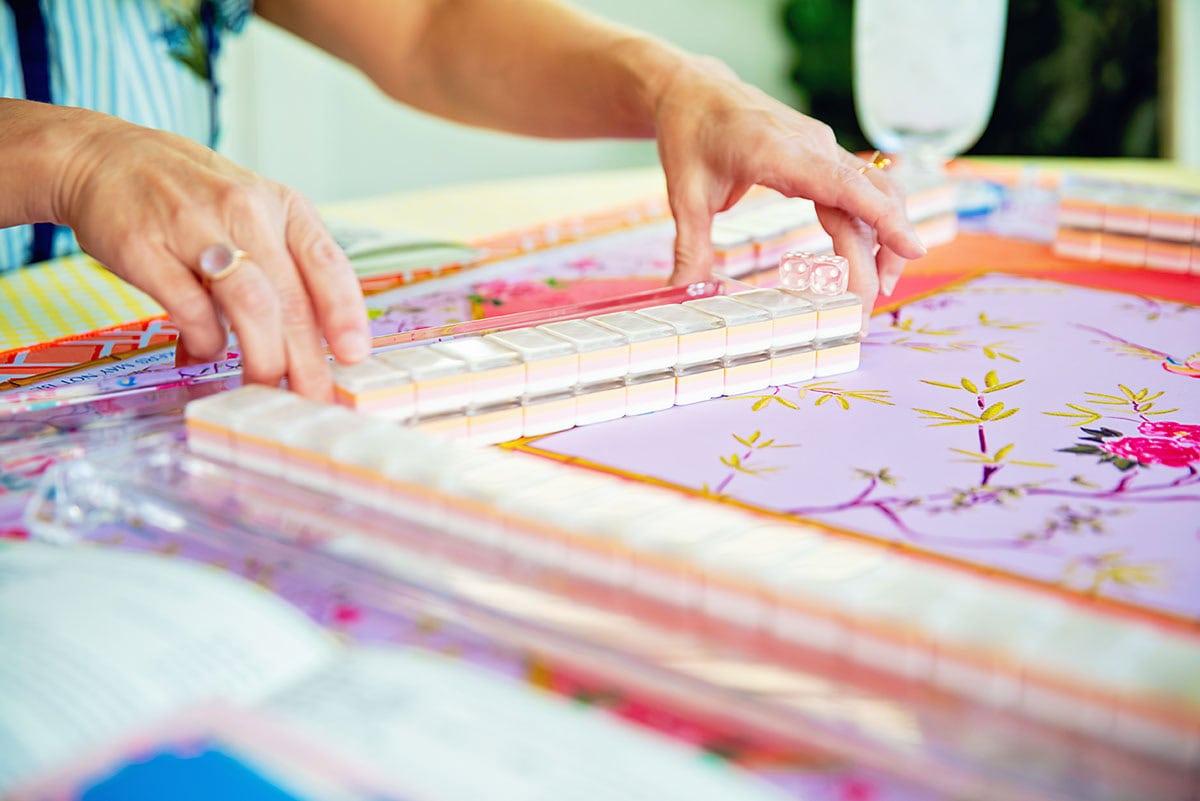
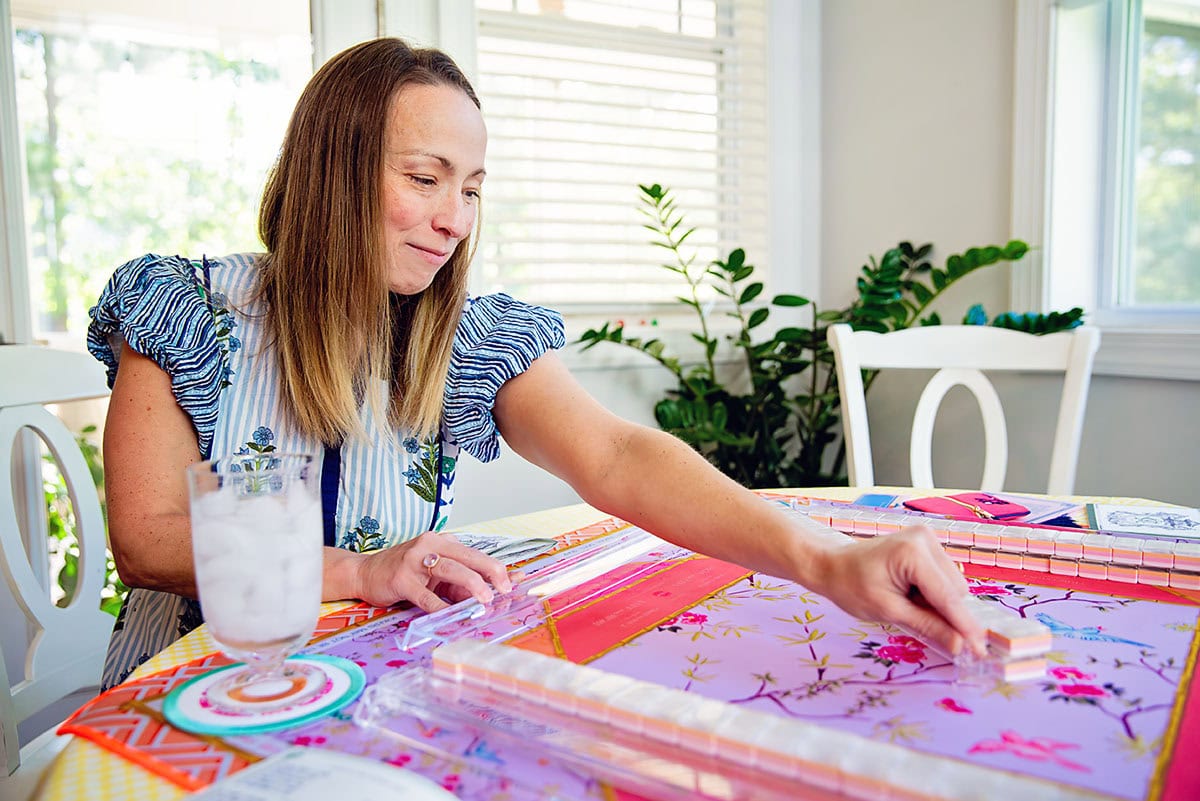
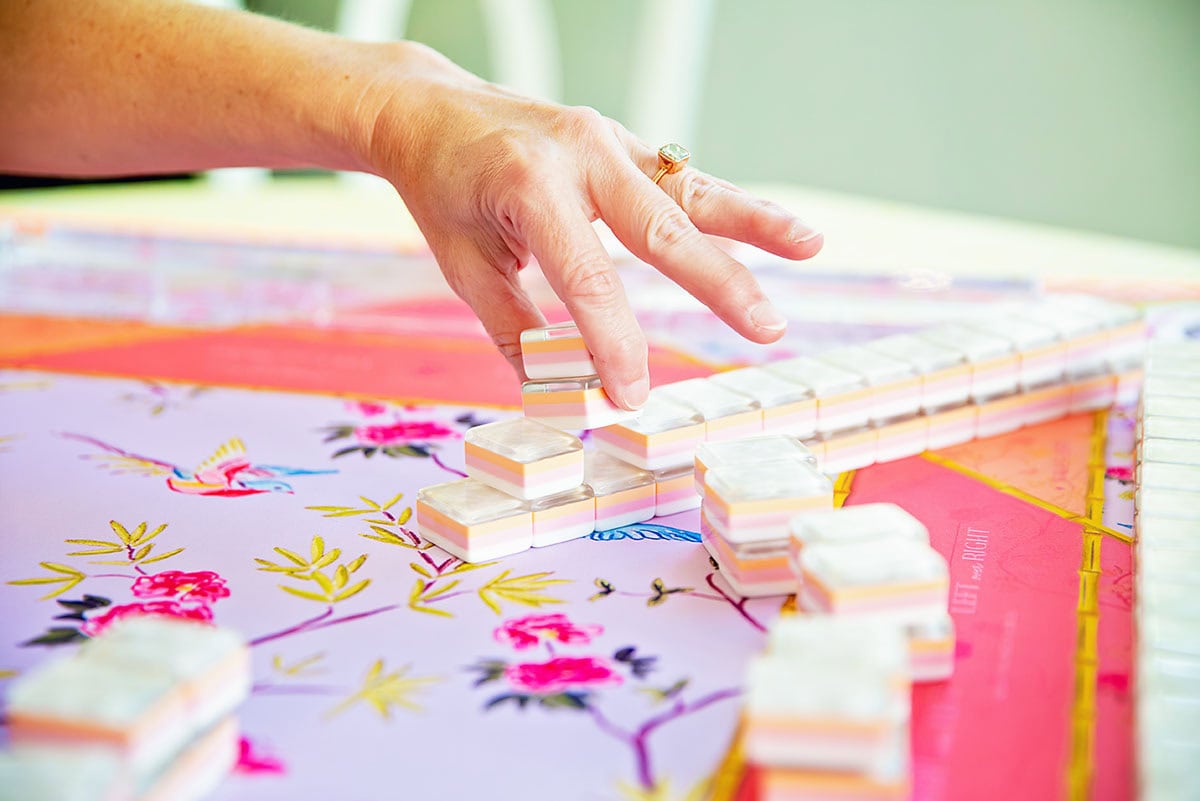
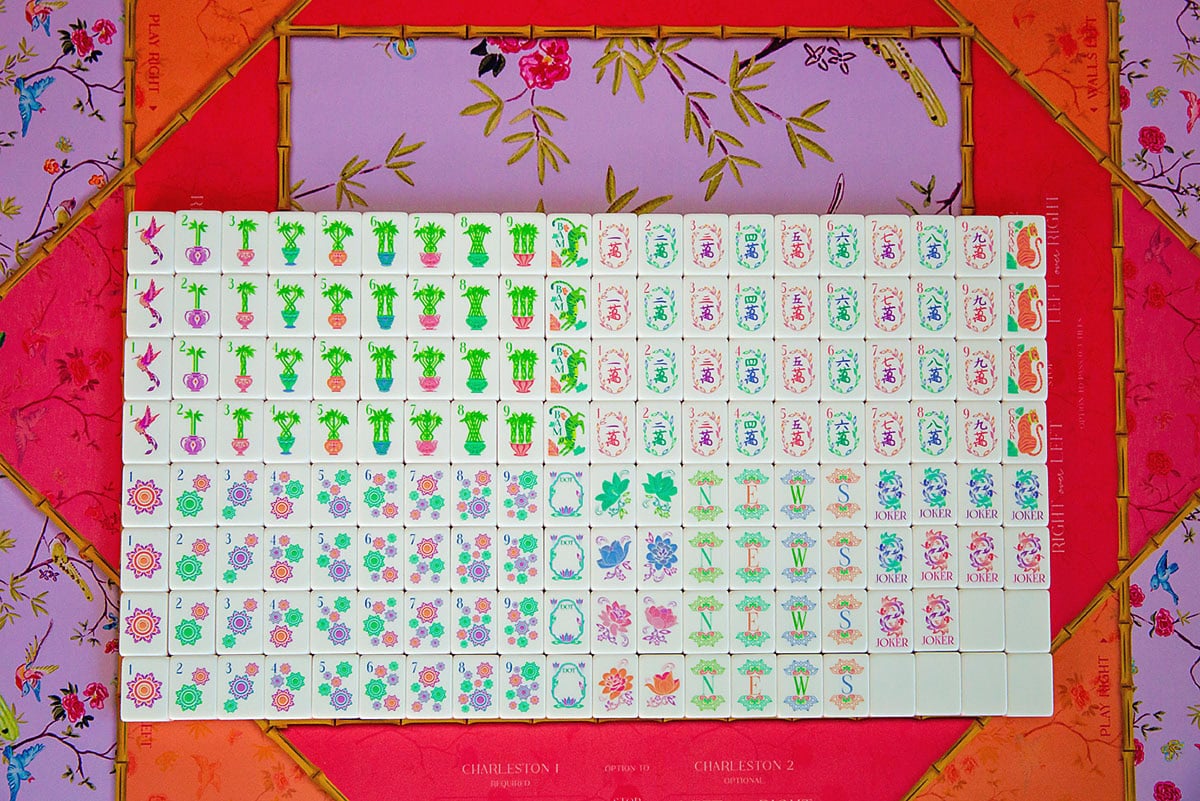
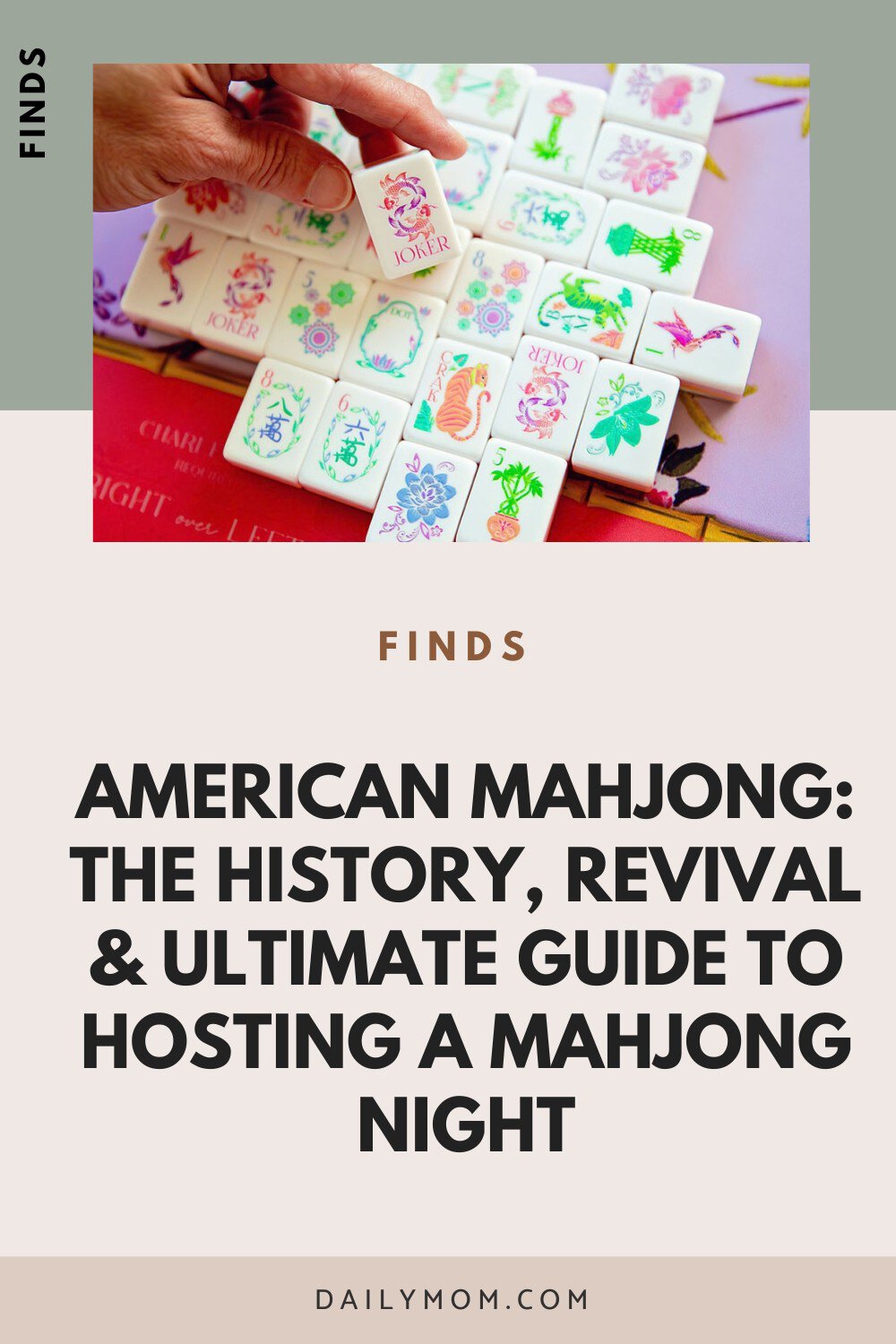
For our Mahjong night, Oh My Mahjong’s Pearlescent Ultimate Starter Kit gives you pretty much everything you need to get started, while also making the table look like something you’d actually want sitting in your dining room. The set includes 160 acrylic Mahjong tiles, four clear racks and pushers, tile shufflers, line finders, a Mahjong mat and storage bags, along with four American Mahjong cards and a Mahjong 101 booklet.
The tiles themselves are the real showstopper. They’re translucent and pearlescent with soft lavender, coral, mint and sky-blue tones, botanical details and illustrated Jokers. Paired with the floral Goldie Mahjong Mat, the whole thing feels less like a game that gets shoved into a closet and more like part of the evening’s tablescape.
How to Host the Ultimate Mahjong Night
Make the Table Feel Special
This is where you can have fun with the setting without turning it into a production. The Mahjong set is already going to bring plenty of color and personality to the table, so you don’t need much more. Add a few simple touches that make the evening feel intentional: pretty glassware, flowers, candles or a favorite serving piece.
Bring a Little Mahjong With You
If you’re attending a Mahjong night, a Mahjong-themed hostess gift is a fun way to thank the person who invited you, especially if she’s the one teaching you how to play. During our own introduction to the game, my friend’s aunt was quick to show us a pair of earrings she’d received featuring tiny Mahjong tiles. They were such a cute little nod to the game and a great example of how American Mahjong has become part of the fun beyond the table itself.
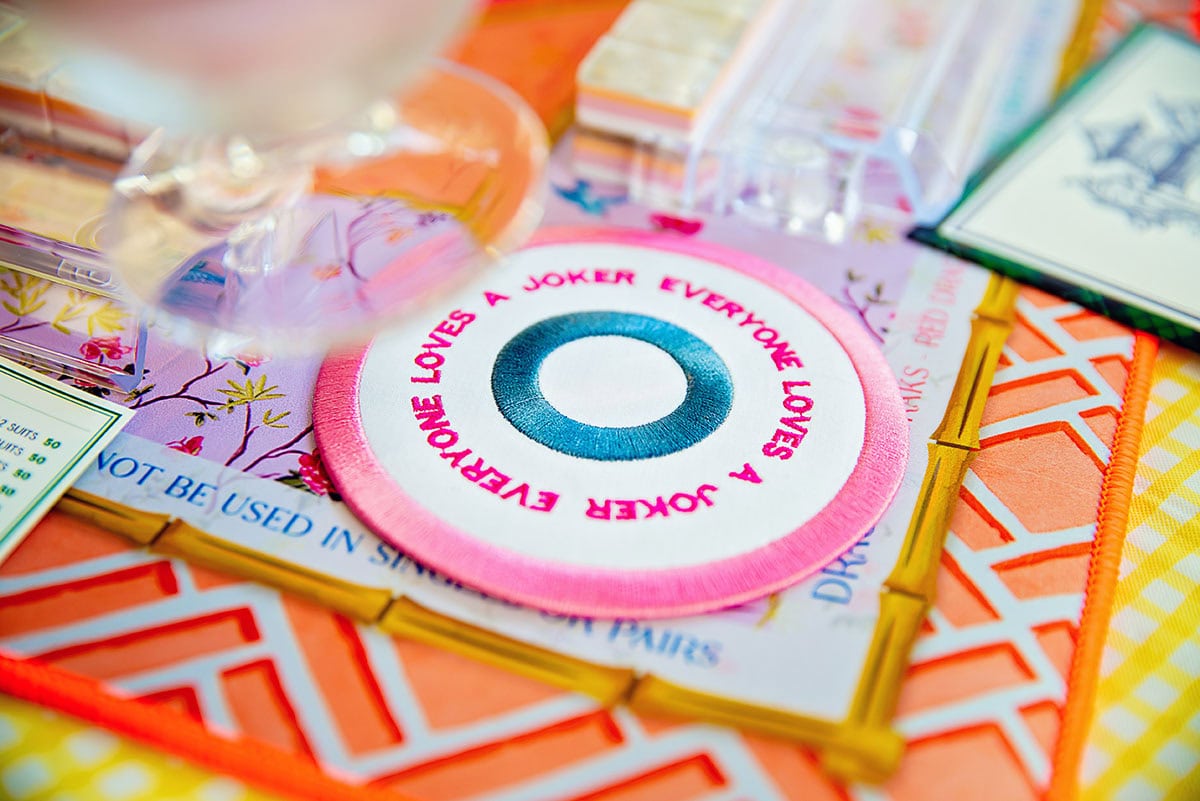
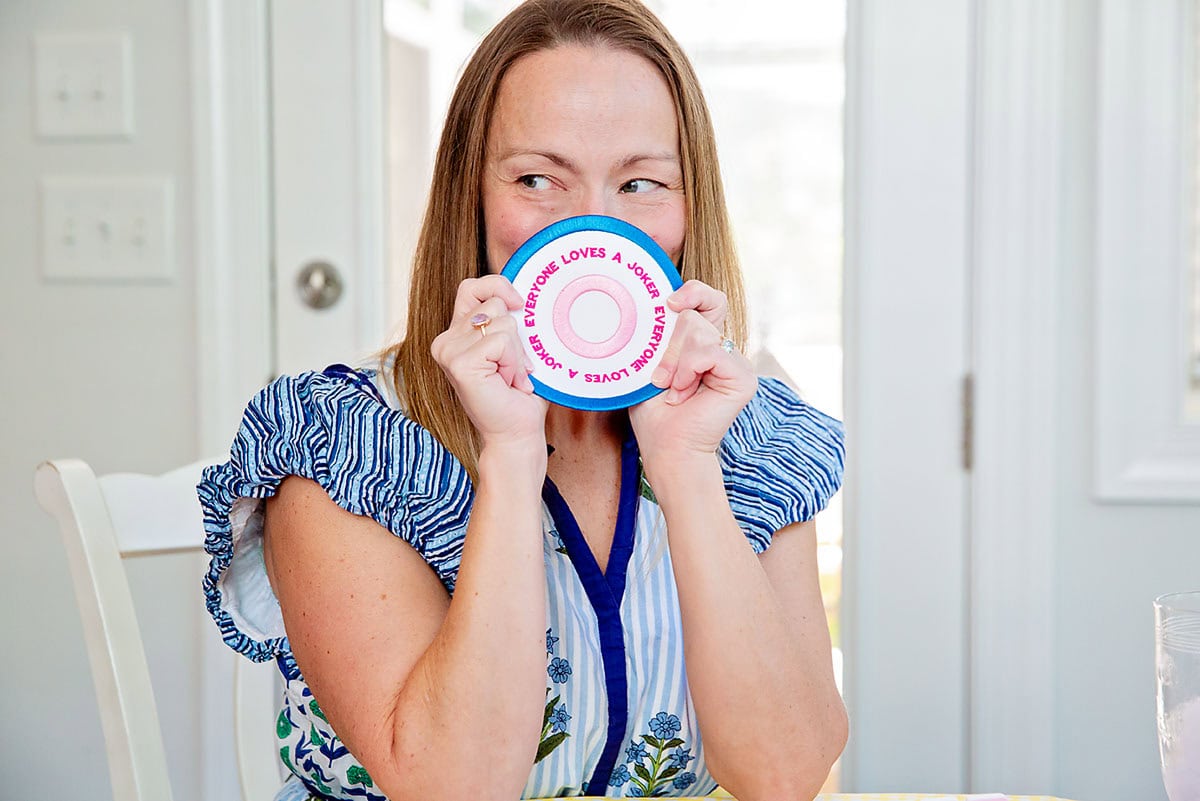
You don’t have to go all-in on a Mahjong-themed gift, either. A set of Mahjong cocktail napkins, a pair of tile-inspired earrings or even a small Mahjong accessory can be a thoughtful way to show your appreciation. And really, bringing a little something for your host is never a bad idea, whether it’s a Mahjong night or any other gathering.
Keep the Food Easy
This is one place where I’d borrow from our Keno nights. Dinner was always part of the reason we gathered, and Mahjong doesn’t have to replace that. It can simply give the evening a new activity.
You don’t need a complicated menu. Serve something that can mostly be prepared ahead of time, put out a few snacks people can grab between rounds and have drinks ready to pour. The goal is to spend your evening playing American Mahjong and talking to your friends, not running back and forth to the kitchen.
Give Yourself Permission to Be Bad at It
Your first few games might be confusing. You will probably forget what you’re supposed to be looking for, second-guess every tile you pick up and occasionally make a move that makes absolutely no sense five minutes later. Just remember, nobody is handing out grades.
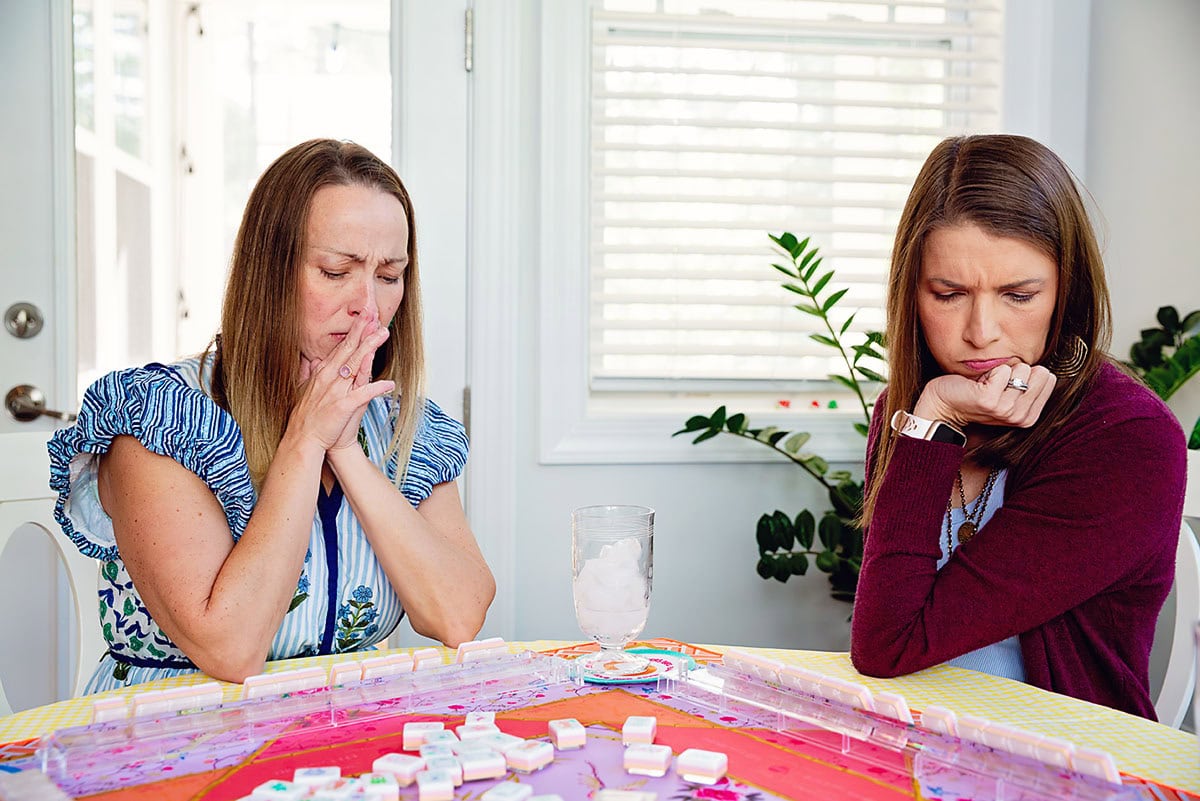
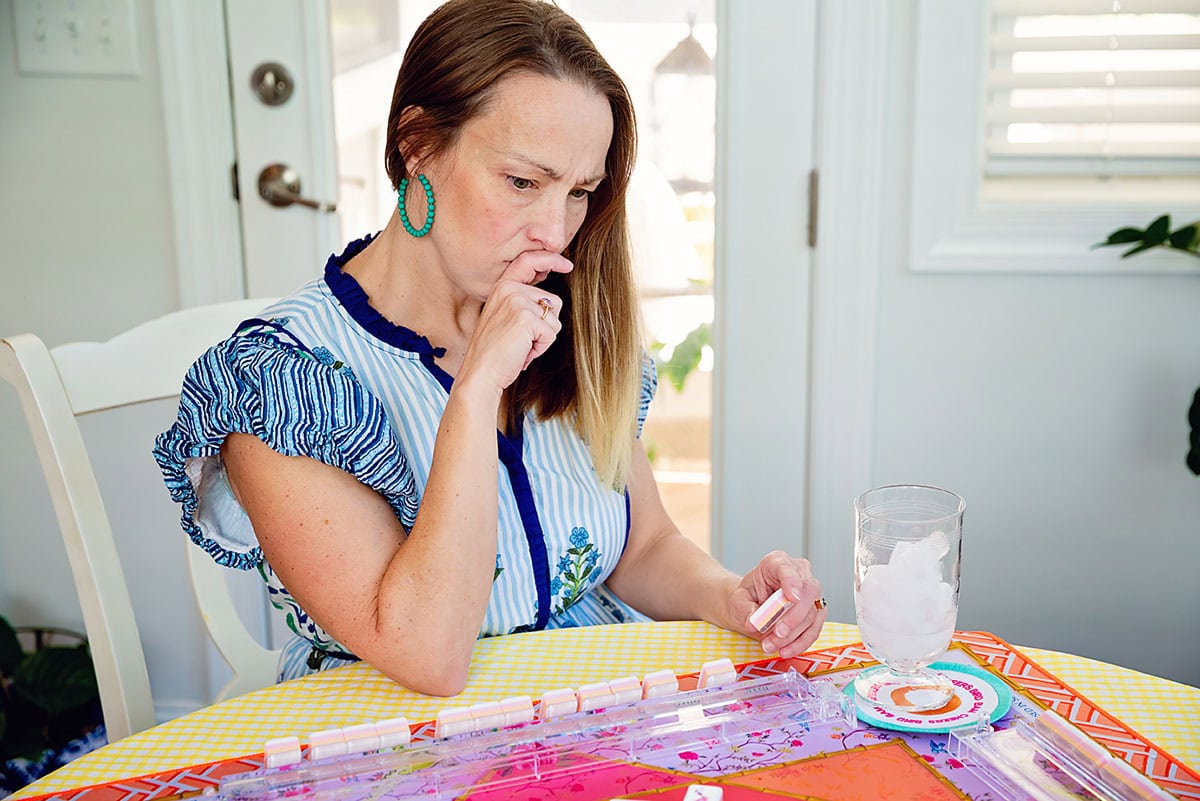
I know this because that’s exactly what happened to me.
The first time I played American Mahjong, I locked in on one row on the card based almost entirely on my initial tiles. I had no real strategy and honestly couldn’t have explained why I was so determined to make that particular hand work. Our instructor, my friend’s aunt, even told me she wasn’t sure it would work, but she was curious to see whether my intuition would pay off.
It did. I won!
The next round, one of my friends reached the point where she was convinced there was no way she could win. Another player had the tiles she needed to complete the hand she had been working toward, and she felt like she was too far into the game to change course. Our instructor simply told her to take a breath and try another way.
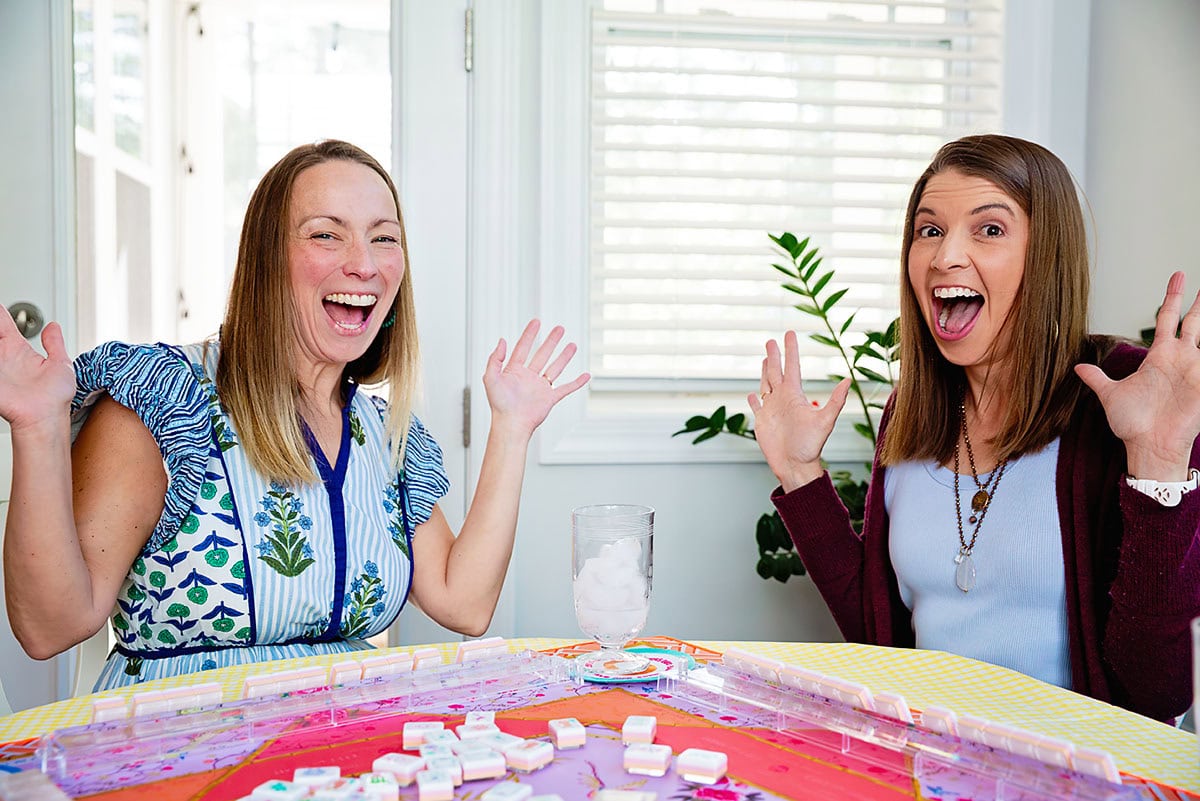
So, we kept playing. And somehow, she ended up winning, too.
That’s one of the things I love about American Mahjong. You don’t have to know exactly what you’re doing to have fun, and you don’t necessarily have to know exactly what you’re doing to win. Sometimes your first instinct works. Sometimes you have to completely change direction. Either way, you’re learning as you go, laughing with your friends and figuring it out together.
Make It a Tradition
Maybe your first Mahjong night will be a little chaotic. Maybe someone will forget the rules, someone will fall in love with a particular hand and refuse to give it up, and someone will inevitably ask, “Wait, whose turn is it?” That’s okay. The next time, you’ll know a little more. You’ll recognize more tiles. You’ll make different mistakes. And eventually, you’ll be the one inviting someone new to sit down and learn.
That’s how a Mahjong night becomes a tradition. Not because everything goes perfectly, but because you had enough fun to want to do it again.
SHOP:
Pearlescent Ultimate Starter Kit | Bullseye Cocktail Napkins
EXPLORE AND CONNECT:
Oh My Mahjong | Facebook | Instagram | Youtube | TikTok
Now that you know a little more about American Mahjong and what you’ll need to get started, you’re ready to plan your own Mahjong night! Don’t worry if you don’t have a group of four ready to go or if none of your friends know how to play yet. Invite a few friends who are curious, ask someone who already knows the game to teach you, and figure it out together. Your first game might be a little chaotic, but that’s part of the fun. Before long, you may find yourself looking forward to the next one.
WANT TO READ MORE?
What Is A Bunco Game-Complete Game Rules For Any Bunco Group
CONNECT WITH DAILY MOM
💖 NEWSLETTER: DAILY READS IN YOUR INBOX 💖
Sign up to receive our picks for the best things to do, see and buy so you can relax and focus on more important tasks! Let us help you be the best version of yourself you can be!
BE SOCIAL WITH US
📌 LOVE IT? PIN IT!📌
Picture Credits: Michelle St. John-Grover, Pexels, Annelise Heinz, Museum of Jewish Heritage