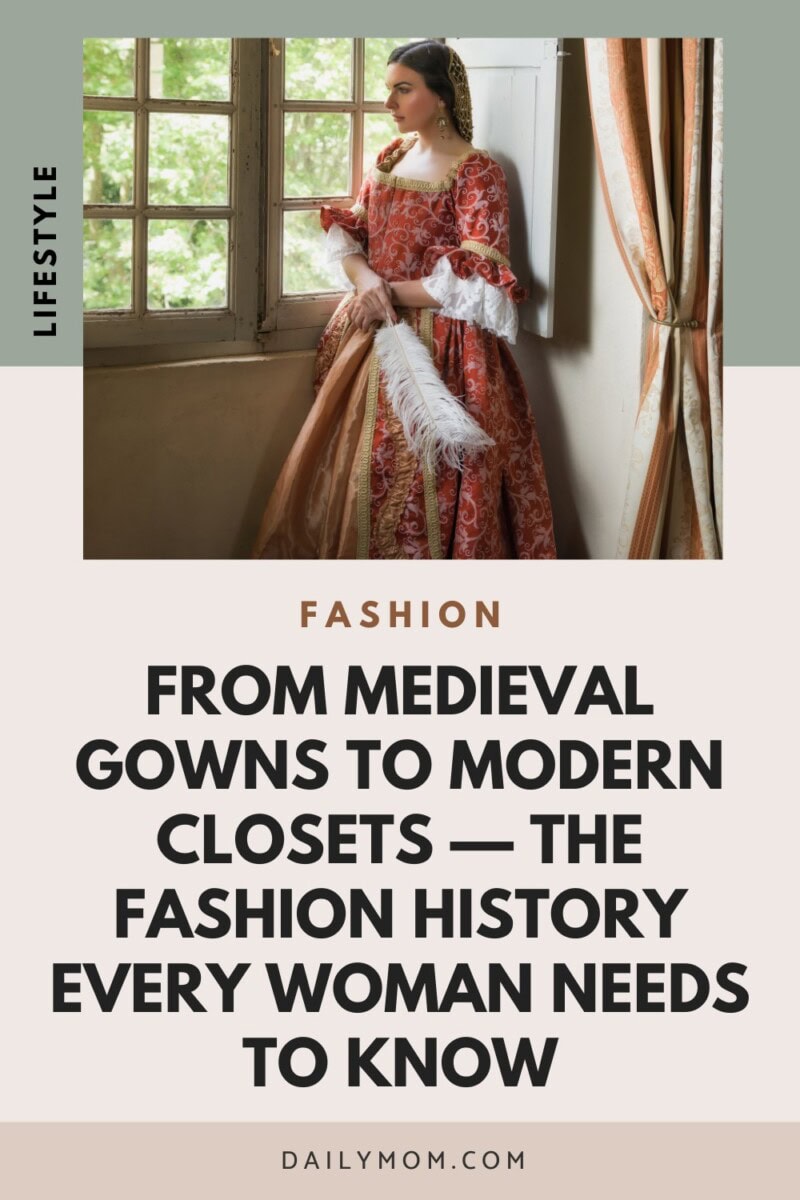


































Women’s clothing of the Middle Ages was far more sophisticated, colorful, and deliberately expressive than most people give it credit for. Spanning roughly 500 to 1500 AD, this era’s wardrobe functioned as a living social language what a lady wore communicated her class, her faith, her marital status, and sometimes even her politics. This guide walks through every layer of the medieval woman’s wardrobe, the textiles and dyes that defined the period, and exactly how to bring these timeless silhouettes into a modern closet today.
Medieval Clothing as Social Code — What Did Every Female Wear to Show Her Place in the World?

Fashion in the middle ages wasn’t just about looking good clothing served as a direct reflection of the social order, and in medieval society, what you wore was essentially your ID card. Sumptuary laws across medieval Europe legally controlled what textiles, colors, and attire each class was allowed to wear, making women’s clothing one of the most regulated aspects of life at the time.
- Noble women — draped in silk, luxurious materials, and richly dyed cloth trimmed with fur
- Merchant-class ladies — quality wool and fine weaves but rarely silk
- Peasant women — kept things simpler and more practical; rough wool, muted tones, functional layers
- Religious ladies — modest, covered, and exempt from changing fashion trends altogether
The diversity of medieval dress across these groups is part of what makes this cultural history so compelling each piece of attire tells a complete story about the lady who wore it
Modern Wardrobe Moment: Rich jewel tones — deep burgundy, sapphire, and forest green were associated with royalty and the aristocracy. Build a fall wardrobe around these shades for an effortlessly period-inspired palette that feels completely current. Shop the look at Free People or ASOS.
The Historical Garments Closest to the Skin — What Did Medieval Women Wear as a Foundation?
The Chemise — The Female Foundation Every Woman Relied On
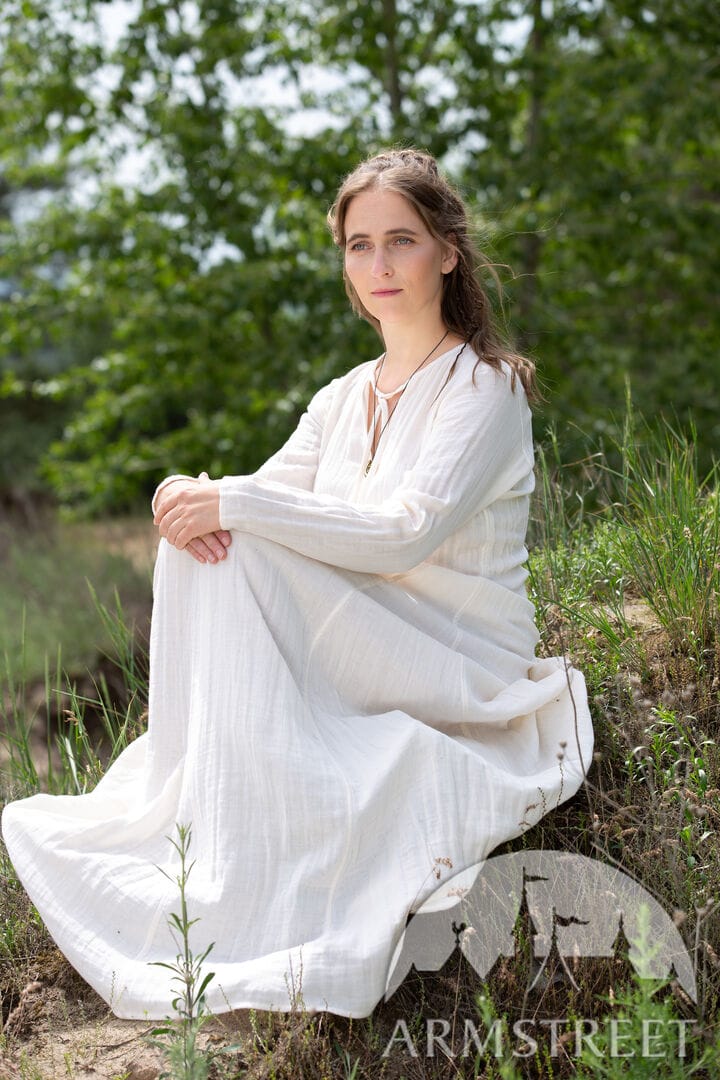
Every outfit in this era started from the inside out, and the chemise a loose, lightweight piece pulled over the head and worn directly against the skin was the non-negotiable foundation of the entire wardrobe. This historical garment wasn’t just underwear; it was a protective layer that kept heavier outer pieces clean, and the quality of a lady’s linen chemise quietly signaled exactly where she sat in medieval life.
- The chemise — worn over the shift by every lady regardless of class
- Linen quality — finer, tightly woven cloth indicated higher status; coarser weave for working ladies
- Hose and garters — women also wore fitted leg coverings held up by simple garters
- Wool underlayers — added in colder months, especially among the lower classes
- The neckline evolved from simple round cuts in early times to more fitted constructions in the late middle ages
The chemise evolved quietly but consistently across the medieval period by the high and late middle ages it had become more tailored, reflecting a broader shift toward fitted, body-conscious silhouettes that defined the era
Modern Wardrobe Moment: The chemise lives on in the modern linen slip dress layer one under an open blazer or structured vest for an effortless nod to medieval women’s clothing that feels completely current. Shop linen styles at Free People or ASOS.
Kirtles, Gowns, and the Female Silhouette — How Did Medieval Women’s Clothing Evolve Over Time?
The kirtle was the defining outer garment of the era worn over the shift, it was the dress most people actually saw, and its silhouette tells the entire story of clothing for women across five centuries. From the loose, practical tunic of the early period to the dramatically fitted silk gown of the 15th century, the evolution of female dress across this span is nothing short of remarkable.
Early Middle Ages (500–1000 AD) — The Age of the Tunic
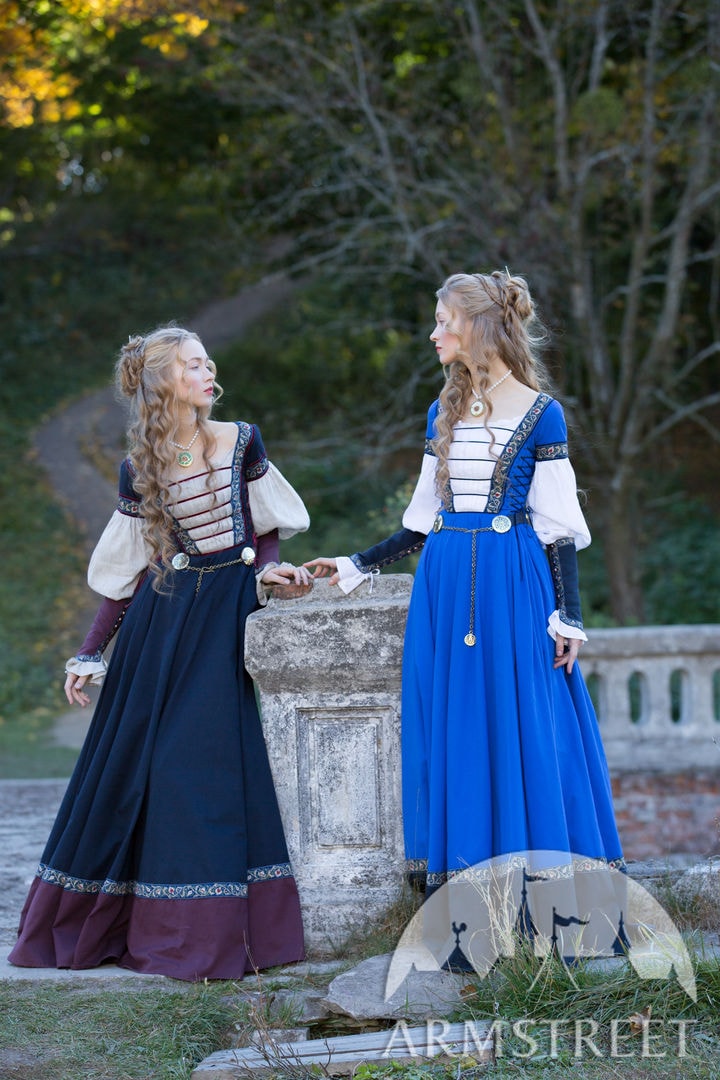
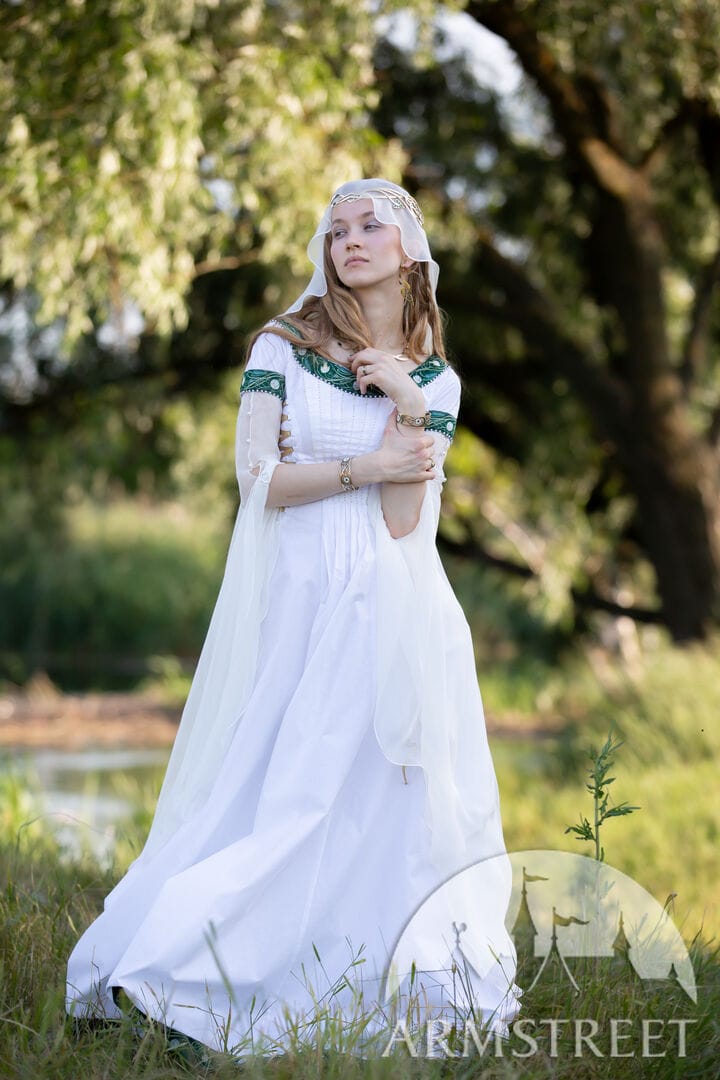
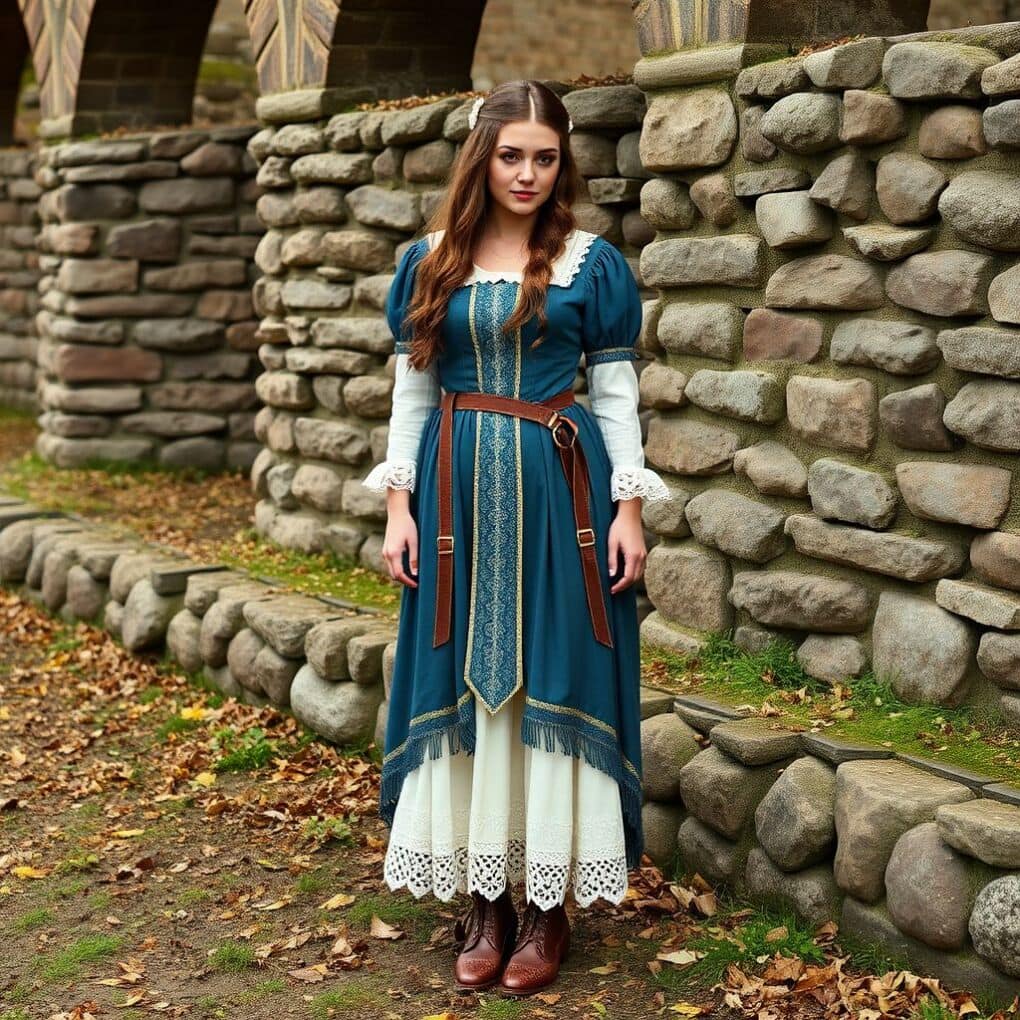
- Ladies wore a long, flowing woolen tunic often belted as their primary dress
- The tunic was loose-fitting and designed for practicality above all else
- Anglo-Saxon ladies would wear a simple cloak over the tunic for warmth and coverage
- A woman who wears a long veil outdoors was the norm — head coverings were universal across every class
- Two styles dominated — an everyday working tunic and a finer version reserved for special occasions
High Middle Ages (1000–1300 AD) — When Dress Got Fitted
By the 12th century, garments began to be laced to follow the body’s natural shape, and the bliaut emerged as a fashionable fitted piece with long sleeves that trailed dramatically to the floor. Tight sleeves marked high status while wide sleeves became a signature of aristocratic female attire, and illuminated depictions of the Virgin Mary in manuscripts set the visual standard for the idealized silhouette women would wear throughout this era.
Late Middle Ages (1300–1500 AD) — Drama, Luxury, and the V-Neckline
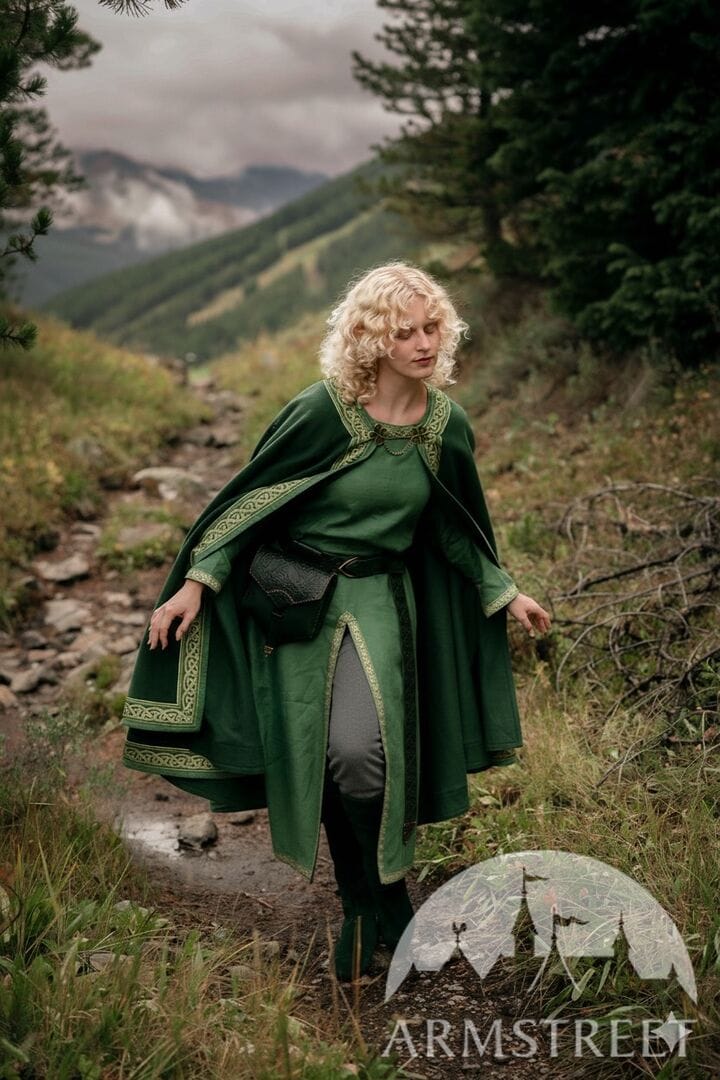
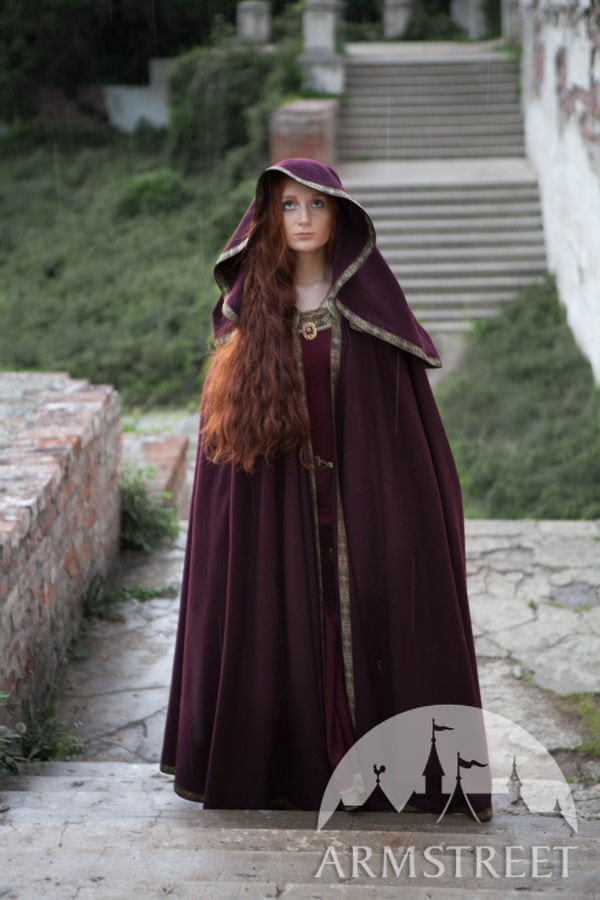
- The 14th century brought deep V-necklines, fitted bodices with lace closures, and dramatically trailing hems
- The houppelande — a voluminous outer garment with wide sleeves and elaborate fur trim became the ultimate status dress of the 1400s
- Noble ladies often wore silk pieces with gold and silver embroidery at court functions
- Long sleeves were frequently lined with luxurious fabric and contrasting silk trim
- The FIT Fashion History Timeline covers decade-by-decade detail on late medieval fashion trend
Modern Wardrobe Moment: The houppelande is the maximalist coat of its era oversized, dramatic, and impossible to ignore. A modern faux-fur trimmed oversized coat with wide sleeves is its direct descendant. Shop the look at ASOS or browse Etsy for independently crafted pieces.
Silk, Wool, and Fabric — What Did the Material World of Medieval Fashion Really Look Like?
The textile a lady wore was never just a practical choice it was a declaration of wealth, status, and identity woven into every thread, and understanding the fabric hierarchy is key to the full story of fashion in the middle ages. From the roughest undyed wool to the most opulent silk at court, this material world was as richly layered as the garments themselves.
The Medieval Fabric Hierarchy
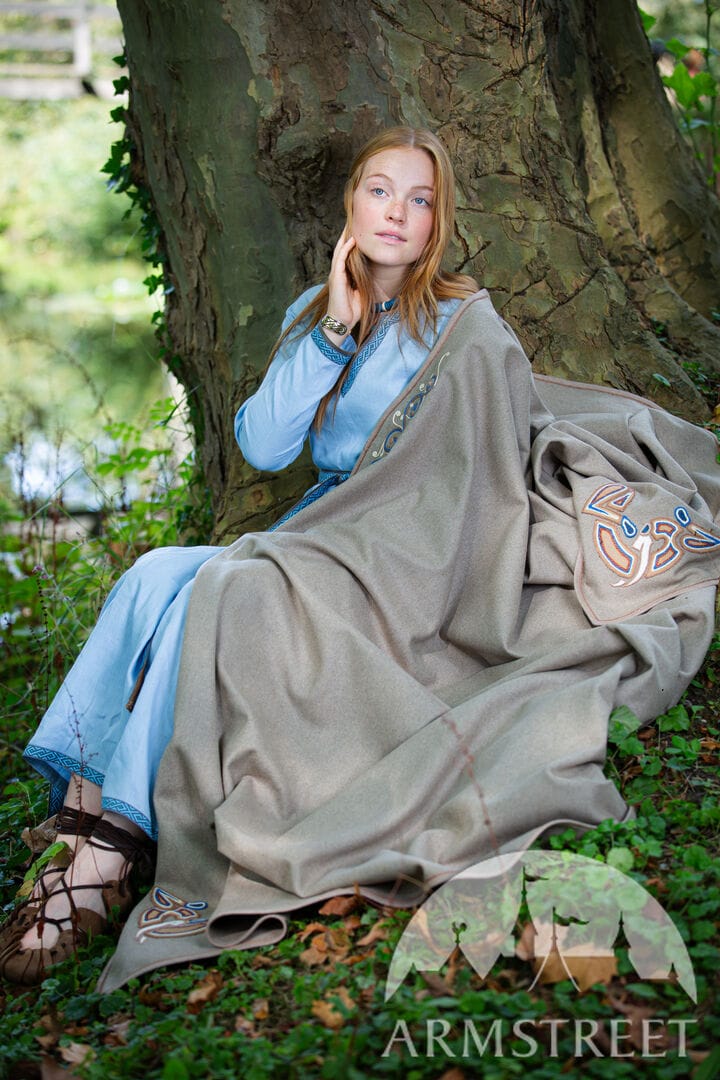
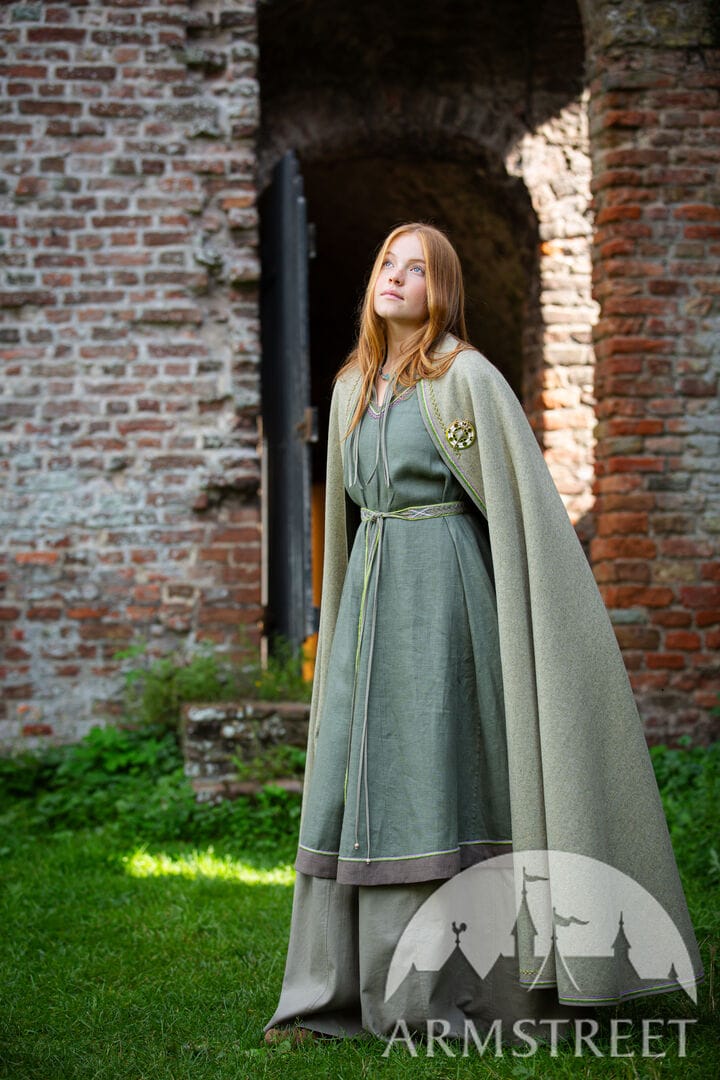
- Wool — worn by every class in some form, from coarse peasant dress to finely woven noble cloth
- Linen — universally used as underlayers; finer grades imported from Flanders indicated higher standing
- Silk — the ultimate opulent textile, imported via Eastern trade routes and largely restricted to the aristocracy through sumptuary laws
- Velvet — emerged in the late medieval era and immediately became a powerful status symbol at court
- Fur — used as edging and lining; ermine and sable were strictly associated with royalty
The Color Story — Dye as Status
- Natural undyed wool in muted tones was standard attire for working women
- Plant-based dye sources — woad for blue, madder for red, weld for yellow were common across medieval times
- Scarlet — a specific type of high-quality cloth signaled considerable wealth wherever it was worn
- Purple dye was associated with royalty and the Church across the rest of Europe
- Bright, saturated colors in any fabric type reliably signaled elevated social standing
- Sumptuary laws in many regions dictated which specific dye colors each tier was allowed to use
Weaving, Embroidery, and Textile Craft
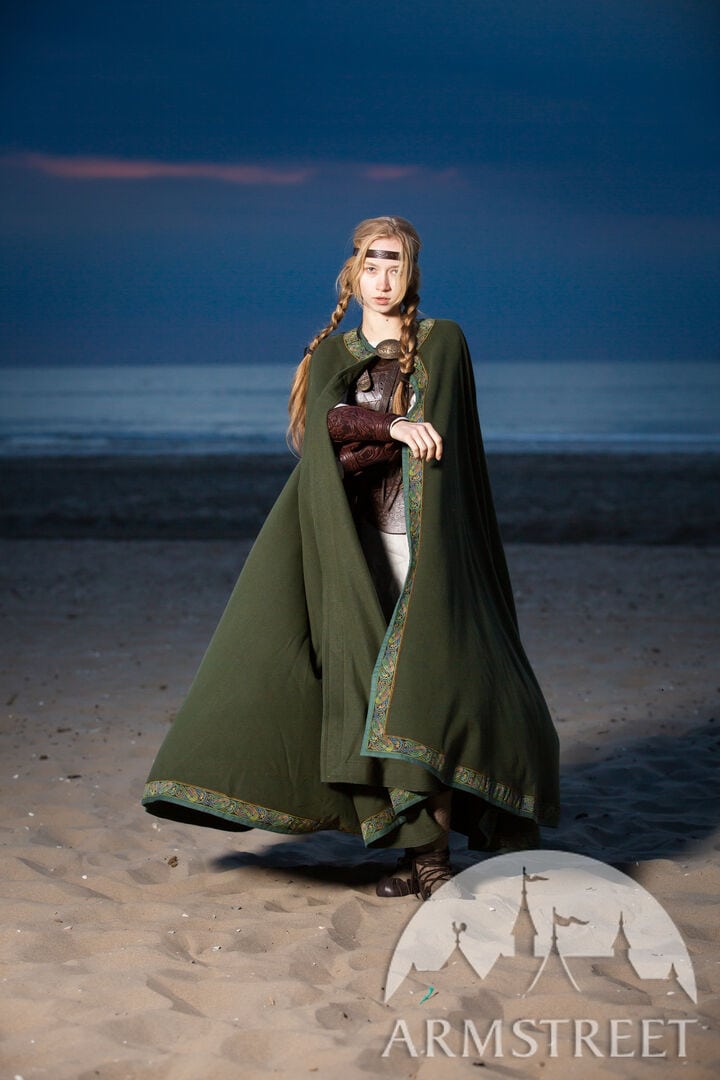
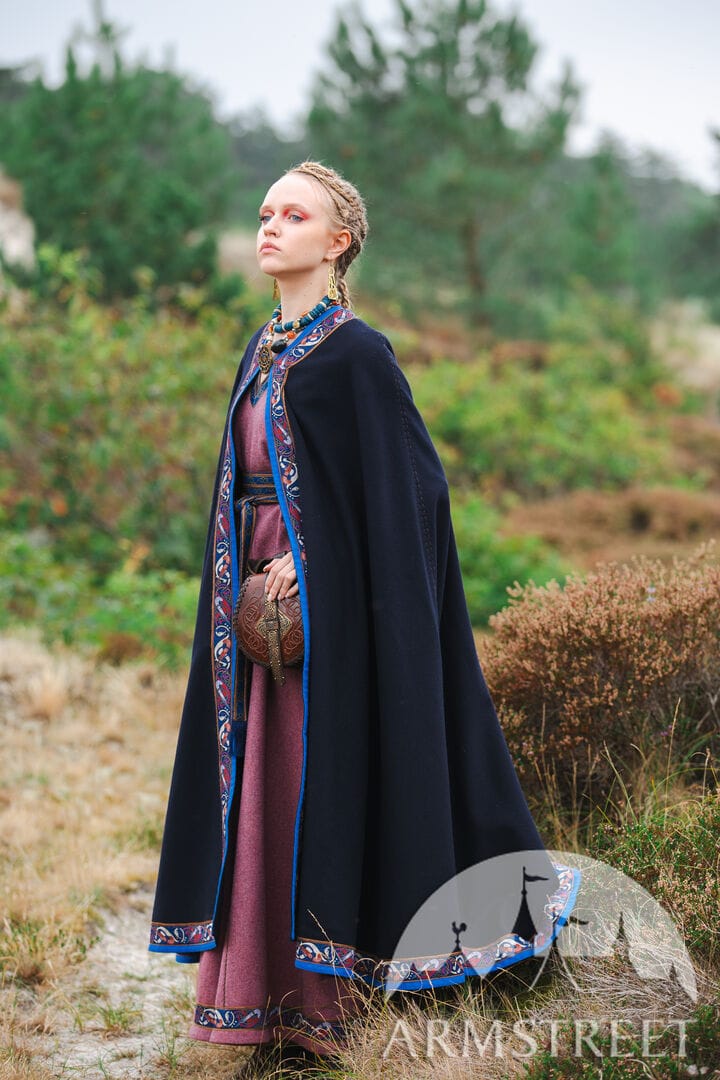
- Clothing made through labor-intensive hand weaving produced textiles of extraordinary quality and durability
- Intricate embroidery — particularly opus anglicanum goldwork elevated dress from functional attire into wearable fine art
- Byzantine textile traditions introduced entirely new silhouettes and cloth possibilities to the broader wardrobe
- Imported pieces allowed noble ladies to wear garments of a visual impact that domestic production simply couldn’t achieve
Modern Wardrobe Moment: The jewel tone palette of this era deep burgundy, forest green, sapphire, and burnt amber — is one of the most enduring color stories in history. Build a fall wardrobe using modern wool and linen pieces from Everlane or COS for an elevated, grounded look.
The Lady’s Outer Layer — What Were the Most Iconic Outer Garments in Medieval Women’s Fashion?
The outer garment a lady draped over her kirtle was where personal expression, social rank, and pure ambition collided and for aristocratic ladies especially, it was the most visible and deliberate part of the entire outfit. From the sweeping mantle to the dramatically cut surcoat, outerwear in this period was anything but an afterthought.
The Mantle — The Classic Cloak of Power
- A large, semi-circular piece fastened at the front with a decorative brooch or cord
- Noble ladies often wore mantles lined with opulent ermine and embroidered with precious metalwork at the edges
- The cloak functioned as both a practical layer and a powerful status display at court functions
- Married women of high standing would also wear richly dyed mantles as a clear signal of household wealth
- A simple woolen wrap was the only outerwear most working ladies could realistically afford
The Surcoat — One of the Era’s Most Daring Outer Garments
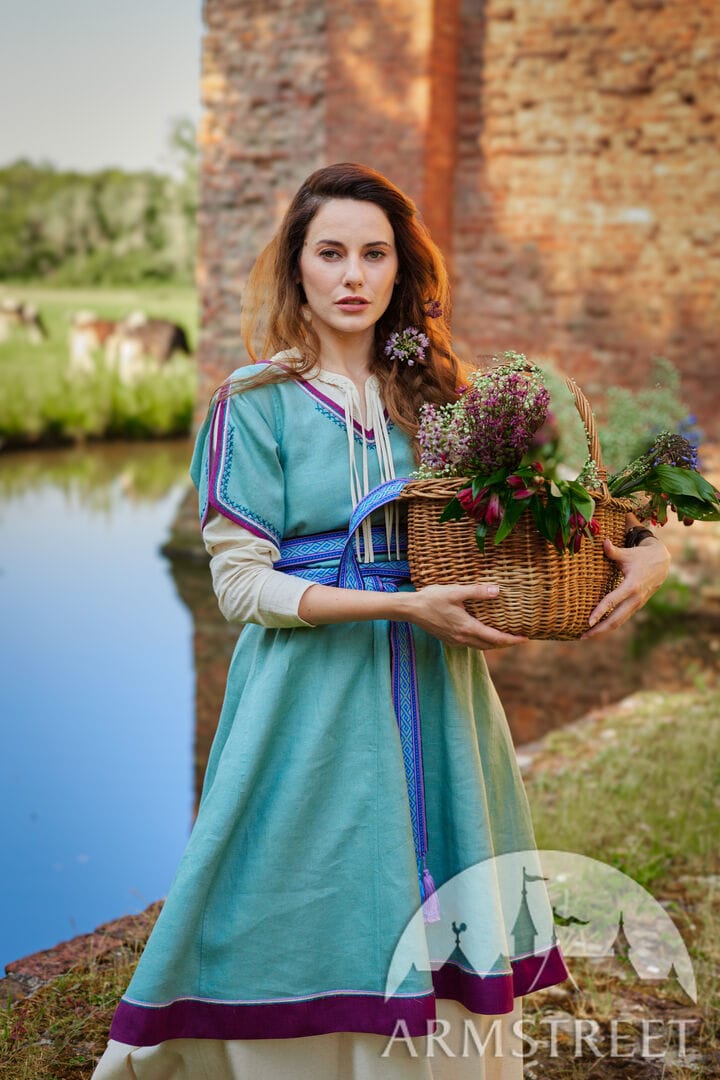
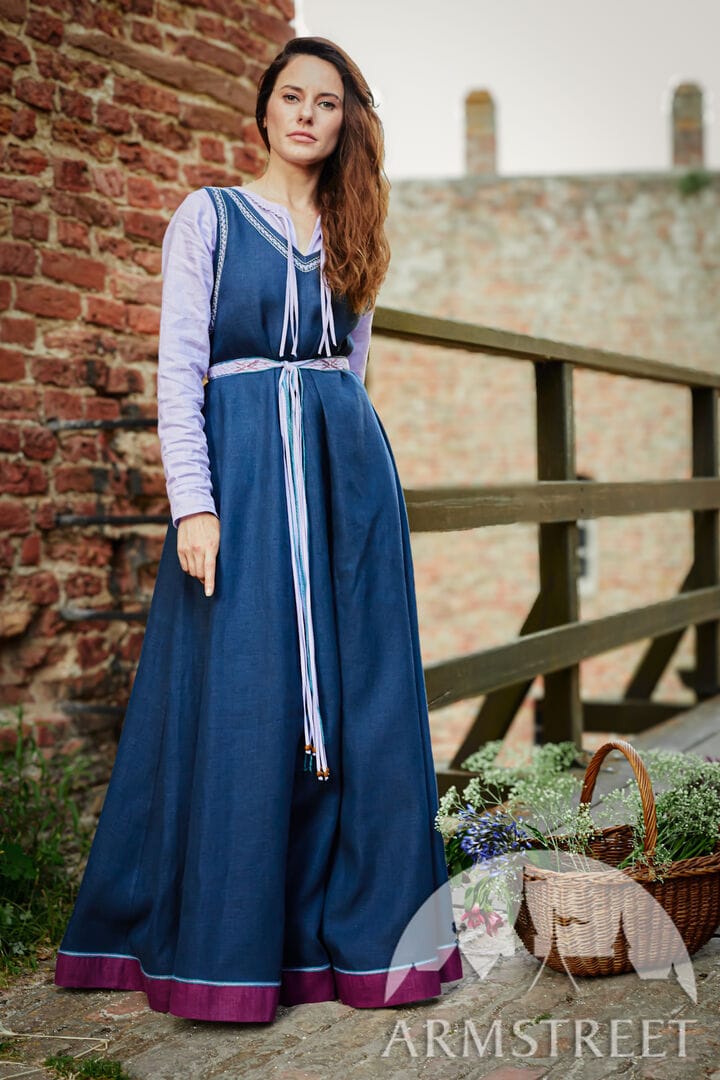
- Worn over the kirtle, the surcoat was a sleeveless overgarment that evolved dramatically throughout this period
- By the late middle ages it featured side openings so dramatic they were called “windows to hell” by disapproving clergy
- The cyclas — an early type of surcoat was more restrained in cut and popular in the earlier centuries
- A studded belt worn low on the hips over the surcoat was among the most fashionable accessories a lady could sport
- Heraldic embroidery allowed noble ladies to display family allegiance directly through their dress
The Houppelande — Drama at Its Peak
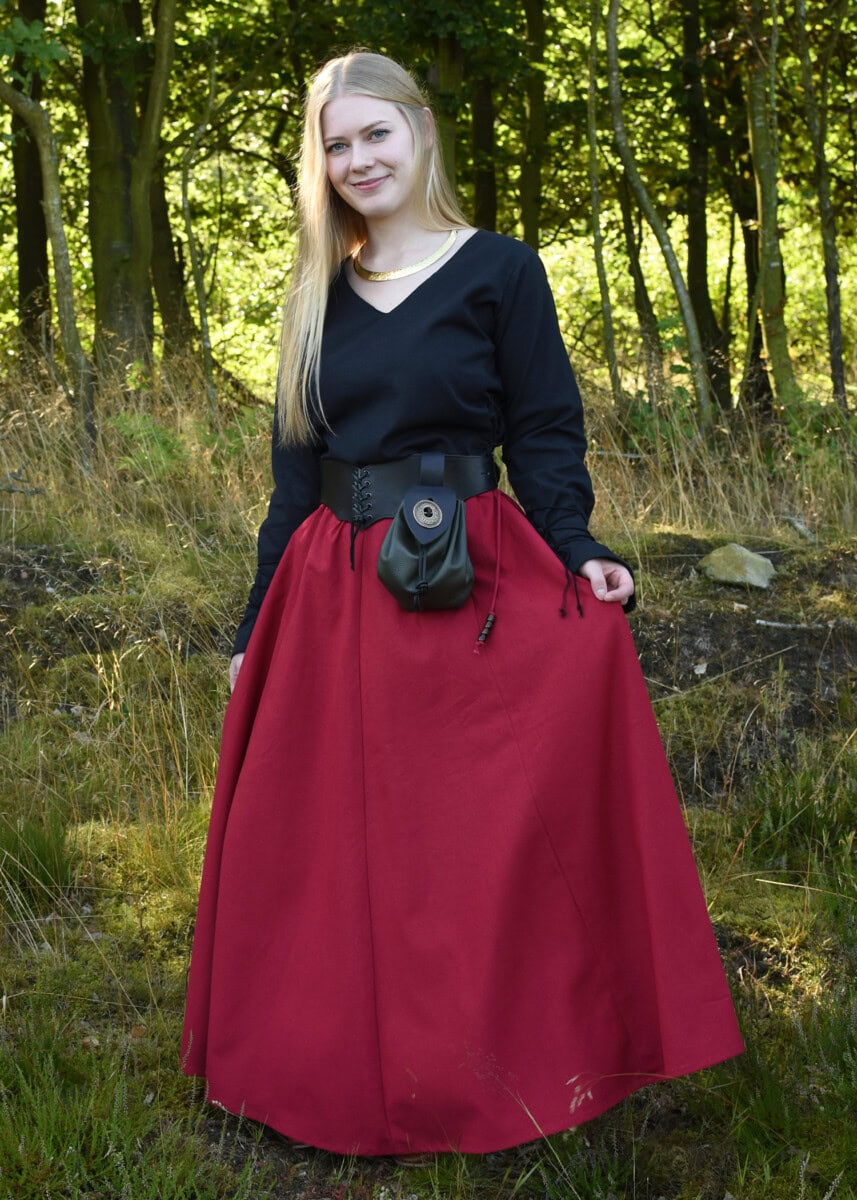

Women would wear this voluminous piece as both dress and outer layer depending on the occasion and climate, and its wide sleeves, heavily trimmed edges, and theatrical silhouette made it the defining court statement of the age. New fashion flowing in from the Burgundian court pushed silhouettes to their most elaborate extremes, and the Battle Merchant’s guide offers excellent context for how outerwear differed across female roles and standings.
Modern Wardrobe Moment: The surcoat’s open-sided silhouette is the direct ancestor of the modern sleeveless vest style one over a fitted long-sleeve dress for an instantly period-influenced look. For full dramatic effect, shop oversized coats at Free People or explore Leonardo Carbone’s collection for authentically inspired outerwear.
What Was on Their Heads — How Did Medieval Women’s Headdresses and Veils Define an Entire Era?
Head coverings were non-negotiable across the entire period going bareheaded in public was socially unacceptable for most adult ladies, and yet within that constraint, the creativity of female headwear was extraordinary. From the simplest linen veil to the most elaborate headdresses ever conceived, what sat atop a lady’s head was often the loudest statement in the entire outfit.
Early Coverings — Simple, Modest, Universal
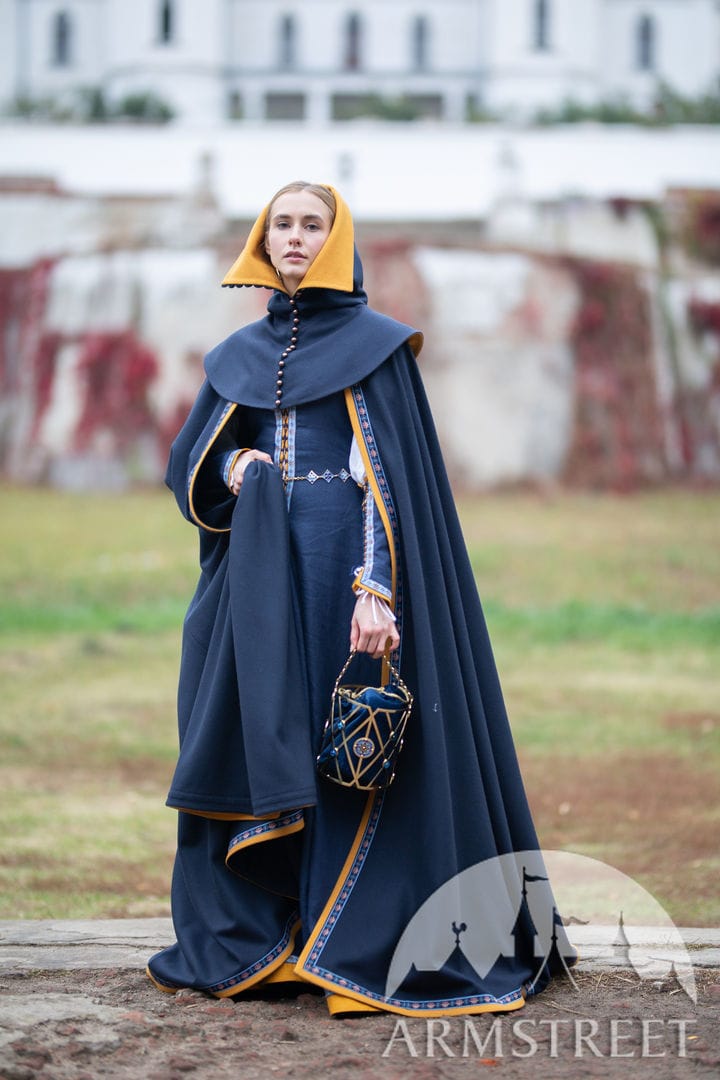
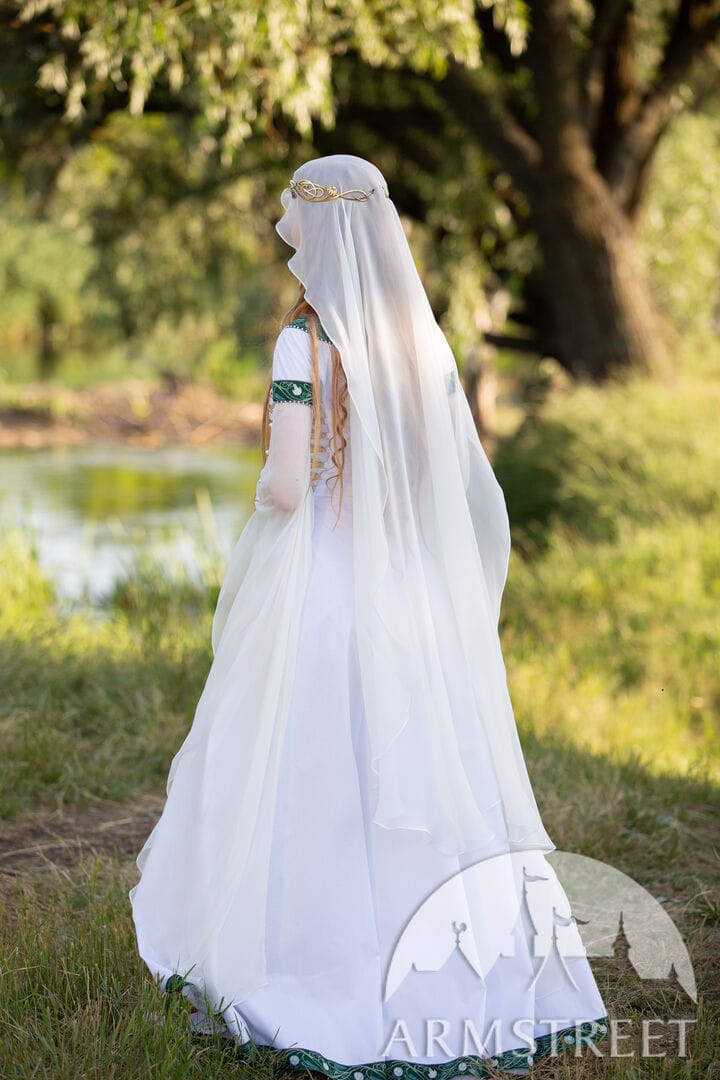
- The veil was the most universal head covering across all classes a simple draped cloth worn by virtually every lady in the region
- The wimple — cloth draped around the chin and neck became strongly associated with modesty and respectability in the 1100s
- Married women were particularly expected to keep their hair fully covered as a marker of social standing
- Among working ladies and peasant women, a simple knotted kerchief was the practical everyday alternative
- Illuminated manuscript depictions of feminine ideals heavily influenced the visual standard for head coverings throughout this period
High Middle Ages — When Headwear Got Structured
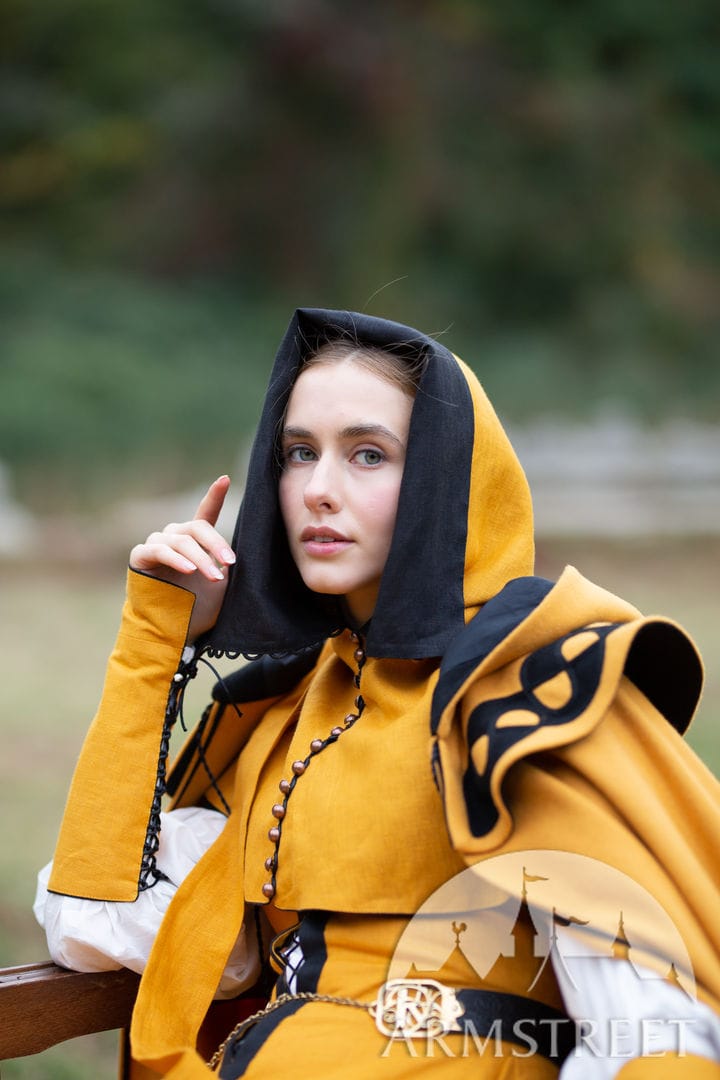
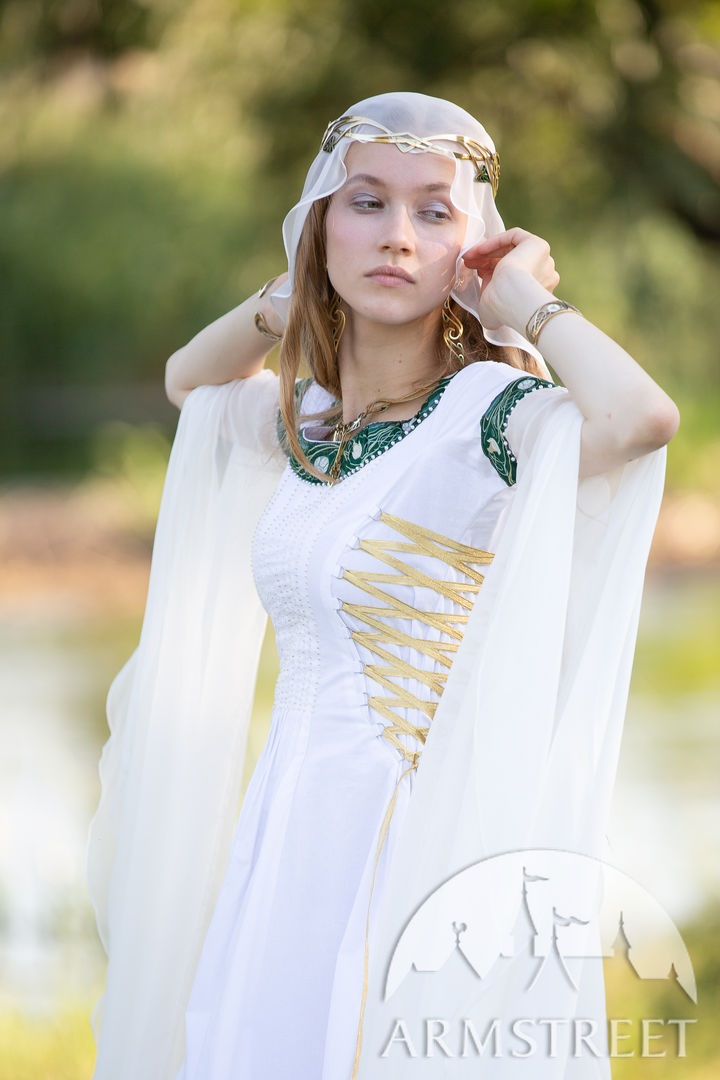
- The barbette and fillet — a stiffened band worn around the head became popular among aristocratic ladies in the 1200s
- The crespine or caul — a decorative net enclosing the hair at the sides added fashionable structure to female headwear
- Head coverings in this period ranged from the soft draped approach of earlier centuries to increasingly structured, architectural constructions
- The Virgin Mary’s depiction in art and manuscripts set the standard for how an idealized woman wore her head covering throughout this era
Late Middle Ages — Elaborate Headdresses at Their Most Dramatic
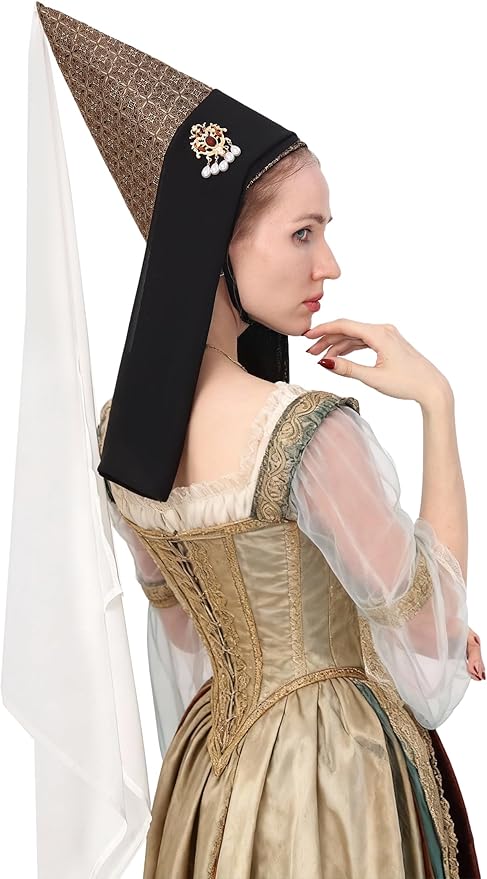
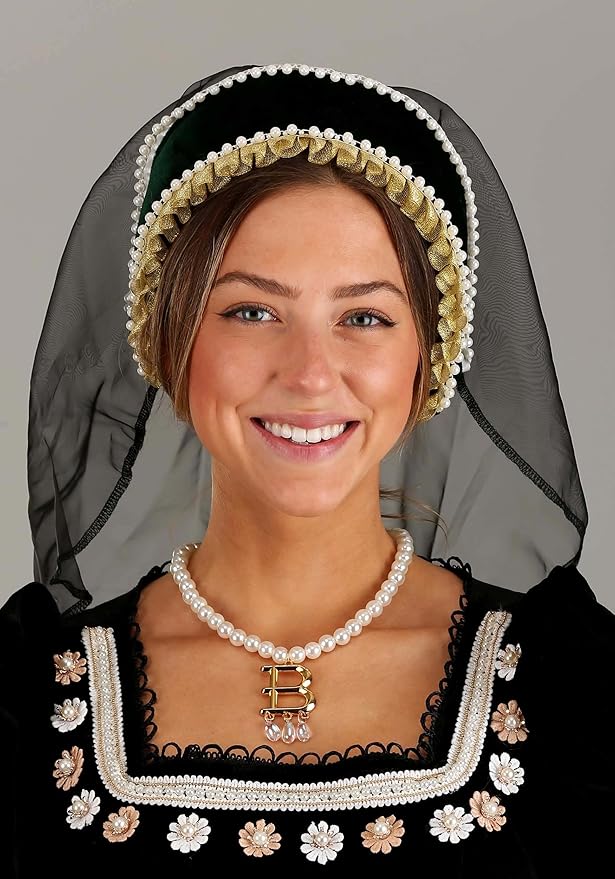
- The hennin — the iconic tall conical hat of the 15th century was almost exclusively worn by high nobility in France and Burgundy and could reach several feet in height
- Elaborate headdresses required internal wire frames and were often draped with sheer silk or fine gauze
- The butterfly headdress became one of the most recognizable silhouettes of late female dress
- The FIT Fashion History Timeline for 1400–1409 documents the rapid evolution of head coverings with decade-by-decade precision
- By the close of the period, headwear had become so architecturally complex it carried directly into Renaissance style
Modern Wardrobe Moment: The medieval veil has made a quiet comeback in bridal and editorial circles — sheer headwraps, draped scarves, and structured fascinators all carry its DNA. Try a sheer fabric wrap tied loosely at the nape, or explore ASOS and Etsy for wearable modern interpretations.
Dressed for the Job — How Did a Woman’s Role Shape Her Dress in the Medieval Period?
Not every lady dressed for court, and the diversity of attire across different female roles and professions is one of the most fascinating threads in this entire story. What a woman did every day shaped every single piece she owned from the textile and silhouette right down to the hem length and sleeve style.
Noble Women and Ladies-in-Waiting — Dressed for Power
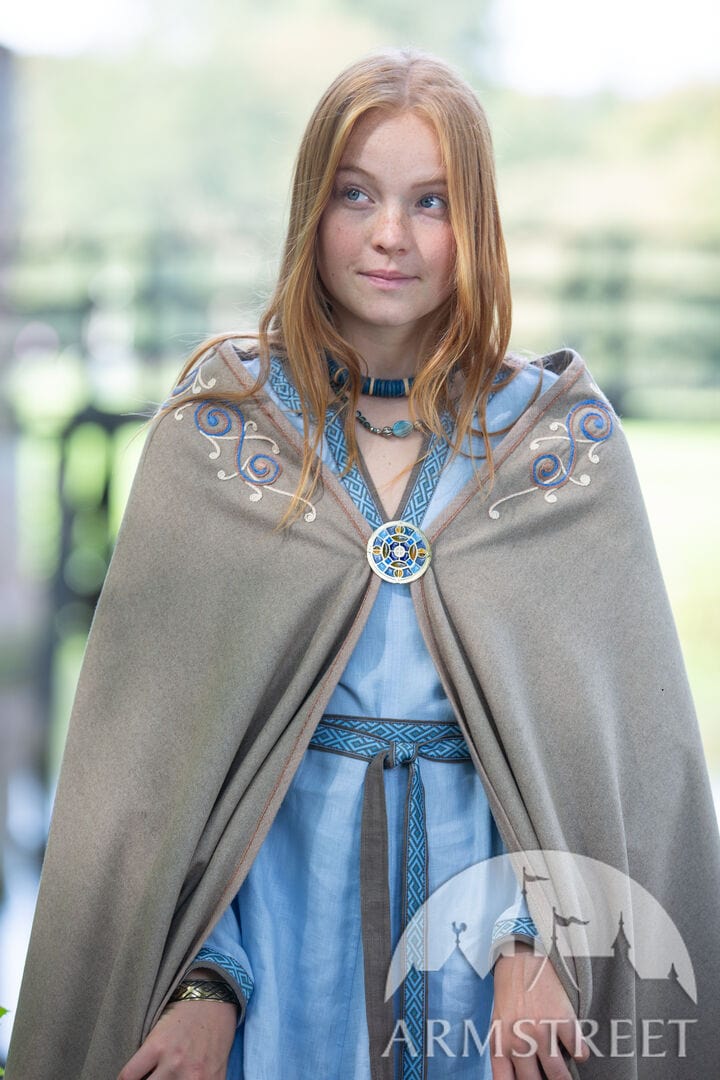

- Noble ladies and their attendants wore the pinnacle of court dress elaborate layered silk pieces, trained hems, and richly embroidered outer garments
- A lady-in-waiting often wear clothing that mirrored her mistress’s look but in less opulent textiles and simpler trim
- Court attire followed strict fashion trends dictated by whoever held the highest social standing at the time
- Museum Replicas offers beautifully reconstructed versions of aristocratic court attire for strong visual reference
Merchant Women and Craftswomen — The Middle Ground of Dress
- Townswomen dressed practically but respectably quality wool and linen in the same silhouettes as the aristocracy but without the opulent materials
- Women would wear neat kirtles, well-made outer garments, and tidy head coverings that communicated respectability without crossing into aristocratic territory
- Men’s clothing and women’s clothing in merchant households often used the same quality wool — purchased from the very cloth traders they worked alongside daily
- The Postej and Stews blog has excellent detail on how middle-class female garb balanced practicality with personal expression
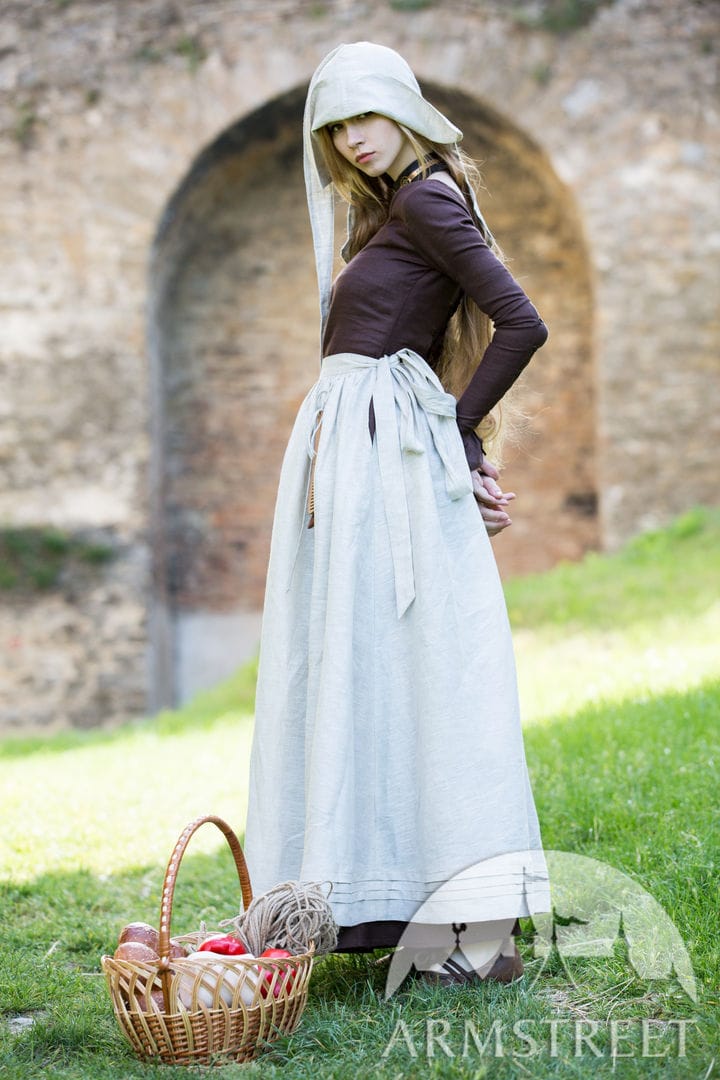
Peasant Women and Religious Ladies — Function Over Fashion

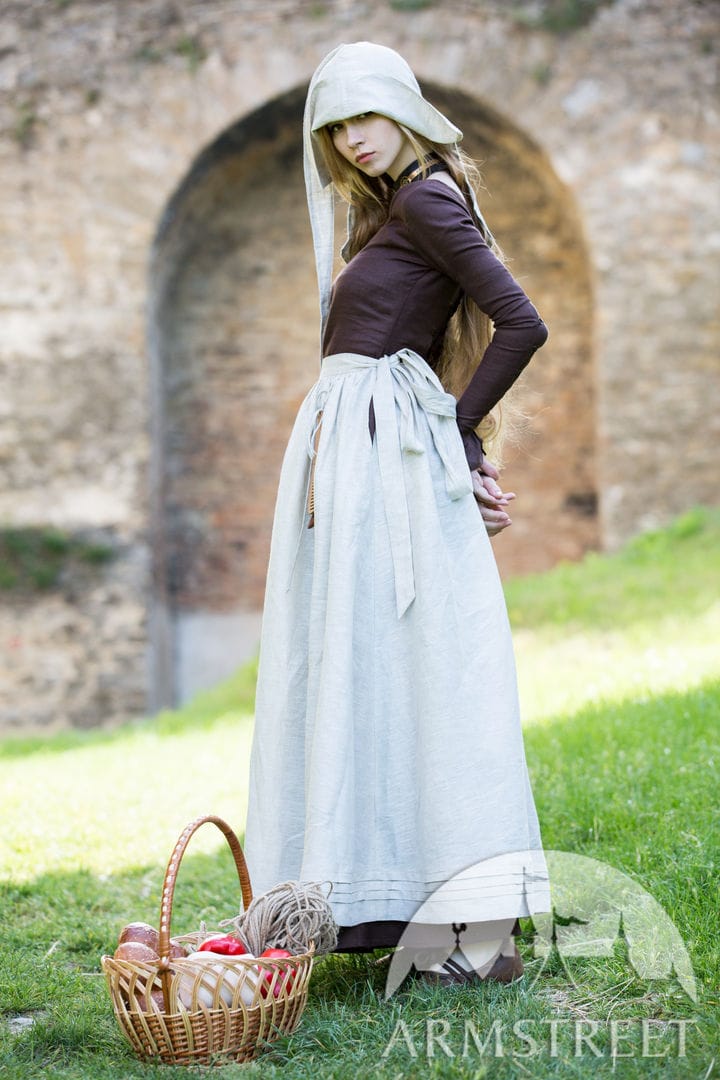
- Peasant women wore rough undyed wool in simple tunic styles clothing made for survival and hard physical labor above all else
- Hemlines ran shorter among the lower classes for practical movement, and a plain kerchief replaced any elaborate head covering
- Women could layer a coarse woolen wrap over their basic dress in colder months to stay warm
- Religious ladies wore modest habits that actually preserved certain early garment styles long after the broader continent had moved on
- The Battle Merchant’s guide breaks down attire by role with excellent visual context throughout
Modern Wardrobe Moment: The working woman’s layering system shift, kirtle, apron, kerchief is cottagecore in its purest original form. Shop the look at Holy Clothing or browse Etsy for handmade pieces that nail this effortless layered style.
Jewels, Belts, and the Power of Accessories — What Finished a Medieval Woman’s Look?
Accessories were never an afterthought in this world they were the punctuation mark on every outfit, and for a lady navigating the rigid social order of the time, the right brooch, belt, or silk purse could speak volumes without a single word. The diversity of medieval accessories across different female tiers is a fascinating thread running through the entire story of this era’s dress.
The Girdle Belt — The Medieval Woman’s Most Iconic Accessory
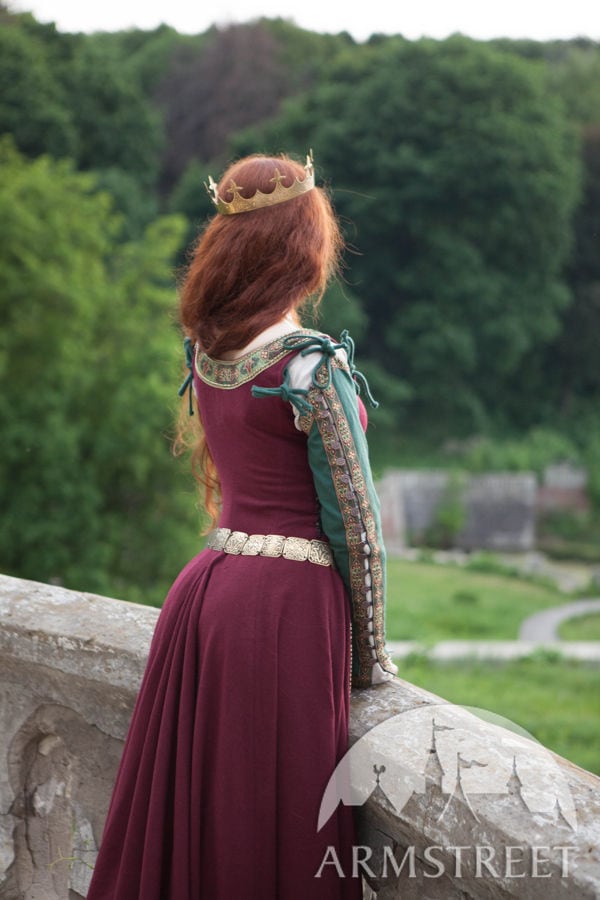
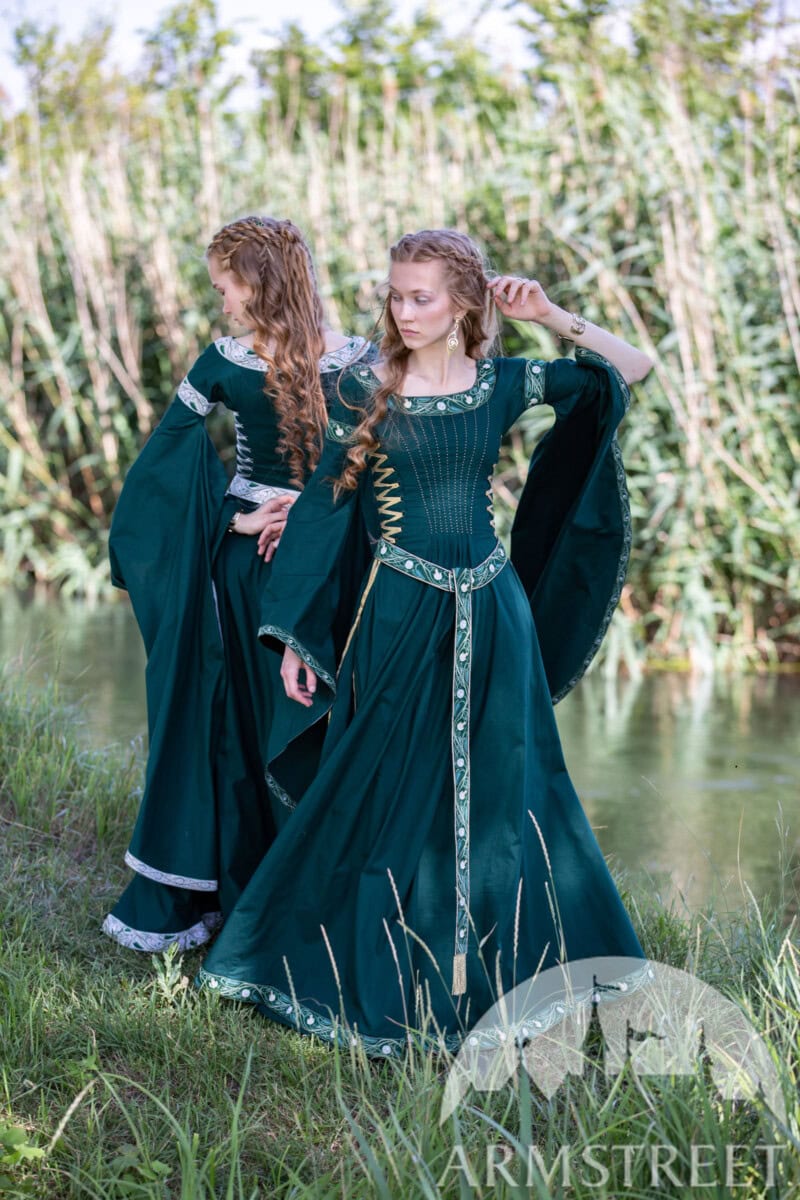
- Worn low on the hips over the outer garment, the girdle was one of the most recognizable silhouette elements of late medieval female attire
- Noble ladies often wore elaborately crafted girdles featuring precious metalwork, gemstones, and intricate lace detailing
- The low-slung hip belt appears consistently across women’s clothing from the high middle ages onward as one of the most fashionable pieces a lady could wear
- Among working ladies, a simple knotted cord or plain leather strap served the same functional purpose without the opulent trim
Brooches, Rings, and Clasps — The Small Details That Said Everything
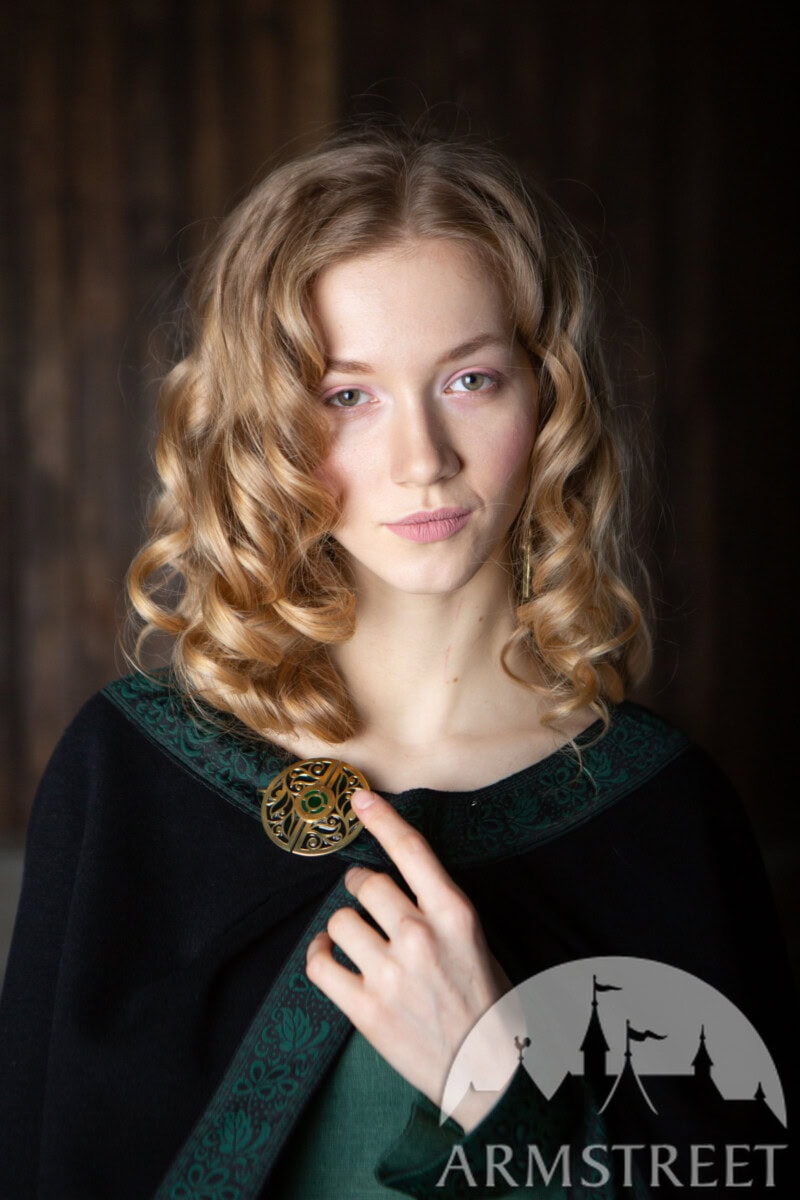
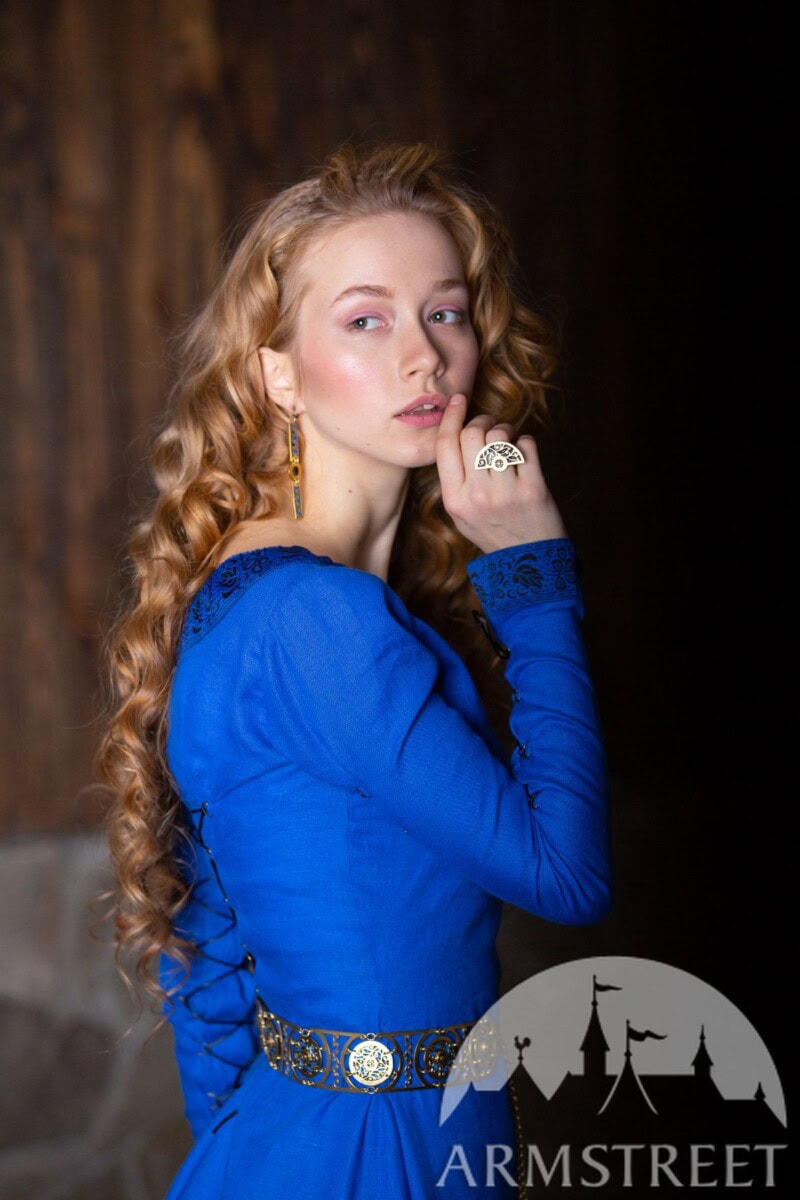
- Brooches were used to fasten cloaks and veils but were also highly decorative often set with gemstones or delicate enamel work
- Rings were common even among non-noble ladies, with simpler metals replacing precious versions reserved for the wealthy
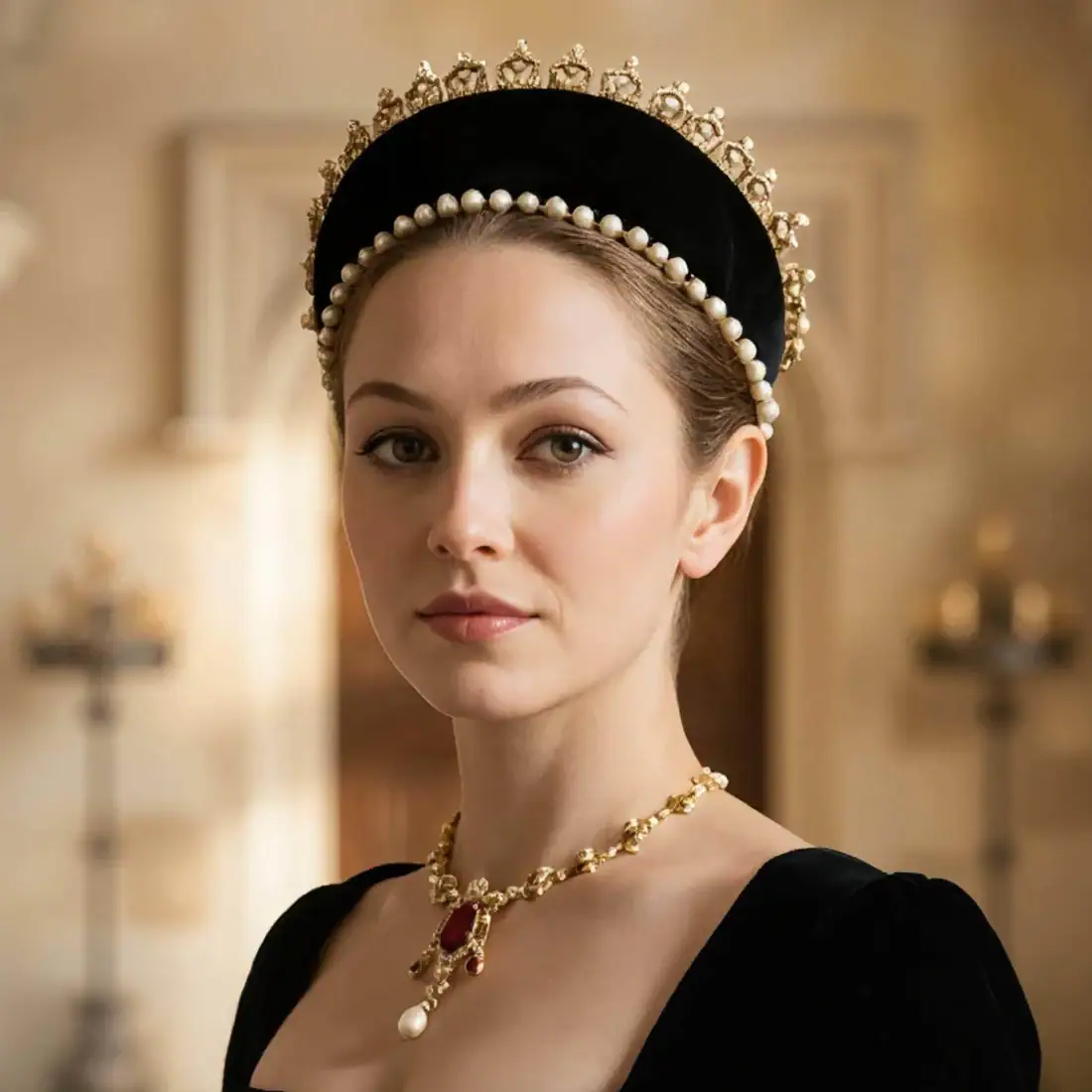
- A lady of standing would also wear earrings, decorative hairpins, and sometimes a jeweled circlet over her head covering
- Byzantine noblewomen were particularly known for pearl-encrusted garments one predecessor’s attire reportedly featured over 30,000 pearls
- The Metropolitan Museum’s medieval collection holds stunning examples that illustrate just how sophisticated this accessory culture really was
Purses, Embroidery, and Wearable Art
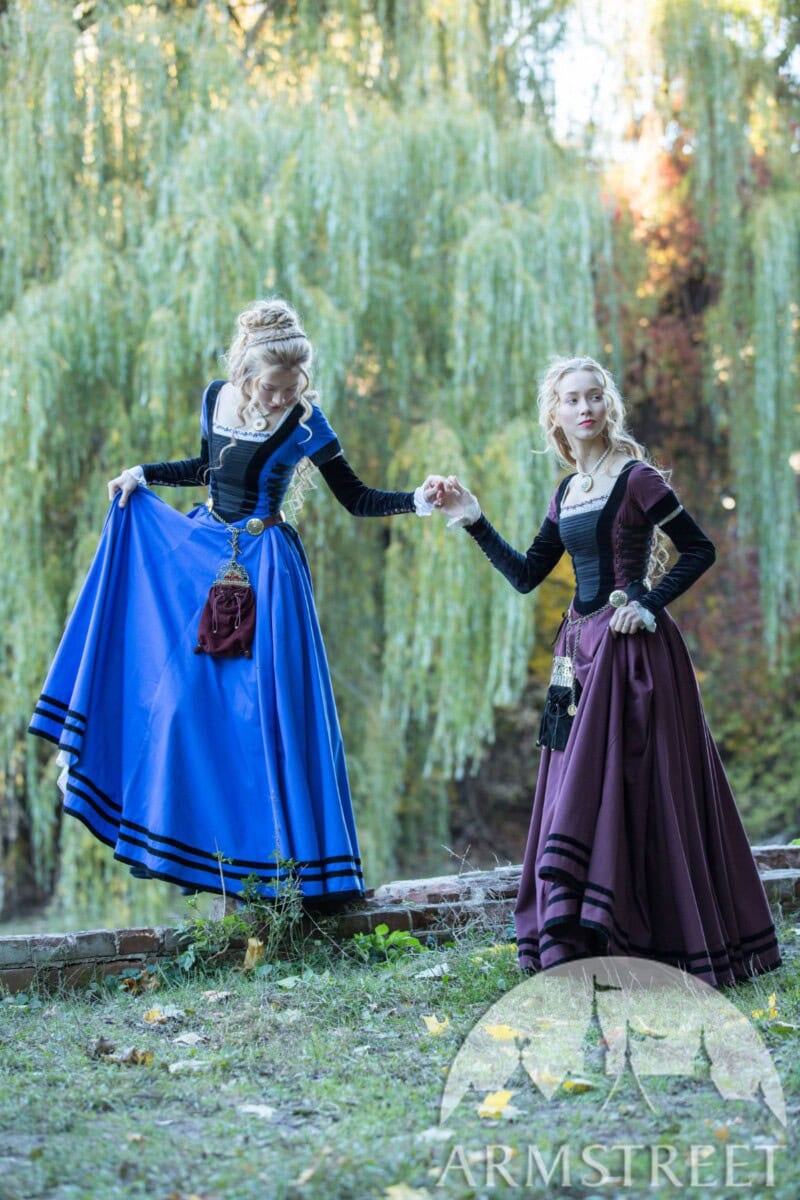
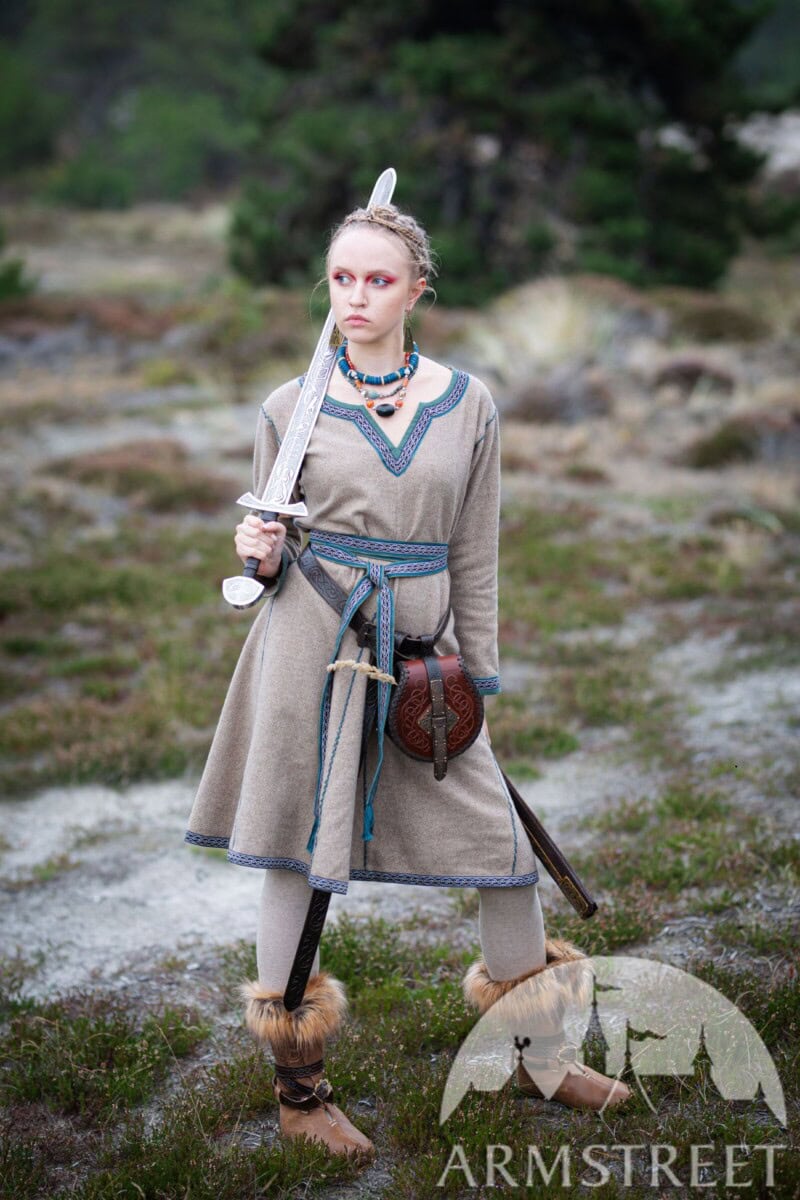
- The almonière — a small decorative silk pouch hung from the girdle was essentially the medieval handbag, and every fashionable lady carried one
- Embroidery elevated dress from functional attire into wearable fine art intricate opus anglicanum goldwork was so valued it was exchanged as diplomatic gifts between royals
- Women also wore decorative wrist cuffs that coordinated with the lace and embroidery detailing on their sleeve edges
- The Victoria and Albert Museum’s fashion collection is one of the best resources for seeing authentic accessories in extraordinary detail
Modern Wardrobe Moment: The medieval low-slung girdle belt is having a full-on fashion renaissance right now — wear a wide leather or chain version low on the hips over a maxi dress or linen tunic for an instantly current silhouette. Shop modern versions at ASOS or browse Etsy for handcrafted leather options from independent artisans.
The Changing Fashion of the Late Middle Ages — When Did Medieval Clothing Become Real Fashion?
The high and late middle ages represent the moment when women’s fashion in medieval Europe stopped being purely functional and became genuinely trend-driven, internationally influenced, and fast-changing a new fashion world bearing a striking resemblance to how style operates today. By the 14th century and into the 1400s, the pace had accelerated dramatically, with clothing for women at court shifting decade by decade rather than century by century.
The Rise of Burgundian Court Fashion — The Style Capital of the Age
- The Duchy of Burgundy emerged as the undisputed style center of the period its court set the standard the rest of the continent scrambled to follow
- Burgundian fashion pushed silhouettes to dramatic new extremes elongated hemlines, towering head coverings, and theatrical sleeve styles defined the look
- Noble ladies at the Burgundian court would wear the most luxurious and architecturally complex garments ever seen in medieval times
- Fashion trends spread outward through traveling aristocracy, diplomatic exchanges, and richly detailed tapestries that functioned as the social media of the day
- The FIT Fashion History Timeline documents this extraordinary period with decade-by-decade scholarly precision
Trade Routes and New Influences — How the World Dressed Medieval Women
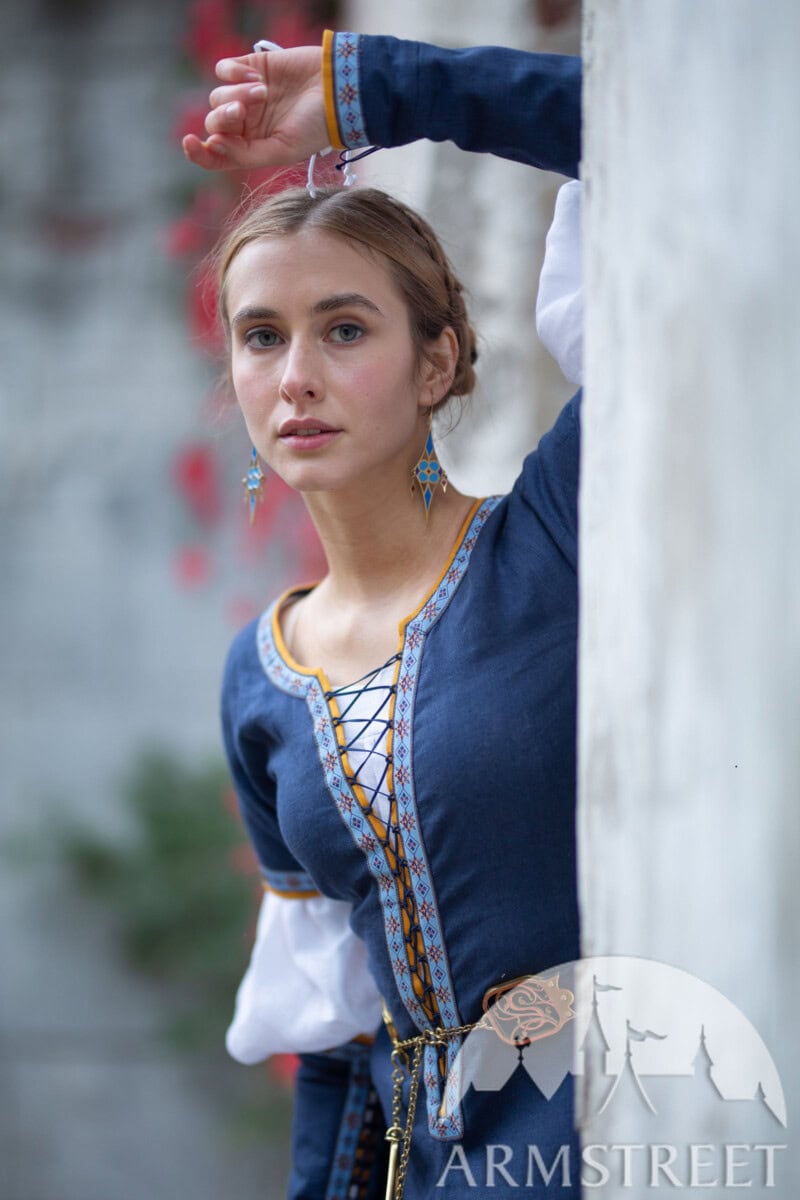
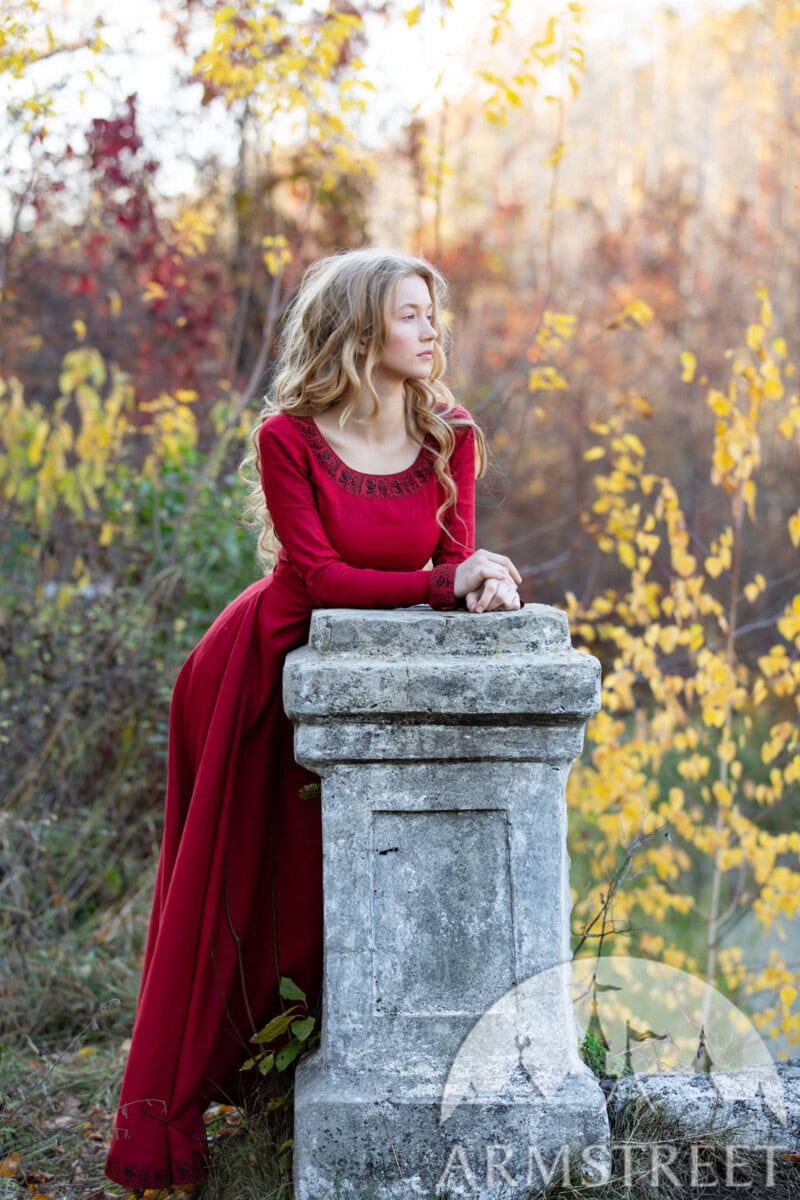
- Silk, velvet, and exotic dye sources flowed in through Eastern trade routes, introducing entirely new textile and color possibilities to the female wardrobe
- Byzantine traditions heavily influenced western dress particularly in richly patterned fabric and luxurious layered pieces
- The introduction of new fashion elements created a genuine cross-cultural style exchange that enriched medieval women’s clothing in ways still visible in the historical record today
- Imported silk allowed noble ladies to wear pieces of a visual impact that domestically produced textiles simply couldn’t achieve
- Medievalists.net’s fashion history feature explores this cross-cultural exchange in fascinating depth essential reading for anyone serious about this subject
Fashion Criticism and the Politics of Dress
- As fashion in the middle ages grew more elaborate, it attracted fierce criticism from clergy who viewed excessive female dress as a moral failing
- Sumptuary laws were repeatedly reinforced throughout this period specifically because women pushed the boundaries of what they were allowed to wear
- The debate around female attire how luxurious, how fitted, how elaborate was a genuine political conversation that echoed far beyond the wardrobe
- The Britannica overview provides excellent context for understanding how these tensions shaped the dress women wore throughout this era
Modern Wardrobe Moment: The Burgundian court aesthetic maximalist, dramatic, and unapologetically extravagant translates beautifully into modern statement dressing. Think structured gowns with dramatic sleeves, rich velvet in deep jewel tones, and architectural headwear. Explore Armstreet’s dress collection for genuinely stunning historically inspired pieces.
How Does Medieval Women’s Fashion Translate Into a Modern Wardrobe Today?
Medieval fashion has never truly disappeared it simply shapeshifted into the silhouettes and style moments that keep cycling back into contemporary wardrobes, and knowing the historical roots of these looks makes wearing them feel intentional rather than costume-y. Whether the personal aesthetic leans maximalist, minimalist, or somewhere in between, there is a direct line from the garments of medieval women to what is hanging in modern closets right now.
The Maximalist — Full Drama, Modern Context
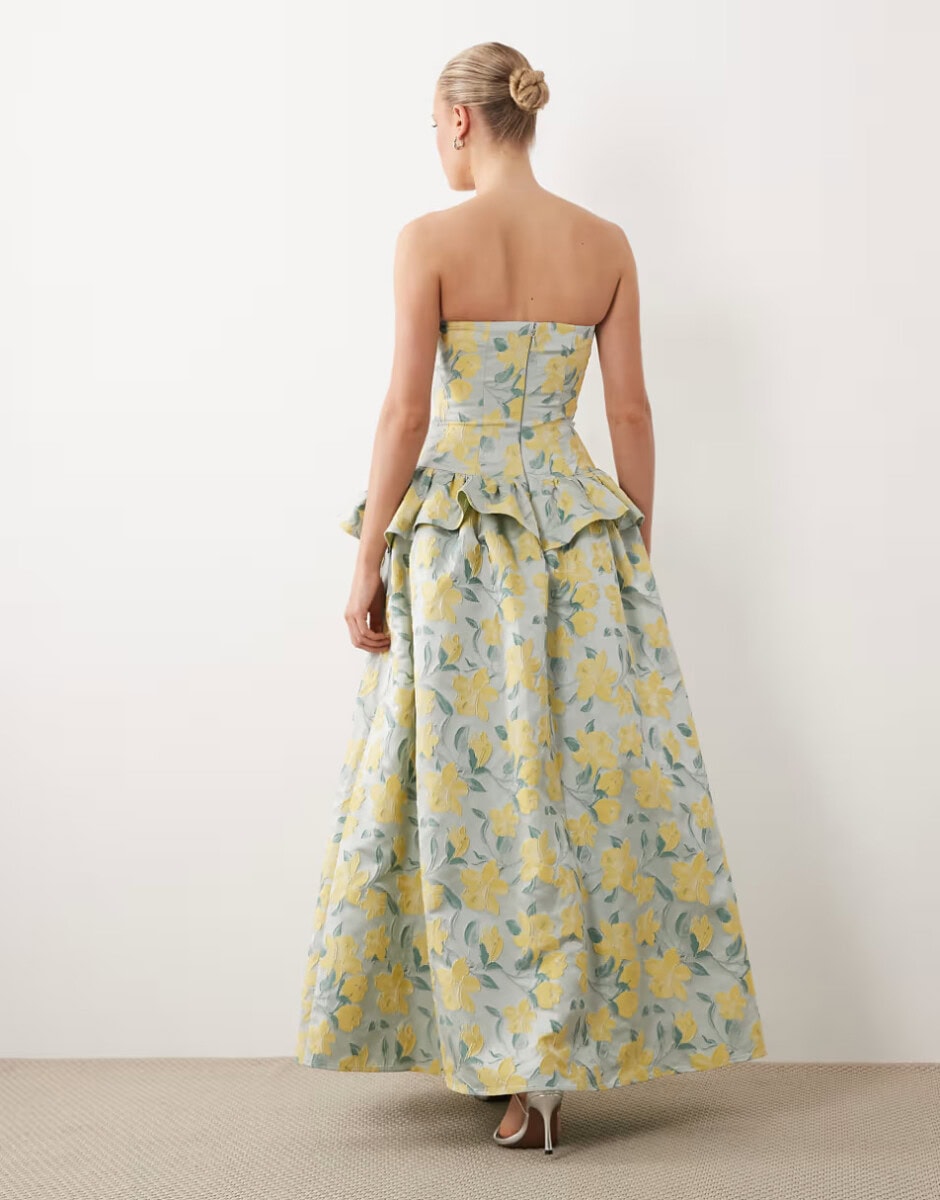
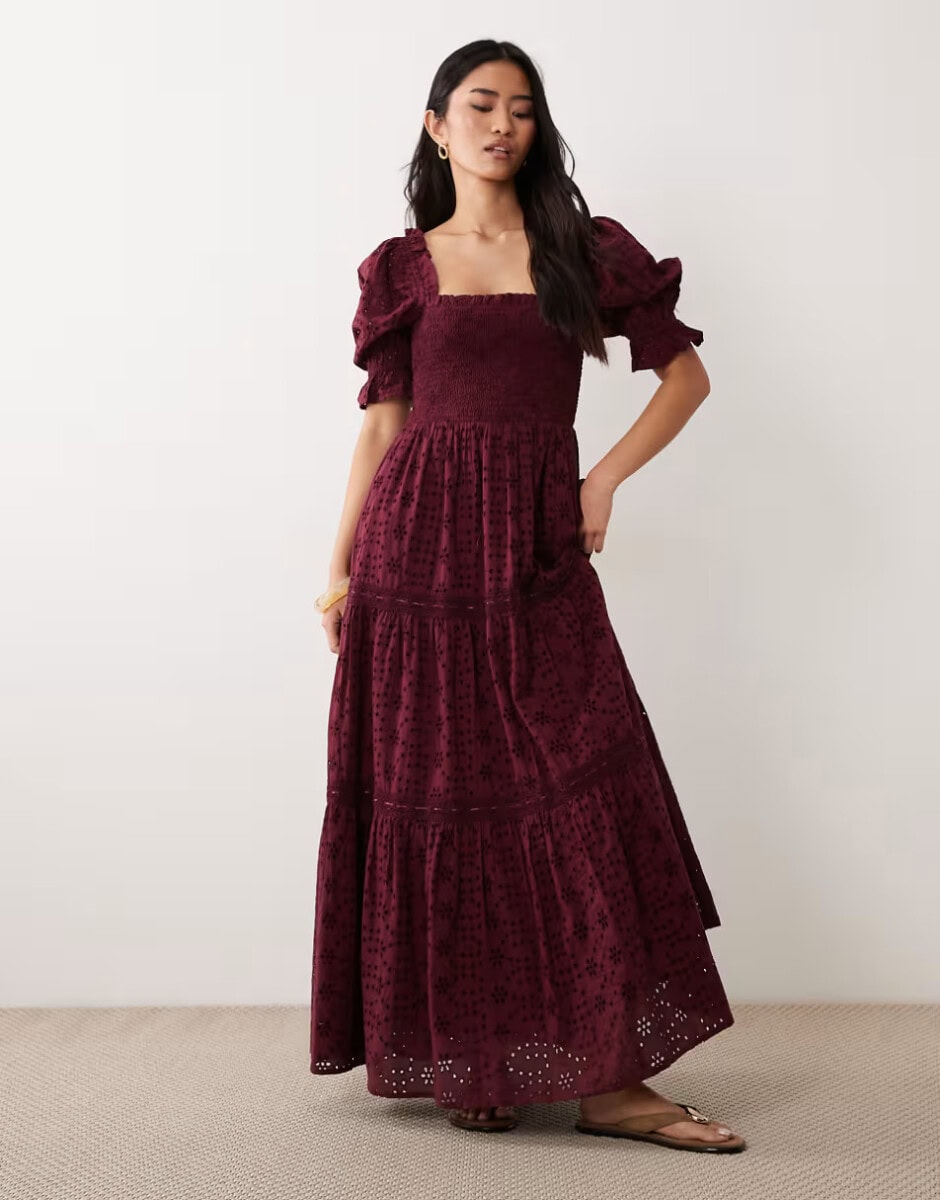
- Channel the houppelande through an oversized faux-fur trimmed coat with dramatic wide sleeves in deep jewel tones
- Layer richly colored velvet pieces a velvet midi skirt paired with a structured blouse captures the opulent layering of late court dress beautifully
- Architectural headwear structured turbans, wired headbands, or dramatic fascinators echoes elaborate historical headwear without veering into costume territory
- A low-slung chain belt over a flowing dress pulls the entire period-inspired look together instantly
Shop at Free People, ASOS, or Armstreet’s collection for genuinely stunning statement pieces
The Minimalist — Clean Lines, Historical Soul


- The linen chemise dress — simple, flowing, and effortlessly elegant is the most wearable direct descendant of the medieval woman’s foundational pieces
- A neutral-toned tunic worn belted at the waist with simple leather sandals captures early female attire in the most understated, modern way possible
- Natural undyed tones — cream, oatmeal, soft grey, and warm brown form the perfect minimalist period palette
- Everlane and COS both carry clean linen pieces that work beautifully as a foundation for this pared-back aesthetic
The Cottagecore Lover — Working Women Reimagined
- The working woman’s layering system shift, kirtle, apron, kerchief is cottagecore in its purest original form
- A flowy linen dress layered under a fitted vest with a simple apron overlay is as period-accurate as it is Pinterest-worthy
- Earthy tones, natural textiles, and loose feminine silhouettes are the shared language between medieval working dress and the modern cottagecore aesthetic
Holy Clothing and Etsy are the best destinations for pieces with genuine medieval DNA
The Fashion-Forward — Medieval Silhouettes as High Style
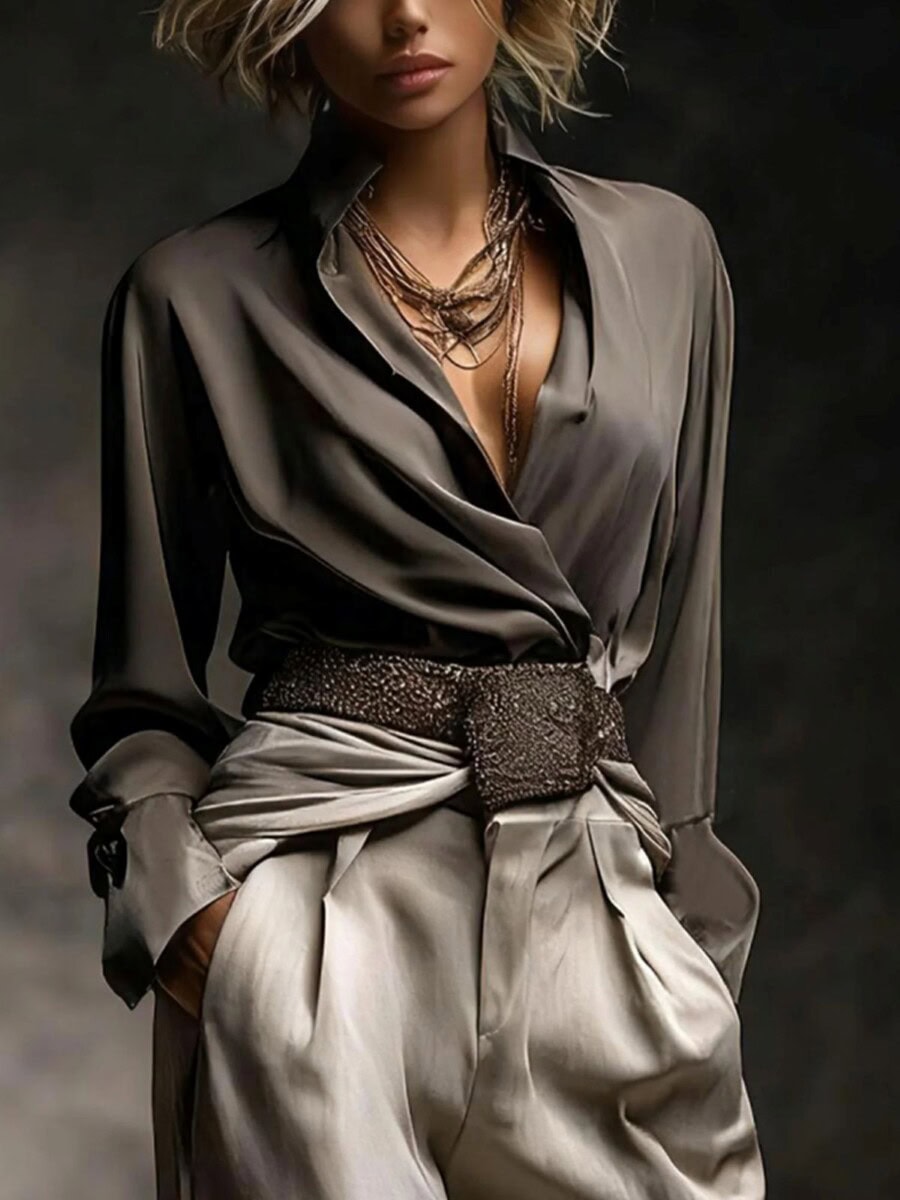
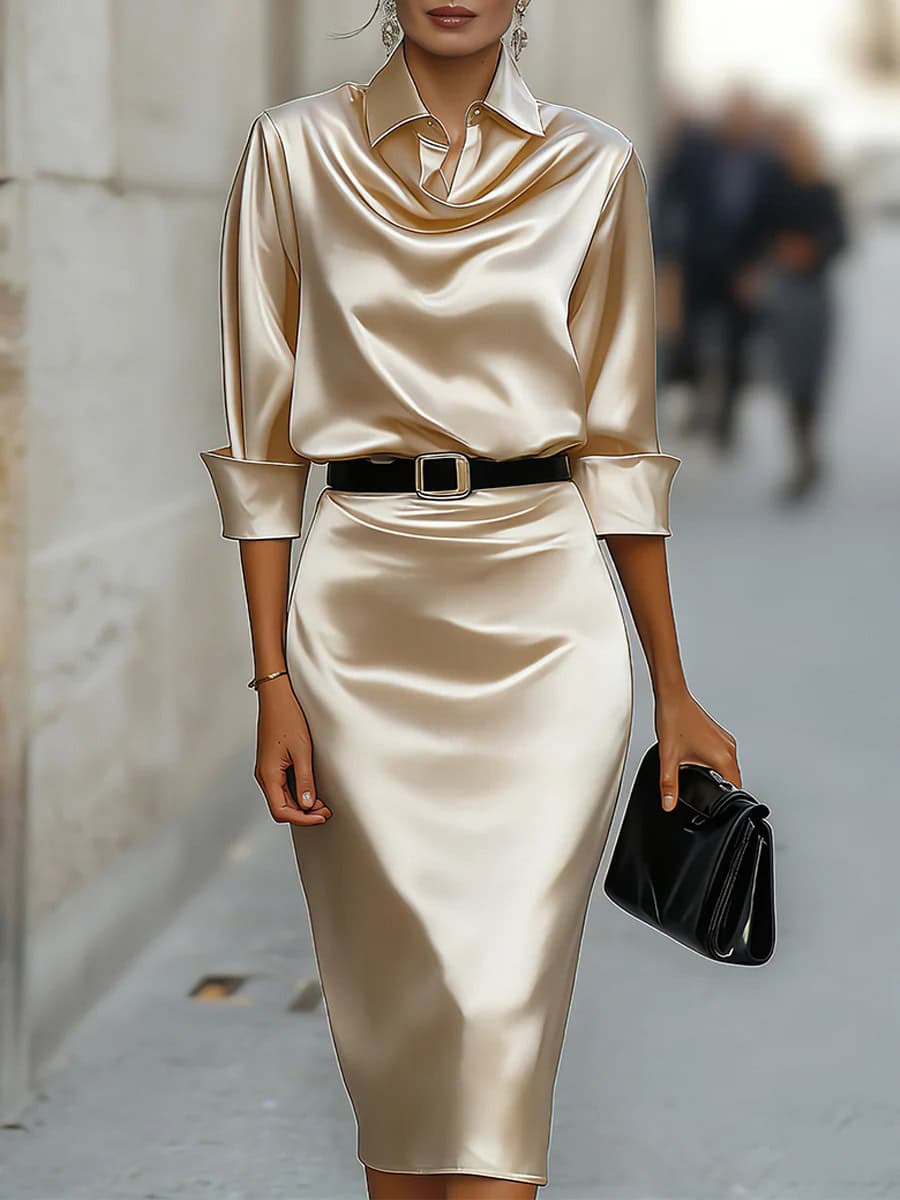
- The surcoat’s open-sided silhouette translates directly into the modern sleeveless structured vest worn over a fitted long-sleeve dress
- A sheer silk or chiffon veil worn as a headpiece bridges medieval times and contemporary runway in one effortless move
- Low-slung hip belts and deep V-necklines are both experiencing a major revival pulling directly from late medieval dress
Follow Medieval Women Clothing on Pinterest for an endlessly inspiring visual archive of period style interpreted through a modern lens
Where to Shop Medieval-Inspired Women’s Fashion Right Now
- Burgschneider — historically accurate pieces for reenactors and serious enthusiasts
- Armstreet — stunning inspired gowns with genuine medieval craftsmanship
- Holy Clothing — romantic, period-adjacent pieces at accessible everyday prices
- Leonardo Carbone — beautifully crafted garb for ladies who want authentic silhouettes
- Etsy — independent makers crafting custom inspired women’s clothing with a modern twist
- ASOS and Free People — accessible, trend-driven pieces for everyday contemporary wardrobes
Where Does the World of Medieval Fashion Live Today — The Best Museums, Archives & Resources?
The story of women’s dress didn’t end in 1500 it lives on in museum collections, digital archives, and academic resources that make this rich history more accessible than ever, and for anyone serious about going deeper, these are the destinations worth bookmarking immediately.
Must-Visit Museums With Significant Collections
- The Metropolitan Museum of Art — extensive textile and garment holdings with stunning free open-access digital images
- The Victoria and Albert Museum — one of the world’s most important fashion archives, including significant clothing for women across every era
- The Getty Center — houses extraordinary illuminated manuscripts documenting female dress across every social tier
Essential Online Archives and Digital Resources
- FIT Fashion History Timeline — Middle Ages — academically rigorous, decade-by-decade fashion history built for researchers and enthusiasts alike
- Medievalists.net — ongoing scholarly articles covering every aspect of the age including garment history
- British Library Digitised Manuscripts — thousands of free illuminated manuscript images documenting female attire across centuries
- Wikimedia Commons — Medieval Clothing — free-to-use period images perfect for visual research
- Europeana — pan-European digital collection with extraordinary breadth of visual material
- Britannica — Medieval European Dress — reliable overview with solid scholarly grounding
Medieval Women’s Fashion Never Left — It Just Found a New Lady to Dress
The ladies who wore these garments were navigating complex social worlds, expressing identity within rigid constraints, and participating in a dress system that was far more dynamic and intentional than history often gives them credit for their attire tells us exactly who they were allowed to be, and sometimes, who they quietly chose to be anyway. Every linen chemise, every silk piece, every elaborately constructed head covering was a decision, a statement, and a small act of self-expression within the deeply stratified world of medieval life.
Medieval fashion never disappeared it simply evolved, resurfaced, and reinvented itself in every romantic revival, every cottagecore moment, every dramatic sleeve and jewel-toned palette that keeps cycling back into contemporary style with the kind of staying power that only truly great design possesses. The next time a linen slip dress, a low-slung belt, a velvet midi, or an oversized dramatic coat catches the eye in a modern boutique — that is a medieval woman’s wardrobe talking, and it has been talking for over a thousand years.
Share your period-inspired looks in the comments below — and don’t forget to pin this post for later!
Key Takeaways — Everything Worth Remembering During the Medieval Life
- Clothing served as a social language — every textile, color, and silhouette communicated class, status, and identity in a world that read every detail
- Sumptuary laws were real and strictly enforced — what a lady was allowed to wear was often legally dictated, making dress as much a political issue as a personal one
- The chemise was the foundation of everything — pulled over the head and worn directly against the skin before any other layer was added
- Fabric told the whole story — wool for working ladies, finer linen for the middle ground, opulent silk and velvet exclusively for the aristocracy
- The tunic defined early dress — loose, practical, and universally worn before fashion evolved toward the fitted silhouettes of later centuries
- Head coverings were non-negotiable — from the simple veil to the towering hennin, they were a fundamental part of every lady’s daily attire
- The late middle ages changed everything — the 14th century and 1400s brought dramatic silhouettes, international influences, and genuinely trend-driven dress culture
- Accessories were power — a silk purse, a jeweled brooch, a fur-edged wrap weren’t extras — they were deliberate status statements
- Medieval fashion never disappeared — it lives in the linen slip dress, the low-slung belt, the dramatic sleeve, and every cottagecore and maximalist trend that keeps cycling back into modern wardrobes
You might also be interested in…
Need more Trendy and fashionable outfits? Check this out
CONNECT WITH DAILY MOM
💖 Where every mom deserves a moment. 💖
FIND US ON OUR SOCIALS
LOVE IT? PIN IT!